Black History, Civil Rights
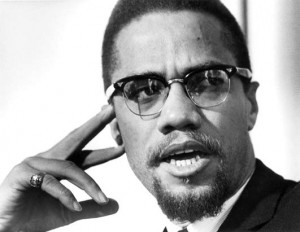
Malcolm X
b.1925–d.1965. Born Malcolm Little in Omaha, NB, Malcolm was the son of a Baptist preacher who was a follower of Marcus Garvey. After the Ku Klux Klan made threats against his father, the family moved to Lansing, Michigan. There, in the face of similar threats, he continued to urge blacks to take control of their lives.
Malcolm’s father was slain by the Klan-like Black Legionaries. Although he was found with his head crushed on one side and almost severed from his body, it was claimed he had committed suicide, and the family was denied his death benefit. (more…)
Black History, Medicine
 Louis was the first university-trained black physician, who after completing studies in Holland, practiced medicine in the colony of New Amsterdam (New York). In 1667 he received a land grant for his services.
Black History, The Arts
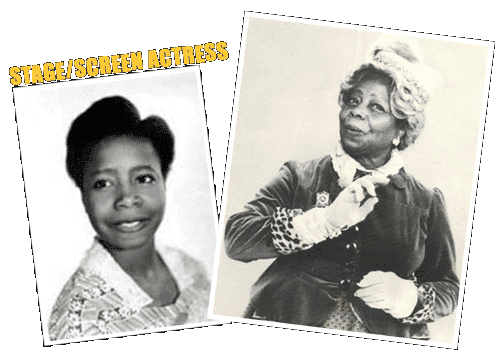
Thelma ‘Butterfly’ McQueen
1811-1995 – Stage and film actress best remembered for her part in film history with Gone With the Wind (1939). McQueen received her nickname of ?Butterfly? when she appeared in the Harlem Theater group’s production of Midsummer Night’s Dream in the Butterfly ballet sequence. Despite the notice she received from her role in Gone With the Wind, roles became harder to get and she was out of films by the 1950s.
She worked at various jobs, including waitress at a soul food restaurant, a receptionist, and dance instructor between occasional acting jobs in small parts on Broadway. She received a bachelor’s degree in political science in 1975 from New York’s City College at the age of 64 and had a radio show in Augusta, Georgia before she died in a fire that consumed her one-bedroom cottage.
Black History, Science
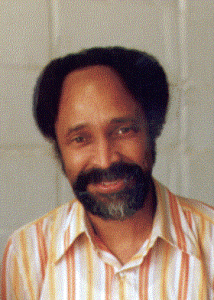 Clarence “Skip” Ellis was born in 1943 and grew up in a very poor neighborhood of the south side of Chicago. His mother struggled to raise five children by herself. Gangs and violence were common in school. Skip wasn’t one of the “cool” kids – he mostly kept to himself. At the time, he was sad because he felt excluded from so many things. Surprisingly, this helped him because he was able to avoid the gangs, violence and problems some kids in his class got into.
At 15, Skip took a job at a local company to help support his family. He was assigned the “graveyard shift,” which meant he had to work all night long. His job was to prevent break-ins and, most importantly, not to touch the company’s brand new computer! It was 1958 and computers were very expensive and not very common. Since he had lots of free time, he read the computer manuals that came with the machines. He became a self-taught computer expert. One day, there was a crisis at the company… (more…)
Black History, Inventions
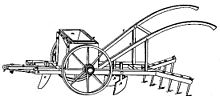
The drawing of the Seed-Planter by Blair used on the patent application in 1836.
Henry Blair, one of the earliest black inventors to receive a patent, was born in Montgomery County, Md. around 1807. Little is known about his personal life. Blair is assumed to have been free since slaves could not legally obtain patents. He received two patents, one in 1834 for his seed planter and another in 1836 for a cotton planter. For many years he was thought to be the first black American to receive a U.S. patent. Later,it was recognized that Thomas L. Jennings received his patent in 1821 for the invention of the dry cleaning process. Many people are unaware of this and still cite Henry Blair as the first black patent holder. (more…)

Black History, Events
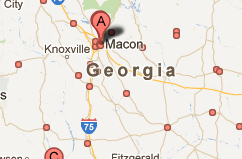 1866 – The Georgia Equal Rights Association First organized.
1867 – The Georgia Equal Rights Association met in Macon.
Its primary goal was to encourage blacks to register and vote on a new state constitution.