Black History, Law
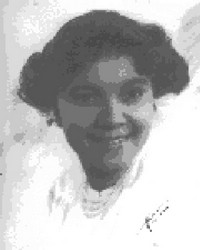
Muriel O. Farmer
Born December 2, 1917 Muriel, the daughter of a Chicago policeman, was one of the first women to graduate from the prestigious John Marshall Law School in Chicago, IL. After graduating from the University of Illinois in Champaign-Urbana at the age of 21, she worked as a social worker while studying law. After passing the bar Muriel went into the legal profession full time and spent over 50 years practicing law, becoming one of the best known divorce lawyers in the state.
Oddly enough, two of her best friends, both black women, were also John Marshall graduates. Her cousin went on to become an acclaimed criminal lawyer (Bernice Z. Leaner) and her best friend went on to be Chicago’s first Black Alderwoman (Anna Langford).
Black History, The Arts
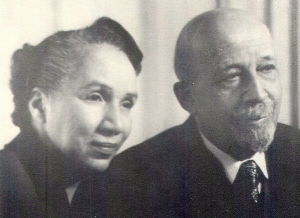
Shirley Graham DuBois and her Husband, W.E.B. DuBois
was born November 11, 1896 in Indianapolis, Indiana on a farm which had been part of the underground railroad and had served as a stopping point for runaway slaves on their way to Canada. It belonged to her grandfather, a former slave who had been freed prior to the Civil War.
Over the years she studied at the Sorbonne, Oberlin, and attended Yale on a Rosenwald Fellowship in Creative Writing. She received both her bachelor’s degree and a master’s degree in music from Oberlin. After receiving her MA degree, she was appointed Head of the Fine Arts Department at Tennessee State College. (more…)
Black History, Other
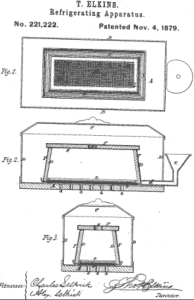
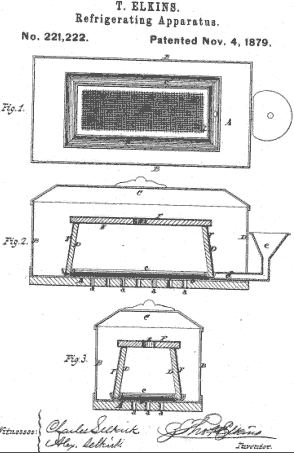
patent #221,22
Thomas Elkins designed a device that helped with the task of preserving perishable foods by way of refrigeration. At the time, the common way of accomplishing this was by placing items in a large container and surrounding them with large blocks of ice. Unfortunately, the ice generally melted very quickly and the food soon perished.
Elkins’ device utilized metal cooling coils which became very cold and would cool down items which they surrounded. The coils were enclosed within a container and perishable items were placed inside. The coils cooled the container to a temperature significantly lower than that inside of a room thereby keeping the perishable items cool and fresh for longer periods of time.
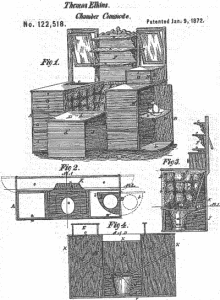
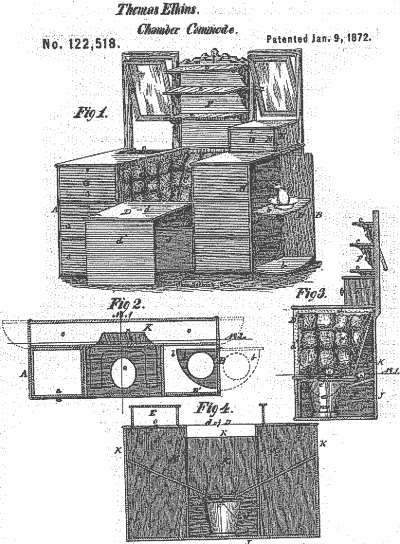
chamber commode
Elkins patented this refrigerated apparatus on November 4, 1879 and had previously patented a chamber commode in 1872 and a dining, ironing table and quilting frame combined in 1870.
An improved chamber commode (toilet) was patented by Thomas Elkins on January 9, 1872. Elkins’ commode was a combination bureau, mirror, book-rack, washstand, table, easy chair, and chamber stool. It was a very unusual piece of furniture.
Black History, Firsts, Religion
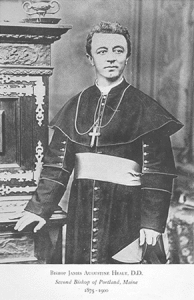
Rev. James A. Healy, D.D.
Bishop Bacon’s successor, James Augustine Healy, was appointed February 12, 1875, and consecrated as Bishop of Portland at the Cathedral of the Immaculate Conception (see Cathedral) on June 2, 1875.
James Augustine Healy became the first black bishop ordained in the United States. He was the son of an Irish immigrant, Michael Healy, who became a prosperous plantation-owner in Georgia, and a mulatto woman who was actually a slave.
James was educated in northern schools and later attended the newly established Holy Cross College. There he made his decision to enter the priesthood. He furthered his studies in Montreal and Paris where he was ordained in 1854 at the Cathedral of Notre Dame.
After ordination Father Healy was assigned to Bishop John Fitzpatrick’s Boston Diocese. He remained there serving first at the House of the Angel Guardian, then as Chancellor of the Diocese and finally as pastor of St. James Church. When his appointment came as the second Bishop of Portland, he was forty-five years old. (more…)
Black History, Medicine, Politics
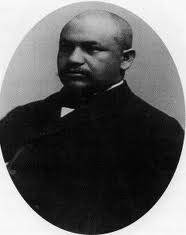
- Dr. Matthew Ricketts
Dr. Matthew Oliver Ricketts was the political leader of Omaha’s African Americans at the turn of the 20th century. Ricketts was born to an enslaved couple near New Castle, Kentucky in 1858. He later received a degree from Lincoln Institute at Jefferson City, Missouri, and three years later moved to Omaha.
When he arrived in Omaha in 1880, despite scarce resources, he was admitted to Omaha Medical College, where he worked as a janitor to pay his tuition. Elected to the state legislature for the sessions of 1892 and 1894, he became the first Nebraskan of African descent to sit in that body