Black History, Education
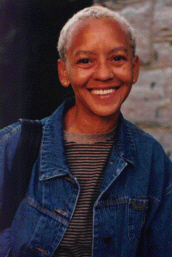
- Nikki Giovanni
Yolande Cornelia “Nikki” Giovanni, born in Knoxville, Tennessee, is a world-renowned poet, writer, commentator, activist, and educator. A leading poet of the Black Arts Movement, Giovanni’s work reflects her radical politics. In 1967 she graduated from Fisk University and published her first poetry collection, Black Feeling. It was followed by the poetry collections Black Talk (1968) and Black Judgment (1970). Truth Is on Its Way, a recording of Giovanni reading poems set to gospel and other black music, was a bestseller in 1971.
After the birth of her son in 1969, Giovanni’s work became more personal and less political. In 1989 she began teaching English at Virginia Polytechnic Institute. The Selected Poems of Nikki Giovanni was published in 1996 and Blues for All the Changes: New Poems appeared in 1999.
Over the past thirty years, Nikki’s outspokenness, in her writing and in person, has brought the eyes of the world upon her. One of the most widely read American poets, she prides herself on being “a Black American, a daughter, a mother, a professor of English.” (more…)
Black History, Science
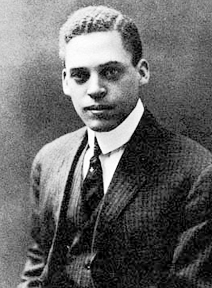
Ernest Everest Just
Dr. Ernest Just was a pioneer in the fields of biology and chemistry at a time when it was extremely difficult for African Americans to get a scientific education. He overcame many obstacles to leave a scientific legacy for generations to come studying cell life and human metabolism. In addition, he explored egg fertilization. In fact, he was the first person to unlock the secrets of cell function and structure.
Ernest Just was born in Charleston, South Carolina in 1883 to Charles and Margaret Just. His early life was not easy. When he was just four years old his father died. In order for his family to survive, Ernest had to work as a field hand to make money.
Once the family got back on its feet again, Ernest’s mother sent him North to prepare for college. He went to the Kimball Hall Academy in New Hampshire where his brilliance shined. He completed four years of course work in only three and graduated valedictorian. He went on to Dartmouth College where he graduated in 1907 magna cum laude with degrees in Biology and History. He was the only person in his class to receive such high standing. (more…)

Black History, Government
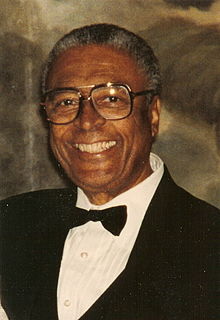
George L. Brown
George Leslie Brown (July 1, 1926 – March 31, 2006) was an American politician. He served in the Colorado Senate from 1955 to 1974 and as the 40th Lieutenant Governor of Colorado from 1975 to 1979. He was also a Sr. Vice President with Grumman Corporation. During World War II, he served as a Tuskegee Airman. Together with California’s Mervyn Dymally, he was one of the first two Black lieutenant-governors sinceReconstruction and outside of any southern state.
Growing up on a farm in Kansas, Brown was a star athlete in basketball, football and track before graduating from Lawrence Liberty Memorial High School in 1944. Brown graduated from the University of Kansas in 1950 with a B.S. in journalism. He also did graduate work at Harvard Business School, the University of Colorado and the University of Denver. (more…)
Black History, Slavery
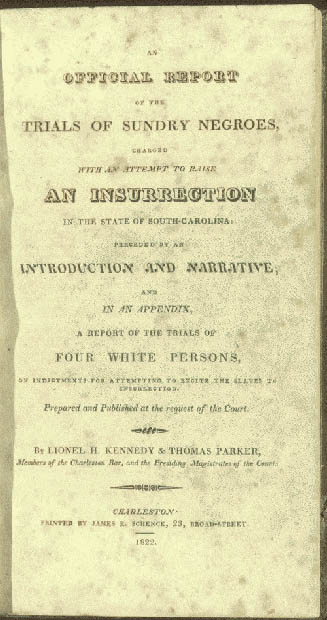
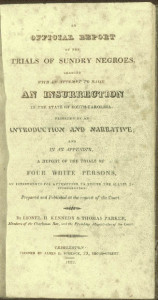 The Vesey Revolt was led by Denmark Vesey (1767-1822) and to a lesser extent, by his accomplice, Peter Poyas (Higginson, 229). Vesey was a literate and very intelligent black man who had purchased his freedom in January of 1800; he was the only free black to take part in the revolt. The revolt was planned to occur on an unknown date in May of 1822 near Charleston, South Carolina (Sylvester, bio 231).
Vesey’s views and ambitions were spurred by his work with the African Methodist Episcopal (AME) Church, the only independent black church in Charleston at the time. Within the church, Vesey gave sermons and led lessons. As a literate man, he was looked upon as a teacher. (more…)
Black History, The Arts

Big Joe Turner
One of the key figures, the vehicle we took from R&B to Rock N’Roll, was Big Joe Turner. Born in 1911 in Kansas City, Big Joe’s dad was killed when he was 15. To help his family, Joe worked at a variety of odd jobs..from shining shoes to running liquor. In 1929 he began to play boogie-woogie with Kermit “Pete” Johnson in clubs around the Midwest. They were discovered and brought to New York to play Carnegie Hall.
The next week they began recording for a label and a star was born. Joe was characterized by his incredible deep singing voice. He didn’t play any instruments, his voice was all he needed. New York Times music critic Robert Palmer said: “…his voice, pushing like a Count Basie solo, rich and grainy as a section of saxophones, which dominated the room with the sheer sumptuousness of its sound.” Big Joe died of kidney failure in 1985..