Black History, Education, Literature
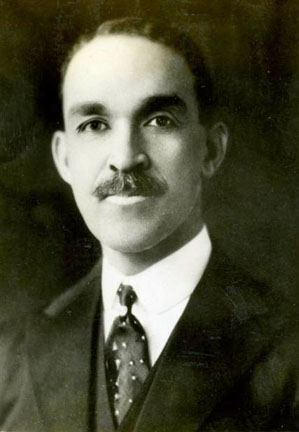
Benjamin Griffith Brawley
Benjamin Brawley (1882-1939) was a prominent African American author and educator. He studied at Atlanta Baptist College, University of Chicago, and Harvard, and he taught at Atlanta Baptist College, Howard University, and Shaw University. Women of Achievement (c1919) is one of Brawley’s numerous books and articles on African American culture. Brawley also published widely in literary studies.
Several of his books were considered standard college texts, including The Negro in Literature and Art in the United States (1918) and New Survey of English Literature (1925).
Born in 1882 in Columbia, South Carolina, Brawley was the second son of Edward McKnight Brawley and Margaret Dickerson Brawley. He studied at Atlanta Baptist College (renamed Morehouse College), graduating in 1901, earned his second BA in 1906 from the University of Chicago, and received his Master’s degree from Harvard University in 1908. Brawley taught in the English departments at Atlanta Baptist College, Howard University, and Shaw University. (more…)
Black History, Civil Rights
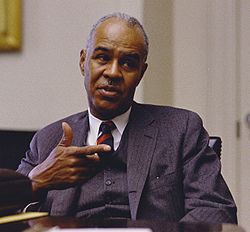
Roy Wilkins
Roy Wilkins (August 30, 1901 – September 8, 1981) was a prominent civil rights activist in the United States from the 1930s to the 1970s. Wilkins was active in the National Association for the Advancement of Colored People (NAACP) and between 1931 and 1934 was assistant NAACP secretary under Walter Francis White. When W. E. B. Du Bois left the organization in 1934, Wilkins replaced him as editor of Crisis, the official magazine of the NAACP.
Roy Wilkins was born in St. Louis, Missouri. He grew up in the home of his aunt and uncle in a low-income, integrated community in St. Paul, Minnesota. Working his way through college at the University of Minnesota, Wilkins graduated from the University of Minnesota with a degree in sociology in 1923. (more…)
Black History, Literature
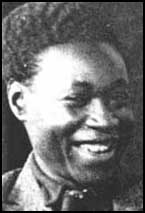
Claude McKay
Claude McKay was born in Jamaica on 15th September, 1890. He began writing poetry as a schoolboy. He worked as a policeman in Spanish Town and when he was twenty-two had his first volume of poems, Songs of Jamaica (1912) published.In 1912 McKay moved to the United States where he attended Tuskegee Institute in Alabama and Kansas State University. He continued to write poetry and in 1918 his work was praised by both Frank Harris and Max Eastman. The following year, his poem, If We Must Die, was published in Eastman’s journal, The Liberator.
Frank Harris encouraged McKay to obtain writing experience in England. In 1919 McKay travelled to England where he met George Bernard Shaw who introduced him to influential left-wing figures in journalism. This included Sylvia Pankhurst, who recruited him to write for her trade union journal, Workers’ Dreadnought. While in London McKay read the works of Karl Marx and becomes a committed socialist. (more…)
Black History, Education
The Dictionary Lady
In 1992, 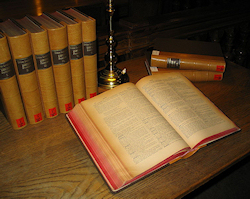 noticed that children on their way to school in her Savannah, Georgia, neighborhood were not carrying books. With $50, she bought thirty dictionaries and handed them out to children on the street corner. In each book, she wrote the motto of the United Negro College Fund, “A mind is a terrible thing to waste.”
When others heard of her idea, they began sending her money so she could expand the project. She also sold t-shirts to raise more money. By 1996, she had given dictionaries to more than 17,000 children, by 1999, nearly 35,000. Annie Plummer was one of 12 children. She dropped out of school to have a baby and her first job was as a maid. She managed to find time to become involved in community affairs and is an example to us all of how anybody can have a good idea to help people.
Black History, Civil Rights, Other

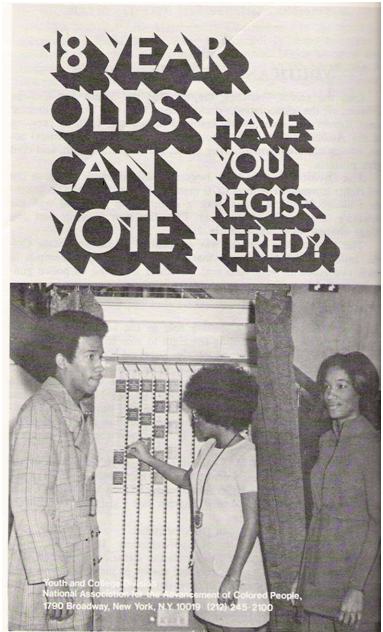
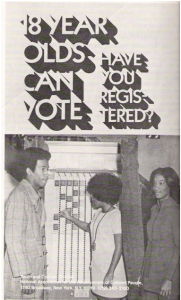 The NAACP’s official organ, The Crisis Magazine, carried information on young people and encouraged formation of youth units for a number of years before any action was taken to form a division in the Association devoted to youth activities. In 1935, during the St. Louis Convention, a fiery address was made by one of the youth delegates, Miss Juanita Jackson, to create a department for youth.
Subsequently, on September 15, 1935, Miss Jackson joined the Association’s staff and became the first Youth Secretary. The NAACP National Board of Directors passed a resolution formally creating the Youth and College Division in March of 1936. Under the guidance of Ms. Jackson, a National Youth Program was created for youth members of the NAACP. This program provided national activities for youth that were supported by monthly meetings discussing local needs of the community. The major national youth activities were demonstrations against lynching and seminars and group discussions on the inequalities in public education. (more…)