Black History, Music
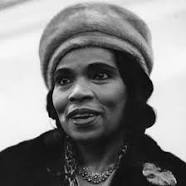
Marion Anderson
Marian Anderson (February 27, 1897 – April 8, 1993) was an African-American contralto and one of the most celebrated singers of the twentieth century. Music critic Alan Blyth said “Her voice was a rich, vibrant contralto of intrinsic beauty.” Most of her singing career was spent performing in concert and recital in major music venues and with famous orchestras throughout the United States and Europe between 1925 and 1965.
Although offered roles with many important European opera companies, Anderson declined, as she had no training in acting. She preferred to perform in concert and recital only. She did, however, perform opera arias within her concerts and recitals. She made many recordings that reflected her broad performance repertoire of everything from concert literature to lieder to opera to traditional American songs and spirituals. (more…)
Black History, Education
Goals of THE PHOENIX SOCIETY of New York
The Liberator, 29 June 1833
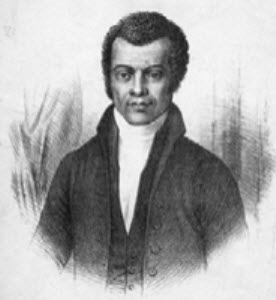
Rev. Christopher Rush, a founder of the Phoenix Society
In 1833 several black leaders in New York City formed the Phoenix Society to promote the education of the city’s African Americans – children and adults alike – through classes, lectures, lending libraries, job centers, and the mutual support needed to pursue these goals. The Society began several programs yet folded later in the decade for lack of funds. Other black mutual aid and literary societies in the city continued to pursue the goals envisioned by the Phoenix Society.
THIS SOCIETY WILL AIM TO ACCOMPLISH THEFOLLOWING OBJECTS: (more…)
Black History, Events
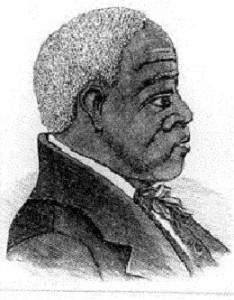
Rev. Andrew Bryan
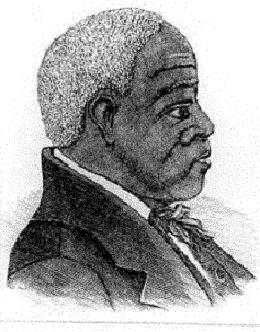
Andrew Bryan, the founder of the First African Baptist Church, was born enslaved in 1737, on a plantation outside of Charleston, South Carolina. He served as coachman and body servant to Jonathan Bryan, who along with his brother Hugh and several other planters, was arrested for preaching to slaves. Jonathan Bryan’s plantation became the center of efforts by dissenting group of planters to evangelize their slaves.
In 1782, Andrew was converted by the preaching of George Liele, the first black Baptist in Georgia, who was licensed to preach to slaves along the Savannah River. Liele baptized Andrew and his wife Hannah. When Liele and hundreds of other blacks left with the British later that year, Andrew continued to preach to small groups outside of Savannah. With his master’s encouragement, he built a shack for his small flock, which included a few whites. Although he brought hundreds into his church, 350 others could not be baptized because of their masters’ opposition. (more…)
Black History, The Arts
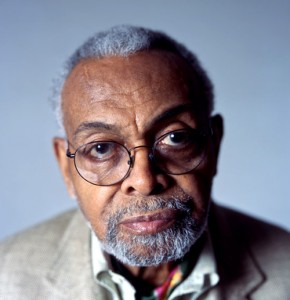
Amiri Baraka
(formerly LeRoi Jones)
Amiri Baraka, born in 1934, in Newark, New Jersey, USA, is the author of over 40 books of essays, poems, drama, and music history and criticism, a poet icon and revolutionary political activist who has recited poetry and lectured on cultural and political issues extensively in the USA, the Caribbean, Africa, and Europe.
With influences on his work ranging from musical orishas such as Ornette Coleman, John Coltrane, Thelonius Monk, and Sun Ra to the Cuban Revolution, Malcolm X and world revolutionary movements, Baraka is renowned as the founder of the Black Arts Movement in Harlem in the 1960s that became, though short-lived, the virtual blueprint for a new American theater aesthetics. (more…)
Black History, Politics

Patricia Roberts Harris
Patricia Roberts Harris (1924-85), former cabinet official and the only woman to have headed three federal departments, joined the faculty of The George Washington University Law School in the fall of 1983. Harris graduated from the GW National Law Center at the head of her class in 1960, receiving her JD with honors.
“She is truly one of the most distinguished graduates of the school and one of the most distinguished women in public life,” said National Law Center Dean Jerome A. Barron in announcing the appointment. “She brings great understanding of government, as well as experience in it, to the teaching of public law. (more…)