Alice H. Parker
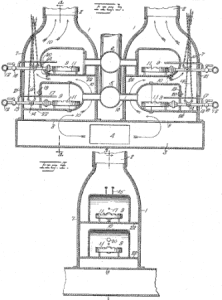
In 1919, Alice Parker of Morristown, New Jersey, invented a new and improved gas heating furnace that provided central heating.

In 1919, Alice Parker of Morristown, New Jersey, invented a new and improved gas heating furnace that provided central heating.
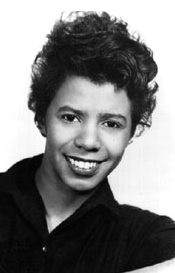
(b. May 19, 1930, Chicago, Ill., U.S.–d. Jan. 12, 1965, New York, N.Y.), American playwright whose Raisin in the Sun (1959) was the first drama by a black woman to be produced on Broadway.
Lorraine Hansberry
Hansberry’s father, a prosperous real-estate broker, fought a lengthy legal battle in the late 1930s against restrictive covenants that kept Chicago’s black inhabitants in ghettos. As part of this struggle the Hansberry family moved into a white neighbourhood, where Lorraine met daily hostility in her walks to and from school. Although her father took the case to the Supreme Court and won, he became disillusioned with the prospects for black equality in the United States and moved to Mexico.
Hansberry attended the University of Wisconsin for two years and then studied painting in Chicago and Mexico, before she decided she had no talent for it. Moving to New York in 1950, she held a number of jobs, meanwhile perfecting her skill as a writer. (more…)

Milton L. Olive III
PFC Milton Olive III was only 18 at the time of his death in Vietnam, but his heroic acts were so great, that the City of Chicago has honored him in two ways. Chicago is home to Olive Park and Olive-Harvey College both named for this brave soldier.
The Harlem Renaissance was an intellectual, social, and artistic explosion centered in Harlem, Manhattan, New York City, spanning the 1920s. At the time, it was known as the “New Negro Movement”, named after The New Negro, a 1925 anthology edited by Alain Locke. The movement also included the new African-American cultural expressions across the urban areas in the Northeast and Midwest United States affected by the Great Migration, of which Harlem was the largest.
Though it was centered in the Harlem neighborhood, many francophone black writers from African and Caribbean colonies who lived in Paris were also influenced by the movement,which spanned from about 1918 until the mid-1930s. Many of its ideas lived on much longer. The zenith of this “flowering of Negro literature”, as James Weldon Johnson preferred to call the Harlem Renaissance, took place between 1924—when Opportunity: A Journal of Negro Life hosted a party for black writers where many white publishers were in attendance—and 1929, the year of the stock-market crash and the beginning of the Great Depression. The Harlem Renaissance is considered to have been a rebirth of the African-American arts.
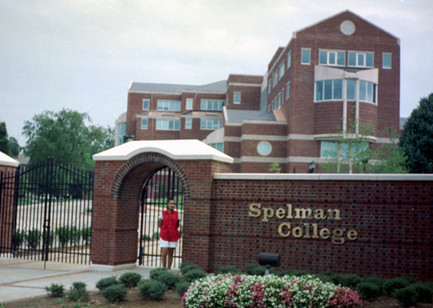
Spelman College in Atlanta, Georgia
Founded in 1881, Spelman College in Atlanta, Georgia, is a private, historically Black, four-year liberal arts college for African American women. For more than 118 years, the College has focused on professional development and leadership both inside and outside the classroom and Spelman has a long-standing tradition of cultivating leaders and providing activities that complement the classroom experience. The college repeatedly appears on “Best Of” lists for academic excellence and value.
With 1,900-plus students, Spelman is a predominately residential college with 12 on campus residence halls which house approximately 1,200 students. Other structures encompass Bessie Strong Hall, Camille Olivia Hanks Cosby, Ph.D. Academic Center, John D. Rockefeller Jr. Fine Arts Building, Sisters Chapel, Albert E. Manley College Center, and the Sally Sage McAlpin, Manley, and Howard-Harreld Halls, among many others on this 33-acre campus. (more…)