Black History, Education, Firsts
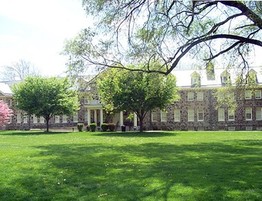
Cheyney University of Pennsylvania
Founded in 1837 as the Institute for Colored Youth, Cheyney University of Pennsylvania is known as the first institution for higher learning for African Americans. The founding of Cheyney University was made possible by Richard Humphreys, a Quaker philanthropist who bequeathed $10,000, one tenth of his estate, to design and establish a school to educate the descendents of the African race.
Born on a plantation in the West Indies, Richard Humphreys came to Philadelphia in 1764. Having witnessed the struggles of African Americans competing unsuccessfully for jobs due to the influx of immigrants, he became interested in their plight. In 1829, race riots heightened and it was that year Richard Humphreys wrote his will and charged thirteen fellow Quakers to design an institution: “…to instruct the descendents of the African Race in school learning, in the various branches of the mechanic Arts, trades and Agriculture, in order to prepare and fit and qualify them to act as teachers….” (more…)
Black History, Inventions

Marjorie Joyner
Marjorie Stewart Joyner had a strong message that she carried throughout her life. Be proud of who you are and treat yourself as if you care. This strong belief in pride led her to being an avid supporter of young men and women throughout her life. It also led her to an invention to help the women who came to see her feel better about themselves.
Born in 1896 in the Blue Ridge Mountains of Virginia, Marjorie did not stay long in the state. She moved early in her life to Chicago where in her teens she studied cosmetology. She quickly became associated with the famous beauty expert Madam C.J. Walker who had been made famous by Josephine Baker’s adoption of her products. (more…)

Black History
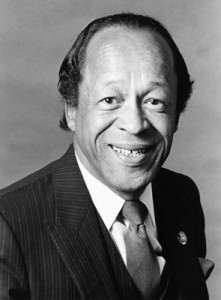
Gus Savage
Gus Savage ascended to Congress as an outsider to elective politics. A veteran civil rights activist and pioneer African-American journalist, he used his strong community ties to earn a seat in the U.S. House from South Chicago.
During his 12 years in Congress, Savage’s flamboyant personality and militant approach to highlighting racial inequalities in his district and around the nation made headlines and often provoked controversy.1 “I value my independence,” Savage avowed. “And I view struggle as desirable. I don’t crave acceptance. I march to my own tune. If the machine doesn’t like it, that’s tough. If my colleagues don’t like it, that’s also tough.”2 (more…)
Black History, Government
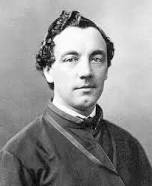
Father Patrick Francis Healy
Patrick Francis Healy (February 27, 1830 – January 10, 1910) was the 29th President of Georgetown University known for expanding the school following the American Civil War. He was accepted as and identified as Irish-American. Healy Hall, a National Historic Landmark, was constructed during Healy’s tenure and is named after him.
In the 1960s the history of Healy’s mixed-race ancestry became more widely known, and he was recognized as the first American of African ancestry to earn a PhD; the first to become a Jesuit priest; and the first to be president of a predominantly white college.
Black History, Science
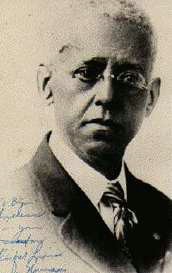
Lewis Howard Latimer
Lewis Howard Latimer (1848-1928), inventor, scientist; born in Chelsea, Mass. Latimer served in the Union Navy in 1863, studied drafting, and later invented and patented an incandescent light bulb with a carbon filament in 1881.
He served as an engineer for the Edison Company for many years, and while with Edison supervised the installation of the electric light system in New York, N.Y.; Philadelphia, Pa.; Montreal, Canada; and London, England.
Latimer wrote the first textbook on the lighting system used by the Edison Company, and he was employed by Alexander Graham Bell to make patent drawings for the first telephone. He also served as chief draftsman for General Electric and Westinghouse companies. (more…)
