Black History, Firsts, Sports
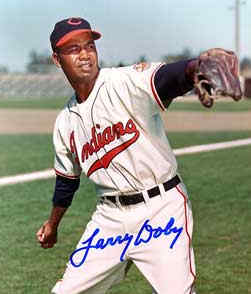
Born on Dec. 13, 1923, in Camden, S.C., Doby grew up in New Jersey. He didn’t start out in life longing for a career in professional baseball. He once said that he grew up wanting to teach and coach in high school.
But in 1942, a Negro League umpire recommended to the owner of the Newark Eagles that Doby, still in high school at the time, get a tryout. “They gave me a tryout, and I made the team,” Doby said. “That’s how I got involved in Negro League Baseball.”
Doby proved he was star material early in his Negro League days. He was an All-Star second baseman whose baseball credentials might have been better than Robinson’s. (more…)
Black History, Education
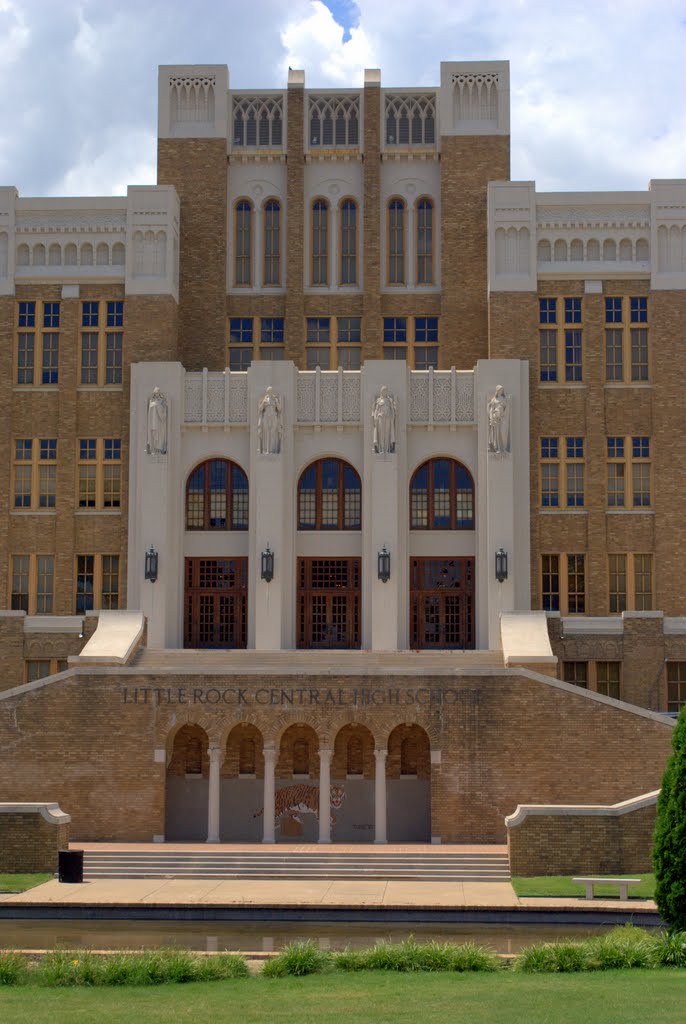
Little Rock Central HS
Three years after the U.S. Supreme Court ruled unanimously in Brown v. Board of Education that separate educational facilities are inherently unequal, nine African American students—Minnijean Brown, Terrance Roberts, Elizabeth Eckford, Ernest Green, Thelma Mothershed, Melba Patillo, Gloria Ray, Jefferson Thomas, and Carlotta Walls—attempted to integrate Central High School in Little Rock, Arkansas.
The students, known as the Little Rock Nine, were recruited by Daisy Bates, president of the Arkansas branch of the National Association for the Advancement of Colored People (NAACP). As president of the Montgomery Improvement Association, Martin Luther King wrote President Dwight D. Eisenhower requesting a swift resolution allowing the students to attend school. (more…)
Black History, Education
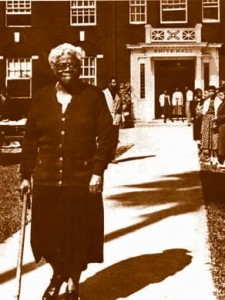
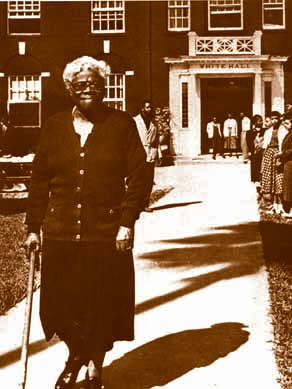
Dr. Mary Bethune in front of White Hall on the campus of Bethune-Cookman College in Daytona Beach, Florida
Mary McLeod Bethune founded the Daytona Educational and Industrial Training School in 1904. The school underwent several stages of growth and development through the years and in 1923, it merged with the Cookman Institute of Jacksonville, Florida and became a co-ed high school. A year later in 1924, it became affiliated with the Methodist Church. By 1931, the school had become a junior college.
The school became a four-year college in 1941 when the Florida Board of Education approved a 4-year baccalaureate program in Liberal Arts and Teacher Education. The name was changed to Bethune-Cookman College.On February 14, 2007, the Board of Trustees approved the name Bethune-Cookman University after the institution established its first graduate program.
In October 2010 the American Association of University Professors accused the university administration of improperly dismissing tenured members of the faculty—some for alleged sexual harassment (but, in the opinion of the AAUP, without due process), others for “budgetary reasons” but without a declaration of “financial exigency”. The university responded saying that the AAUP report contained errors and a one-sided view. (more…)
Black History, Military

Crispus Attucks
A runaway slave who believed fiercely in freedom commanded the people of Boston “do not be afraid,” as he struck out against the redcoats and became the first hero to die in an attack that spurred the American Revolution.
On the night of March 5, 1770, five citizens of Boston died when eight British soldiers fired on a large and unruly crowd that was menacing them. Boston’s patriots, led by Sam Adams, immediately labeled the affray the Boston Massacre and hailed its victims as martyrs for liberty. The troops had been sent to Boston in late 1768 to support the civil authorities and were themselves subject to the jurisdiction of the local courts. (more…)
Black History, Slavery
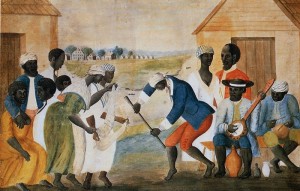 In 1654, John Casor became the first legal slave in America. Anthony Johnson, previously an African indentured slave, claimed John Casor as his slave. The Northampton County rule against Casor, and declared him propter for life by Anthony Johnson. Since Africans were not English, they were not covered by the English Common Law.
The First Black Slave was brought by the Dutch to the colony of Jamestown, 1619.