Black History
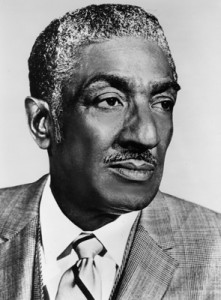
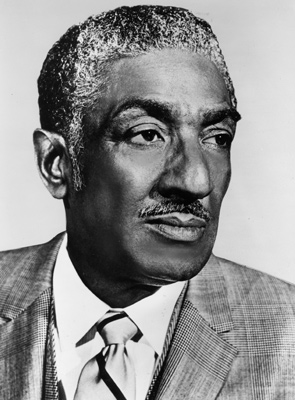
Ralph Harold Metcalfe
Ralph Metcalfe achieved worldwide fame as an Olympic athlete years before he became involved in politics on Chicago’s South Side. Like William Dawson, his predecessor from the predominantly black, urban Illinois district, Metcalfe rose through the ranks of the Chicago Democratic political machine before winning a seat in Congress.
However, Metcalfe differentiated himself from other machine loyalists of the period by elevating race above local party interests. Metcalfe’s willingness to risk his political career to follow his conscience won him loyal support among the majority of his constituents and his black colleagues in the House. (more…)
Black History, Slavery
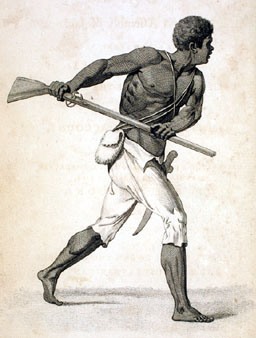
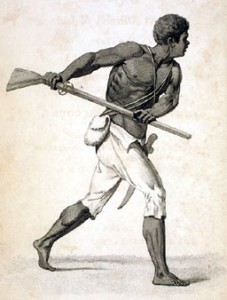
Newspaper Report Of The Charles Deslondes Revolt Of 1811:
Charles Deslondes
In 1811, another “largest slave revolt in American history” took place in New Orleans, Louisiana. During this revolt about 500 enslaved Africans, armed with pikes, hoes, axes and a few firearms, marched on the city of New Orleans with flags flying and drums beating. Many of the slaves had participated in the Haitian Revolution. This revolt was led by Charles Deslondes, a mulatto from Saint Dominique, Haiti. They were well-organized and used military formation dividing themselves into companies commanded by various officers. They showed a variety of military formations, but collapsed in combat against a well- armed militia and regular army troops under General Wade Hampton.
The events were as followed. On January 8, 1811 the rebellion began late in the evening on the plantation of Colonel Manuel Andy located in the German Coast County, some thirty-six miles northwest of New Orleans near present-day Norco. According to contemporary sources the leader of the revolt was a mulatto “a yellow fellow,â€� probably of Santo Domigan or Jamaican origin. He was the property of the Widow Jean–Baptiste Deslondes at the time of the uprising. Charles Deslondes was in the temporary employment of Colonel Andry or Andre, the sources use alternate spellings of his name. (more…)
Black History, Theater

J Rosamond Jonhson
John Rosamond Johnson, born in Jacksonville, Florida, in 1874, was the youngest of the three Johnson children. Although his first name was John, he was called Rosamond by his family and friends. Professionally, he referred to himself as J. Rosamond Johnson.
Rosamond’s special talent was music. He began piano lessons with his mother when he was 4 years old. After graduating from the Stanton Public school in 1891, he went to the New England Conservatory of Music in Boston where he studied piano, organ, composition, and voice. He also studied music in London. (more…)
Black History, Politics

Bakke Decision Protesters
Bakke decision, formally Regents of the University of California v. Bakke, ruling in which, on June 28, 1978, the U.S. Supreme Court declared affirmative action constitutional but invalidated the use of racial quotas. The medical school at the University of California, Davis, as part of the university’s affirmative action program, had reserved 16 percent of its admission places for minority applicants.
Allan Bakke, a white California man who had twice unsuccessfully applied for admission to the medical school, filed suit against the university. Citing evidence that his grades and test scores surpassed those of many minority students who had been accepted for admission, Bakke charged that he had suffered unfair “reverse discriminationâ€� on the basis of race, which he argued was contrary to the Civil Rights Act of 1964 and the equal protection clause of the U.S. Constitution’s Fourteenth Amendment. (more…)
Black History, Literature
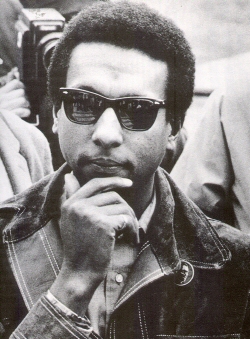
- Stokley Carmichael
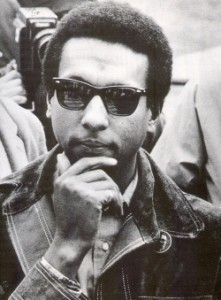
Original name: KWAME TOURE (b. June 29, 1941, Port of Spain, Trinidad–d. Nov. 15, 1998, Conakry, Guinea), West-Indian-born civil-rights activist, leader of black nationalism in the United States in the 1960s and originator of its rallying slogan, “black power.”
Carmichael immigrated to New York City in 1952, attended high school in the Bronx, and enrolled at Howard University in 1960. There he joined the Student Nonviolent Coordinating Committee (SNCC) and the Nonviolent Action Group. In 1961 Carmichael was one of several Freedom Riders who traveled through the South challenging segregation laws in interstate transportation. For his participation he was arrested and jailed for about 50 days in Jackson, Miss. (more…)