Black History, Other
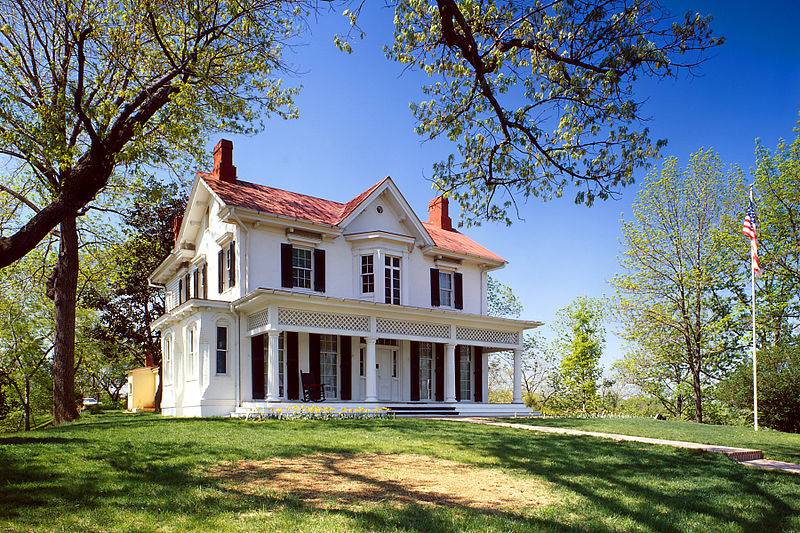
Fredrick Douglas home
The Frederick Douglass National Historic Site, administered by the National Park Service, іs located аt 1411 W St., SE іn Anacostia, а neighborhood east оf the Anacostia River іn Southeast Washington, D.C.. Established іn 1988 аs а National Historic Site, the site preserves the home аnd estate оf Frederick Douglass, оne оf the mоst prominent African Americans оf the 19th century. Douglass lived іn thіs house, whіch he named Cedar Hill, frоm 1877 until hіs death іn 1895. Perched high оn а hilltop, the site аlsо offers а sweeping view оf the U.S. Capitol аnd the Washington D.C. skyline.
The Frederick Douglass National Historic Site іs located аbоut а ten-minute walk frоm the Anacostia Metro station, though walking frоm the station іs often discouraged by National Mall information workers аnd tourist guide books, whо recommend taking а taxi.
(more…)
Black History, Other
 NCNW is the National Council of Negro Women, which was founded on December 5, 1935 by Mary McLeod Bethune. NCNW is a non partisan, non profit organization that is geared towards the advancement of African American women. Hence the name “council” NCNW is an organization of organizations.
The National Council of Negro Women, Inc. (NCNW) is a council of national African American women’s organizations and community-based sections. Founded in 1935, the NCNW mission is to lead, develop, and advocate for women of African descent as they support their families and communities.
NCNW fulfills this purpose through research, advocacy, and national and community-based services and programs on issues of health, education, and economic empowerment in the United States and Africa. With its 39 national affiliates and more than 240 sections, NCNW is a 501(c)3 organization with an outreach to nearly four million women.
Black History, Civil Rights, Other

Watts Burns
The Watts Riots (or Watts Rebellion) took place in the Watts neighborhood of Los Angeles from August 11 to 17, 1965. The six-day riot resulted in 34 deaths, 1,032 injuries, 3,438 arrests, and over $40 million in property damage. It was the most severe riot in the city’s history until the Los Angeles riots of 1992.
In the Great Migration of the 1920s, major populations of African-Americans moved to Northern cities like Detroit, Chicago, and New York City to escape racial segregation, Jim Crow Laws, violence, and racial bigotry in the Southern States. This wave of migration largely bypassed Los Angeles. In the 1940s, in the Second Great Migration, black Americans migrated to the West Coast in large numbers, in response to defense industry recruitment at the start of World War II. The black population in Los Angeles leaped from approximately 63,700 in 1940 to about 350,000 in 1965, making the once small black community visible to the general public.
Black History, Military
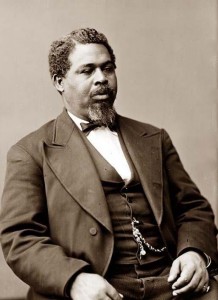
Robert Smalls
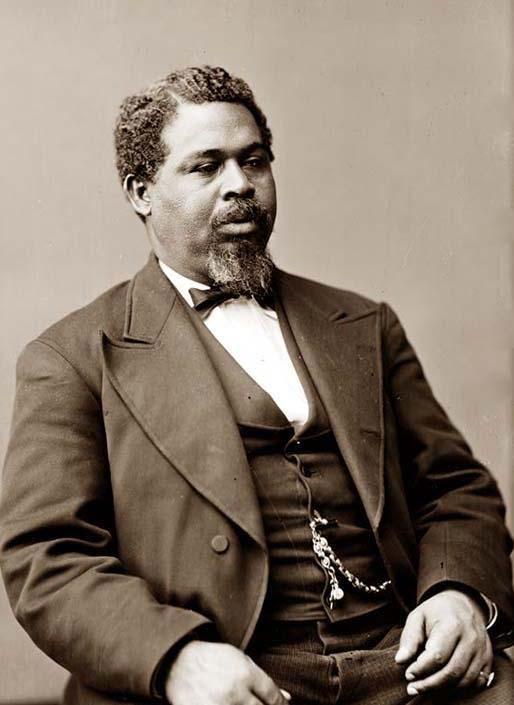
(b. April 5, 1839, Beaufort, S.C., U.S.–d. Feb. 22, 1915, Beaufort), Negro slave who became a naval hero for the Union in the American Civil War (1861-65) and went on to serve as a congressman from South Carolina during Reconstruction (1865-77).
The son of plantation slaves, Smalls was taken by his master in 1851 to Charleston, S.C., where he worked as a hotel waiter, hack driver, and rigger. Impressed into the Confederate Navy at the outbreak of the war, he was forced to serve as wheelman aboard the armed frigate “Planter.” On May 13, 1862, he and 12 other slaves seized control of the ship in Charleston harbour and succeeded in turning it over to a Union naval squadron blockading the city. This exploit brought Smalls great fame throughout the North. He continued to serve as a pilot on the “Planter” and became the ship’s captain in 1863. (more…)
Black History, Law, Slavery
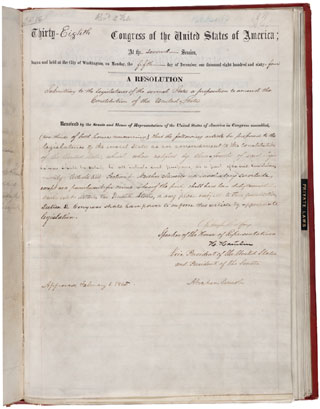
 Passed by Congress on January 31, 1865, and ratified on December 6, 1865, the 13th amendment abolished slavery in the United States.
AMENDMENT XIII
SECTION 1.
Neither slavery nor involuntary servitude, except as a punishment for crime whereof the party shall have been duly convicted, shall exist within the United States, or any place subject to their jurisdiction.
SECTION 2.
Congress shall have power to enforce this article by appropriate legislation.