Black History
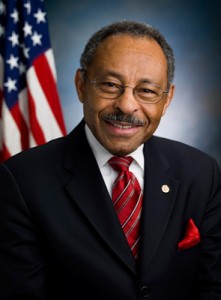
Roland Burris
Roland Burris, a longtime Illinois state official, was named to succeed former Senator and President-elect Barack Obama on December 31, 2008, becoming the sixth African American to serve in the United States Senate.1 Burris started his political career as a teenager at a swimming pool in his hometown of Centralia, Illinois, in the south central part of the state. Burris’s father, who was vice president of the local chapter of the NAACP, had his son and four friends racially integrate the pool after a two-year struggle. The successful effort made Burris focus on law and politics: “If we, as a race of people, are going to get anywhere in this society, we’ve got to have lawyers and elected officials who are responsible and responsive–that’s what my dad said, and it resonated with me.” (more…)
Black History, Inventions
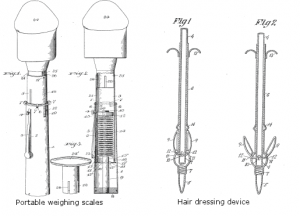
John W. Hunter, on Nov. 3, 1896, received patent number 570,553 for a portable weighing scales
John W. Hunter, on Jan. 19, 1909, received patent number 909,902 for a hair dressing device
J.H. Hunter, an African-American inventor, patented the weighing scale on November 3, 1896.It was patent number 570, 533. The weighing scale is used to determine the weight or mass of an object or individual.
On Jan. 19, 1909, he also received patent number 909,902 for a hair dressing device
Black History, The Arts
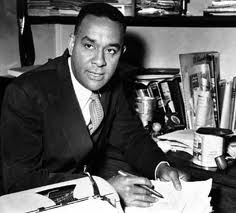
Richard Wright
(b. Sept. 4, 1908, near Natchez, Miss., U.S.–d. Nov. 28, 1960, Paris, France), novelist and short-story writer, who was among the first black American writers to protest white treatment of blacks, notably in his novel Native Son (1940) and his autobiography, Black Boy (1945). He inaugurated the tradition of protest explored by other black writers after World War II.
Wright’s grandparents had been slaves. His father left home when he was five, and the boy, who grew up in poverty, was often shifted from one relative to another. He worked at a number of jobs before joining the northward migration, first to Memphis, Tenn., and then to Chicago. (more…)
Black History, Government
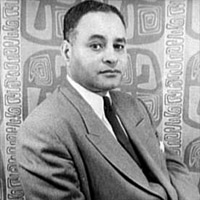
Ralph Bunche
Bunche was the first black person to win the Nobel Peace Prize, awarded in 1950. Born in Detroit, Michigan, Bunche and his sister were orphaned in 1915 and reared by their grandmother in Los Angeles. A brilliant, industrious student, Bunche graduated from Jefferson High School in 1922 as class valedictorian but was barred from the honor society because of his race.
In 1927, Bunche graduated from the University of California at Los Angeles, where he had excelled both in and outside the classroom. He wrote for the school newspaper, won oratorical contests, was sports editor of the yearbook, played guard for three years on the basketball team, and became Phi Beta Kappa. He then entered Harvard University, where in 1934 he became the first African American to earn a Ph.D. in government and international relations. (more…)
Black History, Religion
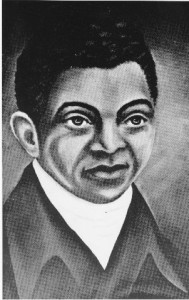 Harry Hosier (c.1750â – May 1806), better known during his life as “Black Harry”, was a black Methodist preacher during the Second Great Awakening in the early United States. Dr. Benjamin Rush said that, “making allowances for his illiteracy, he was the greatest orator in America”.
His style was widely influential but he was never formally ordained by the Methodist Episcopal Church or the Rev. Richard Allen’s separate African Methodist Episcopal Church in Philadelphia.


