Black History, Law
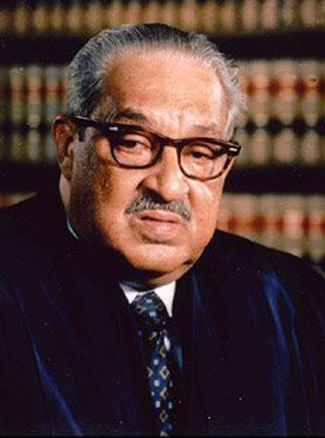
Thurgood Marshall
Born in Baltimore, Maryland on July 2, 1908, Thurgood Marshall was the grandson of a slave. His father, William Marshall, instilled in him from youth an appreciation for the United States Constitution and the rule of law. After completing high school in 1925, Thurgood followed his brother, William Aubrey Marshall, at the historically black Lincoln University in Chester County, Pennsylvania.
His classmates at Lincoln included a distinguished group of future Black leaders such as the poet and author Langston Hughes, the future President of Ghana, Kwame Nkrumah, and musician Cab Calloway. Just before graduation, he married his first wife, Vivian “Buster” Burey. Their twenty-five year marriage ended with her death from cancer in 1955. (more…)
Black History, Slavery
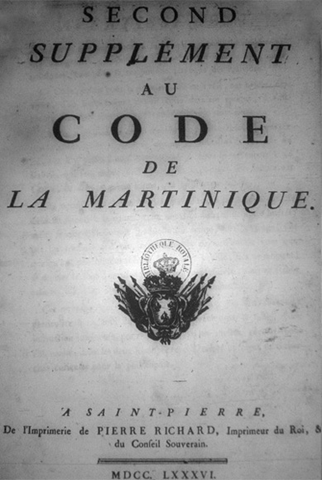
 On 4 February 1794, the First Republic (Convention) voted for the abolition of slavery in all French colonies. The abolition decree stated that “the Convention declares the slavery of the Blacks abolished in all the colonies; consequently, all men, irrespective of colour, living in the colonies are French citizens and will enjoy all the rights provided by the Constitution.”
Restored by the Consulate in 1802, slavery was definitively abolished in 1848 by the Second Republic, on Victor Schoelcher’s initiative.
Black History, Inventions
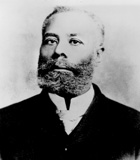
Elijah McCoy
Elijah McCoy (1843-1929) was a Black inventor who was awarded over 57 patents. The son of run-away slaves from Kentucky, he was born in Canada and lived there as a youth.
As a boy, the young Elijah was fascinated with machines and tools, learning by watching and constantly asking questions. He came to the United States after the Civil War and settled near Ypsilanti, Michigan, where he worked in a machine shop, further increasing his mechanical knowledge and skills. (more…)
Black History, Civil Rights

Montgomery Bus Boycott
The Montgomery Bus Boycott, in which African Americans refused to ride city buses in Montgomery, Alabama, to protest segregated seating, took place from December 5, 1955, to December 20, 1956, and is regarded as the first large-scale demonstration against segregation in the U.S. On December 1, 1955, four days before the boycott began, Rosa Parks, an African-American woman, refused to yield her seat to a white man on a Montgomery bus.
She was arrested and fined. The boycott of public buses by blacks in Montgomery began on the day of Parks’ court hearing and lasted 381 days. The U.S. Supreme Court ultimately ordered Montgomery to integrate its bus system, and one of the leaders of the boycott, a young pastor named Martin Luther King Jr. (1929-68), emerged as a prominent national leader of the American civil rights movement in the wake of the action.
Black History, Religion
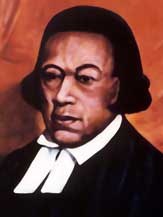
Absalom Jones
Founder of the African Episcopal Church of St. Thomas, Absalom Jones was born into slavery in Sussex County, Delaware, on November 6, 1746. He taught himself to read and knew the New Testament thoroughly at an early age. When he was 16, Absalom’s owner took him to Philadelphia, Pa., where he served as a clerk and handyman in a retail store.
He was allowed to work for himself in the evenings and keep his earning. He was married in 1770. By the time Jones was 38 years old, he had purchased his wife’s freedom, and his own, and had bought a house. Later he built two more houses and used them for rental income. (more…)