Black History, Education

Nannie Helen Burroughs
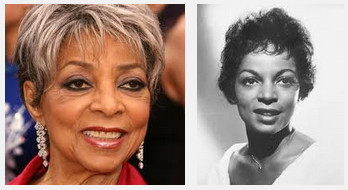
Among the most outstanding African-American educators of the post-reconstruction era of the late nineteenth century to the middle of the twentieth century were Dr. Anna Julia Cooper and Ms. Nannie Helen Burroughs. During this extremely difficult and rocky period for African-Americans these dedicated sisters were confronted with the arduous tasks of struggling for racial uplift, economic justice and social equality.
Nannie Helen Burroughs became a school founder, educator and civil rights activist. She identified African-American teachers such as Anna Julia Cooper as important role models. She attended public schools in Washington, D.C., graduated with honors in 1896, studied business in 1902, and received an honorary M.A. degree from Eckstein-Norton University in Kentucky in 1907. (more…)
Black History, Civil Rights, Entertainment
Ruby Dee
Ruby Dee’s acting career has spanned more than fifty years and has included theater, radio, television, and movies. She has also been active in the National Association for the Advancement of Colored People (NAACP), the Southern Christian Leadership Conference (SCLC), and the Congress of Racial Equality (CORE).
Ruby Dee was born Ruby Ann Wallace on October 27, 1924, in Cleveland, Ohio. Her parents, Marshall and Emma Wallace, moved the family to Harlem in New York City when Dee was just a baby. In the evening Dee, her two sisters, and her brother read aloud to each other from the poetry of Henry Wadsworth Longfellow (1807–1882), William Wordsworth (1770–1850), and Paul Laurence Dunbar (1872–1906). As a teenager Dee submitted poetry to the New York Amsterdam News, a black weekly newspaper. Later in life, Dee admitted that during those years she was a shy girl but that she always felt a burning desire to express herself. (more…)
Black History, Civil Rights, Education
Juliette Derricotte
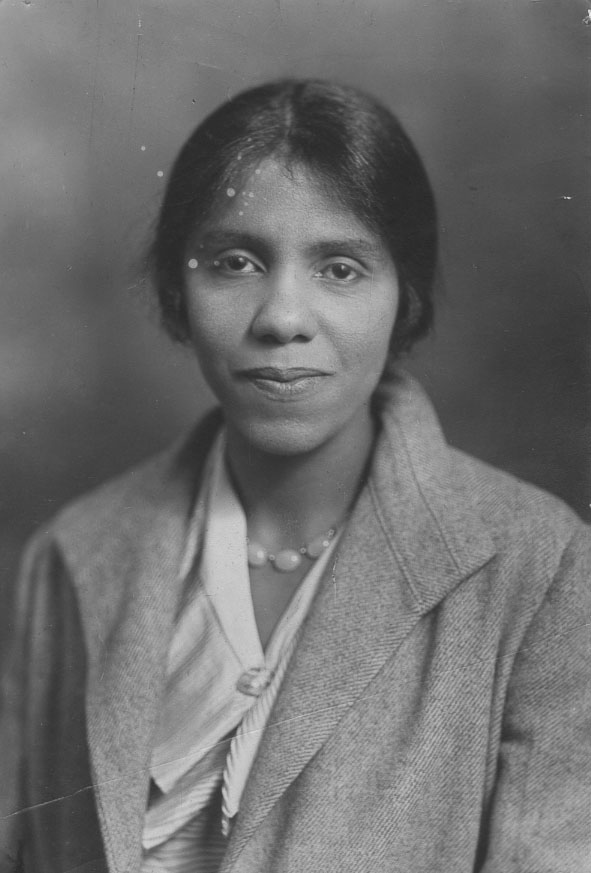
1897-1931. Juliette Dercotte was an African-American educator and political activist whose death after receiving racist treatment after a fatal car accident sparked outrage in the African-American community.
Raised in Athens, GA., Ms. Derricotte was educated in the public schools and at Talladega College. She was the first woman trustee of the College (appointed 1918). Ms. Derricotte was a renowned speaker, traveling across the U.S. in support of black colleges and education.
She was a delegate at the convention of the World’s Student Christian Federation in 1924 and 1928, where she represented all American college students. She served the YWCA as the National Student Secretary, resigning in 1929 to become Dean Of Women at Fisk University.
She was born the fifth of nine children of Isaac Derricotte and Laura Derricotte, a cobbler and a seamstress. As a child, she was hopeful of attending the local Institute and was crushed when her mother told her she would be unable to due to her color. This event helped shape her perception of the world and her desire to change people’s racial prejudices. (more…)
Black History, Politics
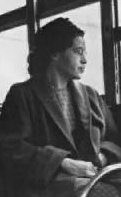
Rosa Parks
Civil rights activist and reformer. Parks is best known for instigating the Montgomery bus boycott in 1955 in protest of segregation laws. Rosa Louise McCauley was born on February 4, 1913, in Tuskagee, Alabama. Her father, James, was a carpenter, and her mother, Leona, a teacher. Parks attended a liberal private school as an adolescent.
After briefly attending Alabama State University, she married Raymond Parks, a barber and activist, in 1932, and the couple settled in Montgomery, Alabama. Besides working as a seamstress and a housekeeper, Parks was involved in several African-American organizations. She served as secretary for her community chapter of the National Association for the Advancement of Colored People, and also worked for the Montgomery Voters League, the NAACP Youth Council, and other civic and religious groups. (more…)
Black History, The Arts
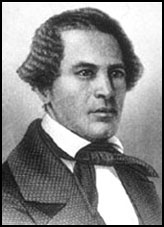
- William Wells Brown
William Wells Brown was born near Lexington, Kentucky, in 1814. His father was George Higgins, a white plantation owner, but his mother was a black slave. “My mother’s name was Elizabeth. She had seven children, Solomon, Leander, Benjamin, Joseph, Millford, Elizabeth, and myself. No two of us were children of the same father.”
As a house slave he was better treated than the field workers: “I was a house servant – a situation preferable to that of a field hand, as I was better fed, better clothed, and not obliged to rise at the ringing of the bell, but about half an hour after.”
When he was a child his master moved to Saint Charles, Missouri. “My master owned about forty slaves, twenty-five of whom were field hands… in addition to his practice as a physician, he carried on milling, merchandising and farming. He had a large farm, the principal productions of which were tobacco and hemp. The slave cabins were situated on the back part of the farm, with the house of the overseer, whose name was Grove Cook, in their midst.” (more…)