Grice wrote to a number of Black American leaders asking if freedmen should emigrate to Canada and, if a convention could be held to discuss the issue.
By September 15, 1830 the first National Negro Convention was held in Philadelphia.

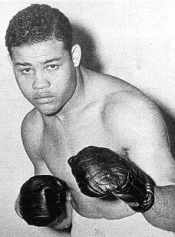
Joe Louis
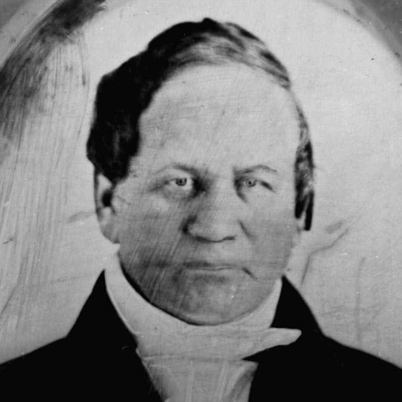 Alexander Lucius Twilight is the first African American to graduate from a U.S. college, receiving his bachelor’s degree from Middlebury College in 1823. Also a pioneer in Vermont politics, Twilight became the first African American to win election to public office in 1836, joining his home-state legislature. He died in Brownington, Vermont, on June 19, 1857.
Born on September 23, 1795 (though sources vary on the month and day of his birth, with some saying September 26 and others noting July 15), in Corinth, Vermont, where he also grew up, Alexander Lucius Twilight was one of six children born to Ichabod and Mary Twilight. The Twilights were one of the few African-American families living in the area at the time. According to the Old Stone House Museum’s website, Ichabod Twilight served in the American Revolutionary War. (more…)
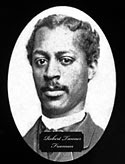
Robert Tanner Freeman
The First Black Dentist
Dr. Robert Tanner Freeman was the first African American dentist to receive a degree in the United States. He graduated from the Harvard University Dental School in 1869. He and George Lewis Ruffin (Law School) share the distinction of being the first African Americans to graduate from Harvard University. Freeman was born in Washington, D.C. to former slaves from North Carolina, and as a young man was hired by a local dentist, Dr. Henry Bliss Noble.
He began as a clerk and became a dental assistant. Dr. Nobel encouraged him to pursue a career in dentistry as a way to help alleviate the sufferings of other blacks.Freeman applied to, and was rejected by, two colleges before he was accepted, in 1867, as one of the sixteen members of the inaugural class at the newly formed Harvard Dental School.
His fellow classmates included another African American, George Franklin Grant. Upon graduation in 1869 he returned to Washington, D.C. to set up private practice in the same building as his previous employer and mentor.Freeman died four years later. (more…)
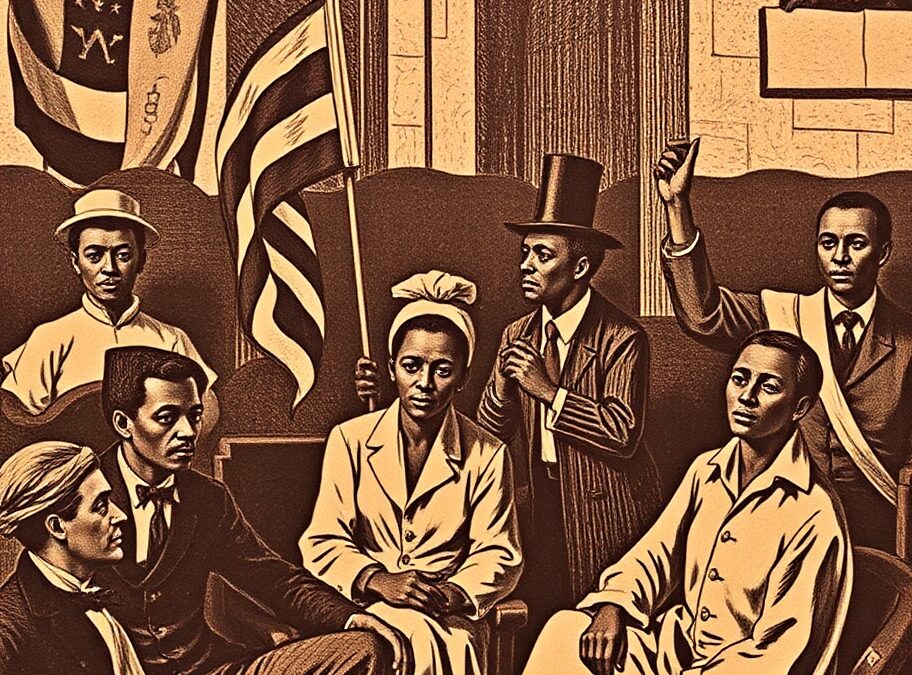
The first National Negro Convention began in Philadelphia, 1830, where they agreed to boycott slave-produced goods.
Grice wrote to a number of Black American leaders asking if freedmen should emigrate to Canada and, if a convention could be held to discuss the issue.
By September 15, 1830 the first National Negro Convention was held in Philadelphia.
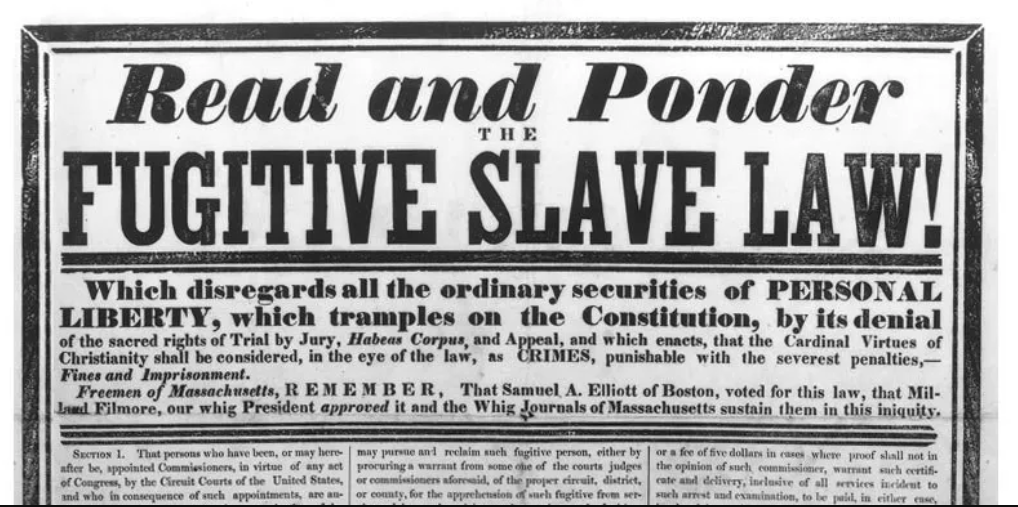
Following increased pressure from Southern politicians, Congress passed a revised Fugitive Slave Act in 1850.
Part of Henry Clay’s famed Compromise of 1850—a group of bills that helped quiet early calls for Southern secession—this new law forcibly compelled citizens to assist in the capture of runaways. It also denied enslaved people the right to a jury trial and increased the penalty for interfering with the rendition process to $1,000 and six months in jail.
In order to ensure the statute was enforced, the 1850 law also placed control of individual cases in the hands of federal commissioners. These agents were paid more for returning a suspected runaway than for freeing them, leading many to argue the law was biased in favor of Southern slaveholders.
The Fugitive Slave Act of 1850 was met with even more impassioned criticism and resistance than the earlier measure. States like Vermont and Wisconsin passed new measures intended to bypass and even nullify the law, and abolitionists redoubled their efforts to assist runaways.
The Underground Railroad reached its peak in the 1850s, with many enslaved people fleeing to Canada to escape U.S. jurisdiction.
Resistance also occasionally boiled over into riots and revolts. In 1851 a mob of antislavery activists rushed a Boston courthouse and forcibly liberated an escapee named Shadrach Minkins from federal custody. Similar rescues were later made in New York, Pennsylvania and Wisconsin.