Sports
1903 – 1976
Hubbard won the long jump at the 1924 Olympics, becoming the first black athlete to win an Olympic gold medal in an individual event; set the long jump world record in 1925 (25-103/4) and tied the 100-yard dash record (9.6) in 1926.
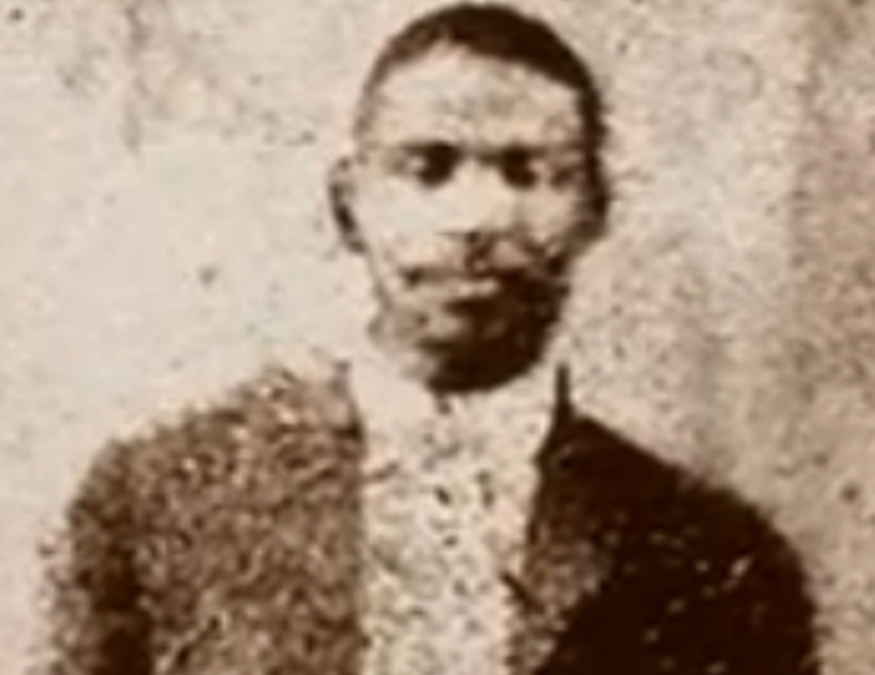
The Arts
byname of CHARLES BOLDEN (b. 1868, New Orleans, La., U.S.–d. Oct. 4, 1931, New Orleans), cornetist and semilegendary founding father of jazz. He was said by many jazz musicians, including the great trumpeter Louis Armstrong, to have been one of the most powerful musicians ever to play jazz.
Little is known about the details of Bolden’s career, but it is documented that he was a barber and that from 1895 to 1899 he led a band that included the cornetist Bunk Johnson. The acknowledged king of New Orleans lower musical life, Bolden often worked with six or seven different bands simultaneously. In 1906 his emotional stability began to crumble, and on June 5, 1907, he was committed to the East Louisiana State Hospital, from which he never emerged.

The Arts
DEREK ALTON WALCOTT (b. Jan. 23, 1930, Castries, Saint Lucia), West Indian poet and playwright noted for works that explore the Caribbean cultural experience. He received the Nobel Prize for Literature in 1992.
Walcott was of mixed black, Dutch, and English descent. He was educated at St. Mary’s College, St. Lucia, and at the University of the West Indies in Jamaica. He began writing poetry at an early age, taught at schools in St. Lucia and Grenada, and contributed articles and reviews to periodicals in Trinidad and Jamaica. Productions of his plays began in St. Lucia in 1950, and he studied theatre in New York City in 1958-59. He lived thereafter in Trinidad and the United States, teaching for part of the year at Boston University.
Walcott is best known for his poetry, beginning with In a Green Night: Poems 1948-1960 (1962). This book is typical of his early poetry in its celebration of the Caribbean landscape’s natural beauty. The verse in Selected Poems (1964), The Castaway (1965), and The Gulf (1969) is similarly lush in style and incantatory in mood as Walcott expresses his feelings of personal isolation, caught between his European cultural orientation and the black folk cultures of his native Caribbean. Another Life (1973) is a book-length autobiographical poem. In Sea Grapes (1976) and The Star-Apple Kingdom (1979), Walcott uses a tenser, more economical style to examine the deep cultural divisions of language and race in the Caribbean. The Fortunate Traveler (1981) and Midsummer (1984) explore his own situation as a black writer in America who has become increasingly estranged from his Caribbean homeland. Walcott’s Collected Poems, 1948-1984, was published in 1986.
Of Walcott’s approximately 30 plays, the best known are Dream on Monkey Mountain (produced 1967), Ti-Jean and His Brothers (1958), and Pantomime (1978). Many of his plays make use of themes from black folk culture in the Caribbean.
Slavery
(1833-70), promoter, with its state and local auxiliaries, of the cause of immediate abolition of slavery in the United States.
As the main activist arm of the Abolition Movement (see abolitionism), the society was founded in 1833 under the leadership of William Lloyd Garrison. By 1840 its auxiliary societies numbered 2,000, with a total membership ranging from 150,000 to 200,000. The societies sponsored meetings, adopted resolutions, signed antislavery petitions to be sent to Congress, published journals and enlisted subscriptions, printed and distributed propaganda in vast quantities, and sent out agents and lecturers (70 in 1836 alone) to carry the impassioned antislavery message to Northern audiences.
Participants in the societies were drawn mainly from religious circles (e.g., Theodore Dwight Weld) and philanthropic backgrounds (e.g., businessmen Arthur and Lewis Tappan and lawyer Wendell Phillips), as well as from the free black community, with six blacks serving on the first Board of Managers. The society’s public meetings were most effective when featuring the eloquent testimony of former slaves like Frederick Douglass or William Wells Brown. The society’s antislavery activities frequently met with violent public opposition, with mobs invading meetings, attacking speakers, and burning presses.
In 1839 the national organization split over basic differences of approach: Garrison and his followers were more radical than other members; they denounced the U.S. Constitution as supportive of slavery and insisted on sharing organizational responsibility with women. The less radical wing, led by the Tappan brothers, formed the American and Foreign Anti-Slavery Society, which advocated moral suasion and political action and led directly to the birth of the Liberty Party (q.v.) in 1840. Because of this cleavage in national leadership, the bulk of the activity in the 1840s and ’50s was carried on by state and local societies. The antislavery issue entered the mainstream of American politics through the Free-Soil Party (1848-54) and subsequently the Republican Party (founded in 1854). The American Anti-Slavery Society was formally dissolved in 1870, after the Civil War and Emancipation.
Medicine
In the spring of 1721, a smallpox epidemic erupted in Boston, killing nearly 1,000 people. Born in Africa, Onesimus, a house slave owned by one of the leading ministers of colonial New England, told about “buying the smallpox,” the inoculation he remembered from African in which people infected themselves with the smallpox disease to create immunity. Mather had read of inoculation in British scientific journals and knew the public opposed it as natural and dangerous. Relying on Onesimus’ knowledge, Mather persuaded Dr. Zabdiel Boylston to experiment with inoculation, which he did on his own son. The experiment was a success, and Dr. Boylston began inoculating a convinced public. Onesimus’ knowledge of smallpox inoculation saved countless lives.
