Medicine
In the spring of 1721, a smallpox epidemic erupted in Boston, killing nearly 1,000 people. Born in Africa, Onesimus, a house slave owned by one of the leading ministers of colonial New England, told about “buying the smallpox,” the inoculation he remembered from African in which people infected themselves with the smallpox disease to create immunity. Mather had read of inoculation in British scientific journals and knew the public opposed it as natural and dangerous. Relying on Onesimus’ knowledge, Mather persuaded Dr. Zabdiel Boylston to experiment with inoculation, which he did on his own son. The experiment was a success, and Dr. Boylston began inoculating a convinced public. Onesimus’ knowledge of smallpox inoculation saved countless lives.
Entertainment
The Chalk Line Walk as it was originally known became popular around 1850 in the Southern Plantations. It originated in Florida by the African-American slaves who got the basic idea from the Seminole Indians (couples walking solemnly). Many of the special movements of the cake-walk, the bending back of the body, and the dropping of the hands at the wrists, amongst others, were a distinct feature in certain tribes of the African Kaffir dances. The Breakdown and Walk Around a Minstrel parody later to be named the Cakewalk was one of the main sources of the Chalk Line Walk.These “Walkers” as they were called, would walk a straight line and balance buckets of water on their heads. Over time the dance evolved into a exaggerated parody of the white, upper class ballroom figures who would imitate the mannerisms of the “Big House” (masters house) with such dignified walking, bowing low, waving canes, doffing hats, and high kicking grand promenade.
By the 1890’s, the Cakewalk was the hottest thing around and Charles Johnson & Dora Dean are said to have introduced the Cakewalk in 1893. However in 1889 The Creole Show would feature the Cakewalk and in 1892 the first Cakewalk contest was held in a New York ballroom). Williams and Walker Inspired a Cakewalk in the play “Clorindy” origin of the Cakewalk. The Cakewalk sheet music would also list the March and Two-Step as dance options to the song so white audiences would be interested in buying it even if they did not know the Cakewalk. It was first introduced upon the Broadway stage by Dave Genaro.
The Idea of the Cakewalk was that of a couple promenading in a dignified manner, high stepping and kicking, mimicking high society. Some of the better plantation owners would bake a cake on Sundays and invite the neighbors over and have a contest of the slaves, different prizes were given but originally it was a cake and whoever won would get the cake…thus the term “That Takes The Cake!” and the name “Cakewalk” was now set. The Minstrel shows of the time would paint their faces black and at the end of the show would do a “Grand Finale,” which often times was the Cakewalk.
The competition dancers were called “Walkers” and these dance contests grew very big, such as the National Cakewalk Jubilee in New York City as well as others, where the champions would receive gold belts and diamond rings.
There were two categories of contests:
1) the “Grand Straight Cakewalk” ( regular type) and
2) the “Fancy Cakewalk”, (Dressed up type)
the doors would open at 7:00p.m., contest at 11:00p.m., and dancing would continue till 5:00am. These Cakewalk dance contests eventually would be held in big cities as Tin-Pan Alley would make a fortune off of the dance and the Rag- time music they would produce.
The Cakewalk was the first American dance to cross over from black to white society as well as from the stage (Minstrel shows) to ballroom. The Cakewalk would be the window for other African-American dances to enter white society in the future. The Cakewalk eventually died in the 1920’s, but there were still traces of the Cakewalk in the newer, more modern forms of dance, even the Lindy hop had the Apache and the Cakewalk thrown in as can be seen in the “Shorty George” video clip in “At The Jazz Band Ball” Video.
Religion
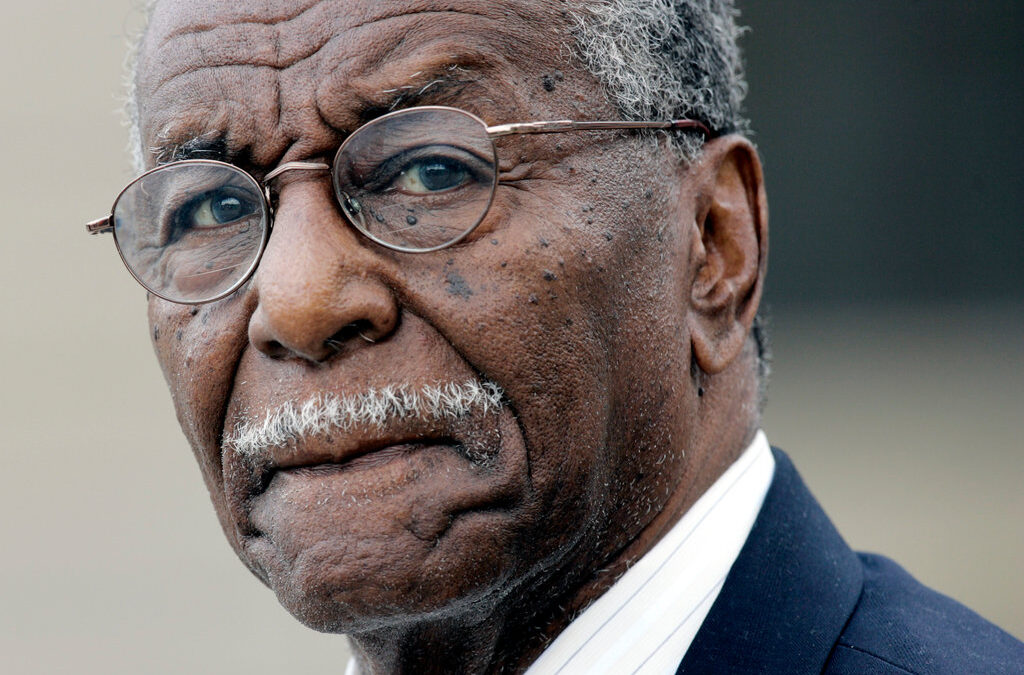
As pastor of Birmingham, Alabama’s First Baptist Church, Shuttlesworth organized the Alabama Christian Movement for Human Rights in 1956. He served as president of the group until 1969 and spearheaded the movement to integrate Birmingham’s schools, offices, and public facilities.
Shuttlesworth worked closely with Martin Luther King, Jr., establishing the Southern Christian Leadership Conference in 1958 and organizing the protests and actions in Birmingham during the spring of 1963. He was secretary of the SCLC from 1958 to 1970. He continues his campaign for racial and social justice as a minister in Cincinnati.
Slavery
1760?-1830. An African American slave in Virginia, Armistead sought and received permission from his master, William Armistead, to enlist under Gen. Marquis de Lafayette, a French officer who joined George Washington’s army during the American Revolution. Lafayette was seeking men to spy on British general Cornwallis and his army at Yorktown, Va. Impressed with Armistead’s intelligence, Lafayette had Armistead pose as a laborer looking for work. He was hired at Cornwallis’s camp and was able to relay information about Cornwallis’s plans to Lafayette. Armistead also earned the trust of Cornwallis, who asked him to spy on the Americans. As a double agent, Armistead was able to move freely between both camps. He provided Lafayette with critical information that enabled the general to intercept Cornwallis’s much-needed naval support and ultimately defeat Cornwallis at Yorktown in Oct. 1781, the decisive battle that ended the Revolution.
After the war, Armistead returned to the Armistead plantation as a slave. He met with Lafayette in 1784, when the general visited the United States. He wrote a glowing recommendation for his former spy, which Armistead used when he petitioned the Virginia House of Delegates for freedom. He was finally freed on New Year’s Day 1787. He assumed Lafayette as his surname and spent the rest of his life as a farmer in Virginia.
Slavery
1811 – 1852.b. Sierra Leone, Africa. Cinqu
