Black History, Education
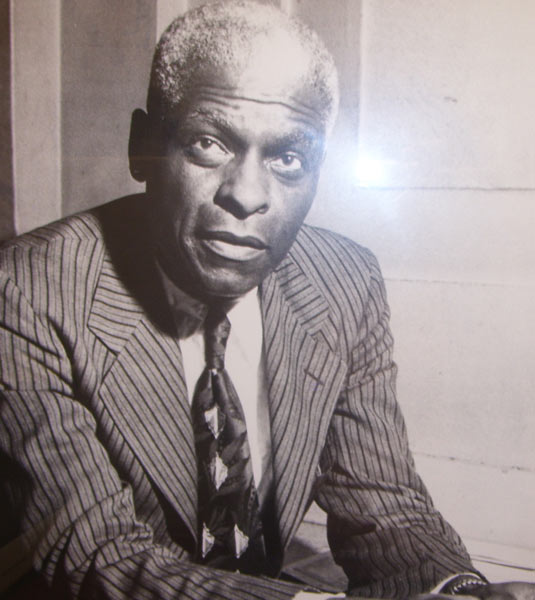
Dr. Benjamin E. Mays
Dr. Benjamin Elijah Mays was a giant in the Christian ministry and American education. He is remembered for his outstanding leadership and service as a teacher, preacher, mentor, scholar, author and activist in the civil rights movement.
Born August 1, 1894 near Epworth, South Carolina, he was a Phi Beta Kappa graduate of Bates College in Maine. He served as pastor of Shiloh Baptist Church from 1921-1923 in Atlanta, Georgia. Recruited by Morehouse President John Hope, Mays would join the faculty as a mathematics teacher and debate coach. He obtained a master’s degree in 1925 and in 1935 a Ph.D. degree from the University of Chicago. In 1934, he was appointed dean of the School of Religion at Howard University and served until 1940. (more…)
Black History, Education
Goals of THE PHOENIX SOCIETY of New York
The Liberator, 29 June 1833
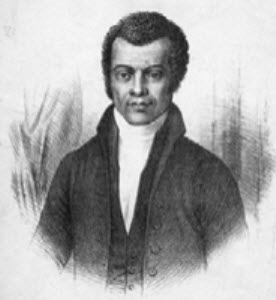
Rev. Christopher Rush, a founder of the Phoenix Society
In 1833 several black leaders in New York City formed the Phoenix Society to promote the education of the city’s African Americans – children and adults alike – through classes, lectures, lending libraries, job centers, and the mutual support needed to pursue these goals. The Society began several programs yet folded later in the decade for lack of funds. Other black mutual aid and literary societies in the city continued to pursue the goals envisioned by the Phoenix Society.
THIS SOCIETY WILL AIM TO ACCOMPLISH THEFOLLOWING OBJECTS: (more…)
Black History, Education

ASLAH
Established on September 9, 1915 by Dr. Carter G. Woodson, we are the Founders of Black History Month and carry forth the work of our founder, the Father of Black History.
We continue his legacy of speaking a fundamental truth to the world–that Africans and peoples of African descent are makers of history and co-workers in what W. E. B. Du Bois called, “The Kingdom of Culture.” ASALH’s mission is to create and disseminate knowledge about Black History, to be, in short, the nexus between the Ivory Tower and the global public. We labor in the service of Blacks and all humanity.
VISION
The vision of the Association for the Study of African American Life and History is to be the premier Black Heritage learned society with a strong network of national and international branches and partners whose diverse and inclusive membership will continue the Woodson legacy.
MISSION
The mission of the Association for the Study of African American Life and History (ASALH®) is to promote, research, preserve, interpret and disseminate information about Black life, history and culture to the global community.
STRUCTURE
The Association for the Study of African American Life and History (ASALH®) is head-quartered in Washington, D.C., temporarily 301 Rhode Island Ave, NW in Washington, DC. The Association operates as local, state, and international branches promoting greater knowledge of African American history through a program of education, research, and publishing.
Activities:
- Sets the annual theme for Black History Month. Establish Annual Black History Theme
- Publish Annual Black History Theme Learning Resource Package
- Sponsor annual Black History Kick-Off Events
- Host Annual Convention and Black History Month Luncheon
- Establish, nurture and grow ASALH Branches, including campus-based branches & youth guilds.
- Manage professional Speaker’s Bureau
- Establish national and local Partnerships
- Host Essay Contest for undergraduate and graduate students
- Promote oral, public and local history projects
- Commemorate the birth of our founder, Dr. Carter G. Woodson
More Information: https://asalh.org/
Black History, Education
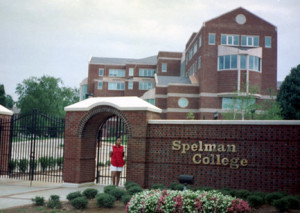
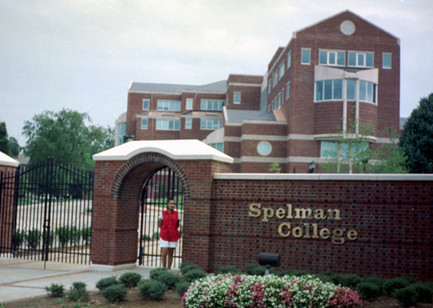
Spelman College in Atlanta, Georgia
Founded in 1881, Spelman College in Atlanta, Georgia, is a private, historically Black, four-year liberal arts college for African American women. For more than 118 years, the College has focused on professional development and leadership both inside and outside the classroom and Spelman has a long-standing tradition of cultivating leaders and providing activities that complement the classroom experience. The college repeatedly appears on “Best Of” lists for academic excellence and value.
With 1,900-plus students, Spelman is a predominately residential college with 12 on campus residence halls which house approximately 1,200 students. Other structures encompass Bessie Strong Hall, Camille Olivia Hanks Cosby, Ph.D. Academic Center, John D. Rockefeller Jr. Fine Arts Building, Sisters Chapel, Albert E. Manley College Center, and the Sally Sage McAlpin, Manley, and Howard-Harreld Halls, among many others on this 33-acre campus. (more…)
Black History, Education
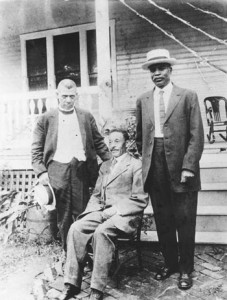
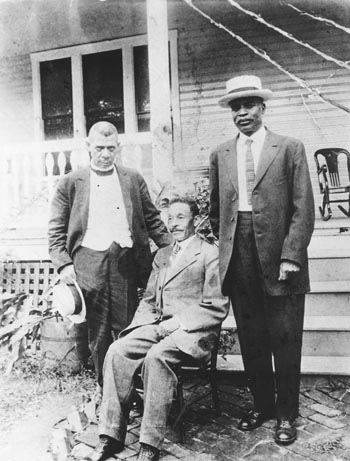
Booker T. Washington, Byrd Prillerman and Kelly Miller
If the student of American history would know what freedom has meant to the Negro race, let him study the life of a man like Byrd Prillerman, B.S., A.M., Litt.D., President Emeritus West Virginia Collegiate Institute and Superintendent of work among the Negroes of West Virginia S. S. Association. Having been born a slave on October 19, 1859 his life covers the whole period of the freedom of his race in America.
His rise from poverty and obscurity to a place of leadership and large usefulness as a citizen, not only makes a fascinating story, but it is in a way, typical of the progress of the race since Emancipation. Mr. Prillerman is a native of the Old Dominion, having been born in Franklin County, Va., the youngest of a family of seventeen children. His father, Franklin Prillerman, was a man of intelligence, energy, and initiative. He was a blacksmith and even before the Civil War had been sent into the Kanawha Valley to work at his trade. (more…)
Black History, Education, Firsts
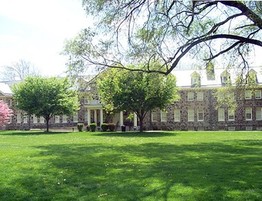
Cheyney University of Pennsylvania
Founded in 1837 as the Institute for Colored Youth, Cheyney University of Pennsylvania is known as the first institution for higher learning for African Americans. The founding of Cheyney University was made possible by Richard Humphreys, a Quaker philanthropist who bequeathed $10,000, one tenth of his estate, to design and establish a school to educate the descendents of the African race.
Born on a plantation in the West Indies, Richard Humphreys came to Philadelphia in 1764. Having witnessed the struggles of African Americans competing unsuccessfully for jobs due to the influx of immigrants, he became interested in their plight. In 1829, race riots heightened and it was that year Richard Humphreys wrote his will and charged thirteen fellow Quakers to design an institution: “…to instruct the descendents of the African Race in school learning, in the various branches of the mechanic Arts, trades and Agriculture, in order to prepare and fit and qualify them to act as teachers….” (more…)