Black History, Politics, Religion
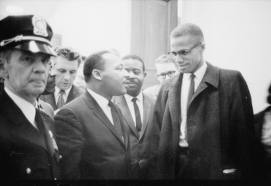 The Nation of Islam was founded in Detroit, Michigan in July, 1930 by Wallace Fard Muhammad, also known as W. D. Fard Muhammad (1877–1934). The N.O.I. teaches that W. Fard Muhammad is both the “Messiah” of Judaism and the Mahdi of Islam. Within one year, he had approximately 25,000 followers who knew him as Prophet W.D. Fard, at Mosque of Islam #1.
Fard’s assistant minister Elijah Muhammad succeeded him as head of the movement in 1934. Because of dissension within the Detroit temple, he moved to Chicago where he established Mosque No. 2. During World War II, he advised followers to avoid the draft, as he said the US did nothing for blacks. He was charged and convicted of violating the Selective Service Act and was jailed (1942–46). (more…)
Black History, Places
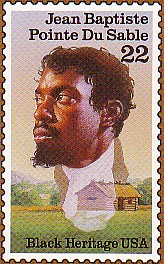
Jean-Baptist-Point Du Sable
(b. 1750?, St. Marc, Sainte-Domingue [now Haiti]–d. Aug. 28, 1818, St. Charles, Mo., U.S.), black pioneer trader and founder of the settlement that later became the city of Chicago.
Du Sable, whose French father had moved to Haiti and married a black woman there, is believed to have been a freeborn. At some time in the 1770s he went to the Great Lakes area of North America, settling on the shore of Lake Michigan at the mouth of the Chicago River, with his Potawatomi wife, Kittihawa (Catherine).
His loyalty to the French and the Americans led to his arrest in 1779 by the British, who took him to Fort Mackinac. From 1780 to 1783 or 1784 he managed for his captors a trading post called the Pinery on the St. Clair River in present-day Michigan, after which he returned to the site of Chicago. By 1790 Du Sable’s establishment there had become an important link in the region’s fur and grain trade.
In 1800 he sold out and moved to Missouri, where he continued as a farmer and trader until his death. But his 20-year residence on the shores of Lake Michigan had established his title as Father of Chicago.
Black History, Dance, Entertainment
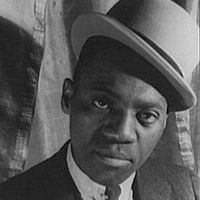
Bill Bojangles Robinson
Bill “Bojangles” Robinson (May 25, 1878 – November 25, 1949) was an American tap dancer and actor of stage and film. Audiences enjoyed his understated style, which eschewed the frenetic manner of the jitterbug in favor of cool and reserve; rarely did he use his upper body, relying instead on busy, inventive feet, and an expressive face.
A figure in both the black and white entertainment worlds of his era, he is best known today for his dancing with Shirley Temple in a series of films during the 1930s, and for starring in the 1943 musical Stormy Weather, loosely based on Robinson’s own life.
Black History, Law
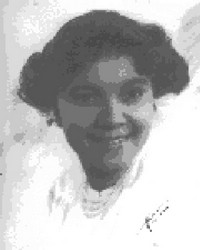
Muriel O. Farmer
Born December 2, 1917 Muriel, the daughter of a Chicago policeman, was one of the first women to graduate from the prestigious John Marshall Law School in Chicago, IL. After graduating from the University of Illinois in Champaign-Urbana at the age of 21, she worked as a social worker while studying law. After passing the bar Muriel went into the legal profession full time and spent over 50 years practicing law, becoming one of the best known divorce lawyers in the state.
Oddly enough, two of her best friends, both black women, were also John Marshall graduates. Her cousin went on to become an acclaimed criminal lawyer (Bernice Z. Leaner) and her best friend went on to be Chicago’s first Black Alderwoman (Anna Langford).
Black History, The Arts
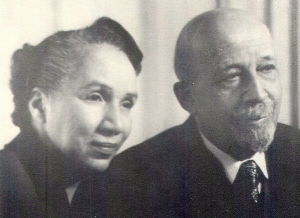
Shirley Graham DuBois and her Husband, W.E.B. DuBois
was born November 11, 1896 in Indianapolis, Indiana on a farm which had been part of the underground railroad and had served as a stopping point for runaway slaves on their way to Canada. It belonged to her grandfather, a former slave who had been freed prior to the Civil War.
Over the years she studied at the Sorbonne, Oberlin, and attended Yale on a Rosenwald Fellowship in Creative Writing. She received both her bachelor’s degree and a master’s degree in music from Oberlin. After receiving her MA degree, she was appointed Head of the Fine Arts Department at Tennessee State College. (more…)
Black History, Other
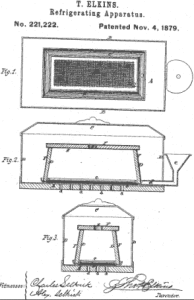
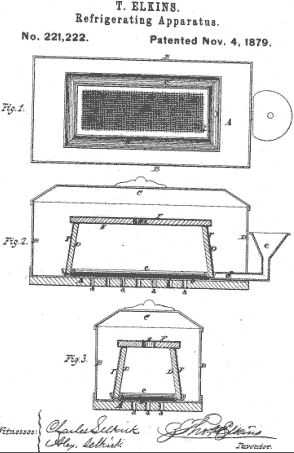
patent #221,22
Thomas Elkins designed a device that helped with the task of preserving perishable foods by way of refrigeration. At the time, the common way of accomplishing this was by placing items in a large container and surrounding them with large blocks of ice. Unfortunately, the ice generally melted very quickly and the food soon perished.
Elkins’ device utilized metal cooling coils which became very cold and would cool down items which they surrounded. The coils were enclosed within a container and perishable items were placed inside. The coils cooled the container to a temperature significantly lower than that inside of a room thereby keeping the perishable items cool and fresh for longer periods of time.
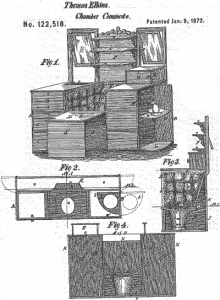
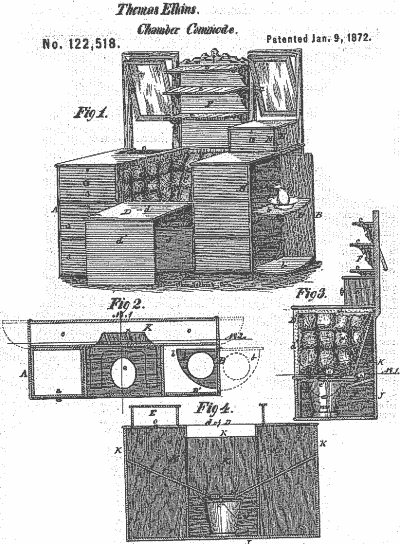
chamber commode
Elkins patented this refrigerated apparatus on November 4, 1879 and had previously patented a chamber commode in 1872 and a dining, ironing table and quilting frame combined in 1870.
An improved chamber commode (toilet) was patented by Thomas Elkins on January 9, 1872. Elkins’ commode was a combination bureau, mirror, book-rack, washstand, table, easy chair, and chamber stool. It was a very unusual piece of furniture.