Black History, History, Other
Charles H. Wesley
12-02 marks the birthday of Charles Harris Wesley in 1891. He was an African-American historian, educator, and minister who was an early proponent of African-American studies.
Born in Louisville, Kentucky, Charles Wesley attended public schools in his hometown of Louisville, Kentucky and then went on to receive a B. A. at Fisk University in 1911, an M. A. in economics at Yale University in 1913, and a Ph.D. from Harvard University in 1925. Wesley’s doctorate in history was the third awarded by Harvard to an African-American. Wesley served on the Howard University faculty from 1913 to 1942. (more…)
Black History, Civil Rights
 Smith v. Allwright , 321 U.S. 649 (1944), was a landmark decision of the United States Supreme Court with regard to voting rights and, by extension, racial desegregation. It overturned the Texas state law that authorized the Democratic Party to set its internal rules, including the use of white primaries. The court ruled that the state had allowed discrimination to be practiced by delegating its authority to the Democratic Party. This affected all other states where the party used the rule.
The Democrats had excluded minority voter participation by this means, another device for legal disfranchisement of blacks across the South beginning in the late 19th century.
Black History, Education
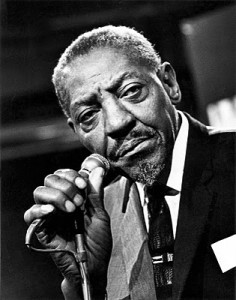
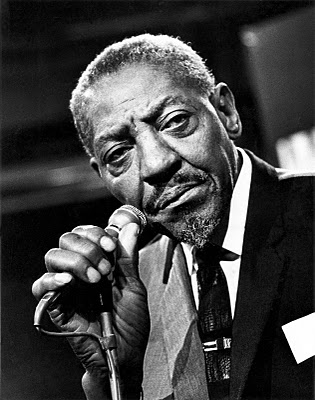
Sonny Boy Williamson II
Alex Miller (December 5, 1912 – May 25, 1965), known professionally as Sonny Boy Williamson, was an American blues harmonica player, singer and songwriter, from Mississippi. He is acknowledged as one of the most charismatic and influential blues musicians, with considerable prowess on the harmonica and creative songwriting skills. He recorded successfully in the 1950s and 1960s, and had a direct influence on later blues and rock performers.
His head stone found in or near Tutwiler, Mississippi, lists his name as Aleck Miller, his birth date as March 11, 1908 and his date of death as June 23, 1965.
Black History, Other, Religion
 Eliza Ann Gardner is regarded as the “mother” of the African Methodist Episcopal Zion (AMEZ) Missionary Society and was one of New England’s most tenacious defenders of women’s equality in religious matters.
She was born in New York City on May 28, 1831, the daughter of James and Eliza Gardner. When she was young, the family moved to the predominantly black West End section of Boston, where her father enjoyed a profitable career as a contractor for sailing vessels. His work made it possible for Gardner to enjoy a comfortable childhood, but she quickly learned that many others of her race were less fortunate, and was taught that she had an obligation to help them. Her family was active in the local African Methodist Episcopal Church, and their home served as a station for the Underground Railroad, which smuggled runaway slaves from the South to freedom.
Gardner’s interest in slavery intensified because of her education at the only public school for black children in the city, which was taught by abolitionist teachers. As a result, she became acquainted with many nationally famous abolitionist leaders. An excellent student, Gardner earned a number of scholarships. However, as few black women at the time were able to pursue higher education or professional careers, she learned the art of dressmaking to support herself once she finished school. (more…)
Black History, Music
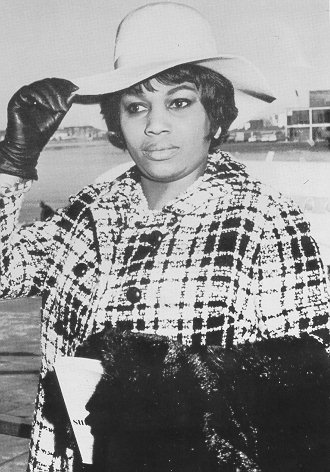
Leontyne Price
Soprano Leontyne Price was born Mary Violet Leontine Price in Laurel, Mississippi, on February 10, 1927, the daughter of James and Katherine Price. Leontine was a very musical child and became a local success at an early age, singing at local weddings and funerals. After receiving local training, she sang in her first recital on December 17, 1943.
After studying at Wilberforve College (now Central State University) in Ohio, Leontine enrolled in the Juilliard School of Music in New York. She began studying with Florence Page Kimball and, shortly after changing the spelling of her name to “Leontyne”, she was accepted into the Juilliard Opera Workshop. Much of Leontyne’s musical education was supported by a wealthy family from Laurel, Alexander and Elizabeth Chisolm.
At Juilliard, she appeared in 1952 as Nella in Gianni Schicchi and and, later that year, as Mistress Ford in Falstaff. Also in 1952, she was invited by composer Virgil Thompson to appear as Saint Cecilia in a revival of his Four Saints in Three Acts in New York and Paris. (more…)
Black History, Politics, Slavery
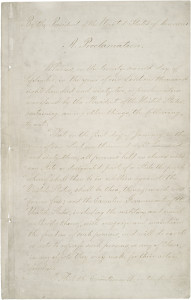
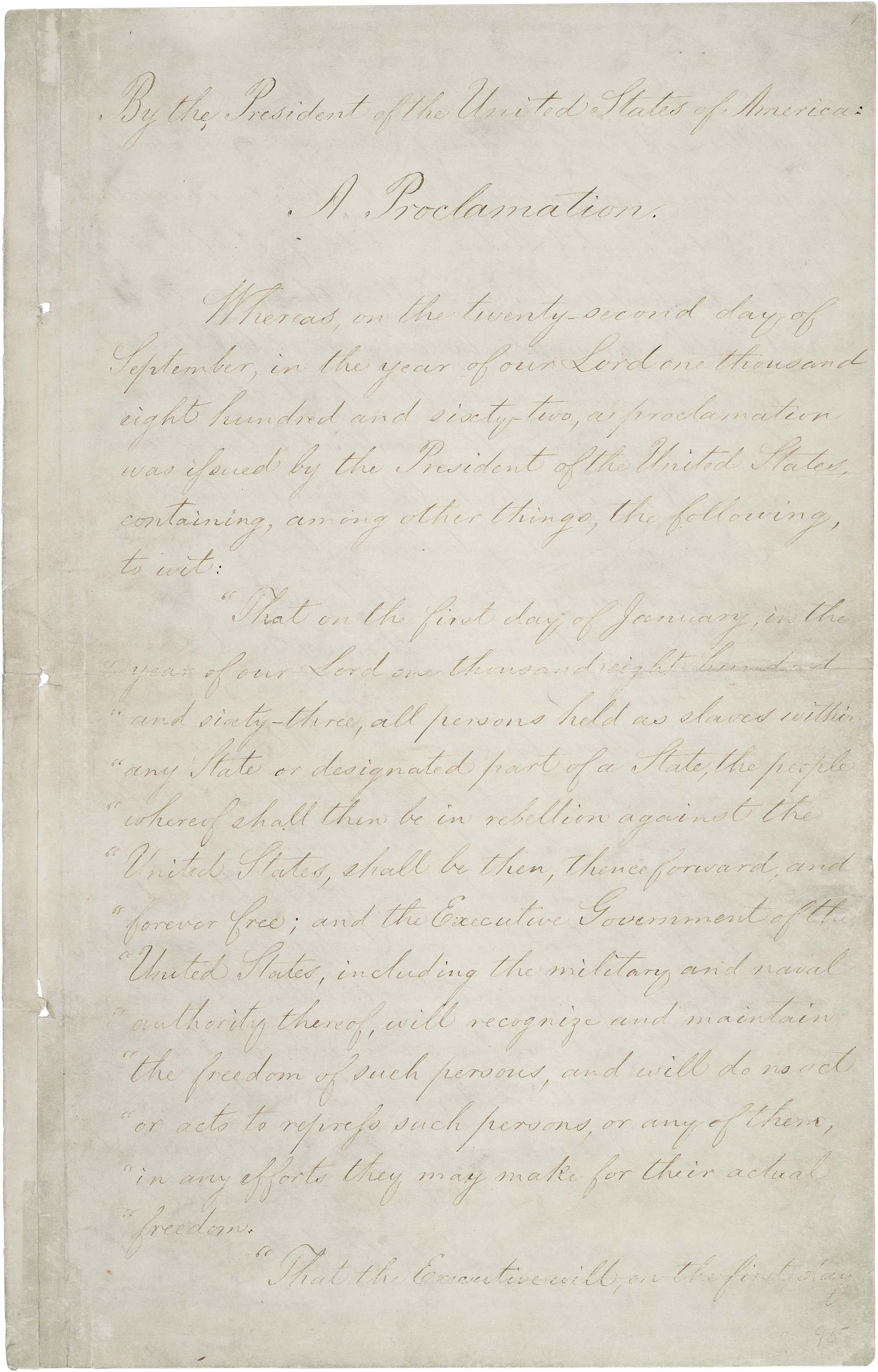
Emancipation Proclamation
President Abraham Lincoln issued the Emancipation Proclamation on January 1, 1863, as the nation approached its third year of bloody civil war. The proclamation declared “that all persons held as slaves” within the rebellious states “are, and henceforward shall be free.”
Despite this expansive wording, the Emancipation Proclamation was limited in many ways. It applied only to states that had seceded from the Union, leaving slavery untouched in the loyal border states. It also expressly exempted parts of the Confederacy that had already come under Northern control. Most important, the freedom it promised depended upon Union military victory.
Although the Emancipation Proclamation did not end slavery in the nation, it captured the hearts and imagination of millions of Americans and fundamentally transformed the character of the war. After January 1, 1863, every advance of federal troops expanded the domain of freedom. Moreover, the Proclamation announced the acceptance of black men into the Union Army and Navy, enabling the liberated to become liberators. By the end of the war, almost 200,000 black soldiers and sailors had fought for the Union and freedom. (more…)