Black History, Firsts, Law
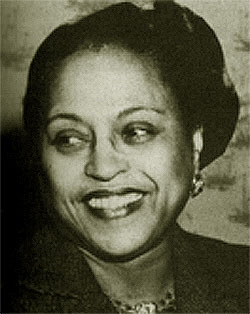
Edith Sampson
On October 13, 1898, Edith Sampson was born in Pittsburgh, the first black woman elected judge to a municipal court. She was born Edith Spurlock, one of seven children.
Her father, Louis Spurlock, earned $75 per month as a shipping clerk in a cleaning, pressing, and dyeing business. Her mother, Elizabeth Spurlock, worked at home making buckram hat frames and twisting switches of false hair.
Edith graduated from Peabody High School, and three years later married Rufus Sampson, a field agent for the Tuskegee Institute. She also attended the New York School of Social Work. There, one of her instructors was George W. Kirchwey, also a professor at Columbia University Law School. After distinguishing herself in his criminology class, he told her she had the talent to be a lawyer. (more…)
![Anna Ella Carroll]()
Black History, Literature, Military
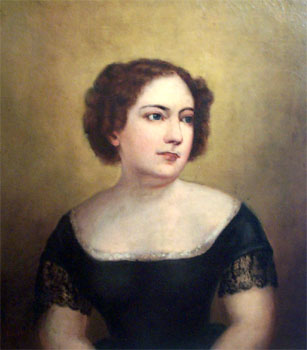
Anna Ella Carroll
More than a century following her death, after being ignored, oppressed, and–literally–erased from history, Anna Ella Carroll is finally getting the last word. Carroll was an intriguing and atypical 19th century woman who emerged from the male-dominated realm of war, politics, and diplomacy.
As a key military strategist, Presidential advisor, and “unofficial” member of Abraham Lincoln’s Cabinet, Carroll was probably the most powerful woman in American during the Civil War. Biographers note that she could “scheme, connive, and maneuver as well as any man.” (more…)
Black History, Military
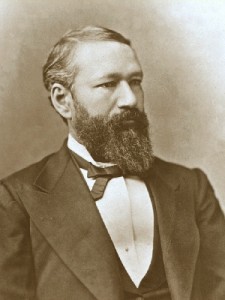
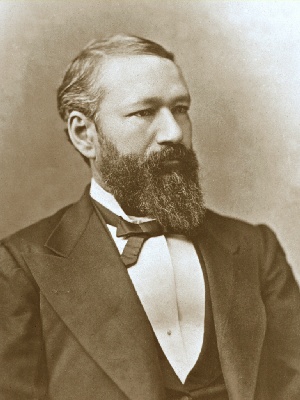
Pinckney Benton Stewart Pinchback
(b. May 10, 1837, Macon, Ga., U.S.–d. Dec. 21, 1921, Washington, D.C.), freeborn black who was a Union officer in the American Civil War and a leader in Louisiana politics during Reconstruction (1865-77).
Pinchback was one of 10 children born to a white Mississippi planter and a former slave–whom the father had freed before the boy’s birth. When the father died in 1848, the family fled to Ohio, fearing that white relatives might attempt to re-enslave them.
Pinchback found work as a cabin boy on a canal boat and worked his way up to steward on the steamboats plying the Mississippi, Missouri, and Red rivers. After war broke out between the states in 1861, he ran the Confederate blockade on the Mississippi to reach Federal-held New Orleans; there he raised a company of black volunteers for the North, called the Corps d’Afrique. When he encountered racial discrimination in the service, however, he resigned his captain’s commission. (more…)
Black History, Music
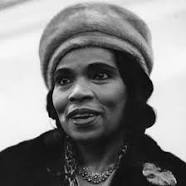
Marion Anderson
Marian Anderson (February 27, 1897 – April 8, 1993) was an African-American contralto and one of the most celebrated singers of the twentieth century. Music critic Alan Blyth said “Her voice was a rich, vibrant contralto of intrinsic beauty.” Most of her singing career was spent performing in concert and recital in major music venues and with famous orchestras throughout the United States and Europe between 1925 and 1965.
Although offered roles with many important European opera companies, Anderson declined, as she had no training in acting. She preferred to perform in concert and recital only. She did, however, perform opera arias within her concerts and recitals. She made many recordings that reflected her broad performance repertoire of everything from concert literature to lieder to opera to traditional American songs and spirituals. (more…)
Black History, Education
Goals of THE PHOENIX SOCIETY of New York
The Liberator, 29 June 1833
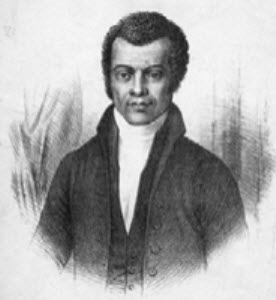
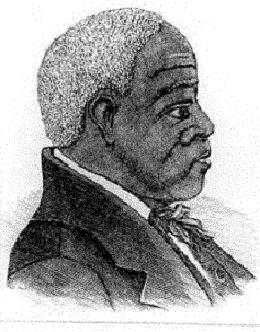
Rev. Christopher Rush, a founder of the Phoenix Society
In 1833 several black leaders in New York City formed the Phoenix Society to promote the education of the city’s African Americans – children and adults alike – through classes, lectures, lending libraries, job centers, and the mutual support needed to pursue these goals. The Society began several programs yet folded later in the decade for lack of funds. Other black mutual aid and literary societies in the city continued to pursue the goals envisioned by the Phoenix Society.
THIS SOCIETY WILL AIM TO ACCOMPLISH THEFOLLOWING OBJECTS: (more…)
Black History, Events
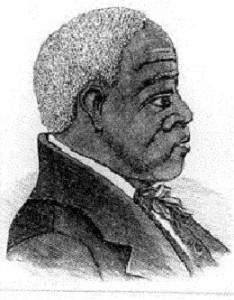
Rev. Andrew Bryan
Andrew Bryan, the founder of the First African Baptist Church, was born enslaved in 1737, on a plantation outside of Charleston, South Carolina. He served as coachman and body servant to Jonathan Bryan, who along with his brother Hugh and several other planters, was arrested for preaching to slaves. Jonathan Bryan’s plantation became the center of efforts by dissenting group of planters to evangelize their slaves.
In 1782, Andrew was converted by the preaching of George Liele, the first black Baptist in Georgia, who was licensed to preach to slaves along the Savannah River. Liele baptized Andrew and his wife Hannah. When Liele and hundreds of other blacks left with the British later that year, Andrew continued to preach to small groups outside of Savannah. With his master’s encouragement, he built a shack for his small flock, which included a few whites. Although he brought hundreds into his church, 350 others could not be baptized because of their masters’ opposition. (more…)