Black History
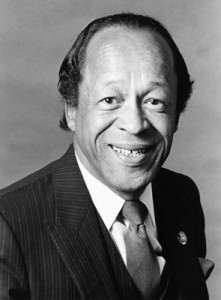
Gus Savage
Gus Savage ascended to Congress as an outsider to elective politics. A veteran civil rights activist and pioneer African-American journalist, he used his strong community ties to earn a seat in the U.S. House from South Chicago.
During his 12 years in Congress, Savage’s flamboyant personality and militant approach to highlighting racial inequalities in his district and around the nation made headlines and often provoked controversy.1 “I value my independence,” Savage avowed. “And I view struggle as desirable. I don’t crave acceptance. I march to my own tune. If the machine doesn’t like it, that’s tough. If my colleagues don’t like it, that’s also tough.”2 (more…)
Black History, Government
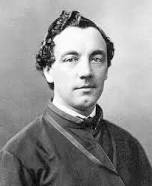
Father Patrick Francis Healy
Patrick Francis Healy (February 27, 1830 – January 10, 1910) was the 29th President of Georgetown University known for expanding the school following the American Civil War. He was accepted as and identified as Irish-American. Healy Hall, a National Historic Landmark, was constructed during Healy’s tenure and is named after him.
In the 1960s the history of Healy’s mixed-race ancestry became more widely known, and he was recognized as the first American of African ancestry to earn a PhD; the first to become a Jesuit priest; and the first to be president of a predominantly white college.
Black History, Science
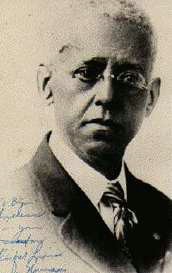
Lewis Howard Latimer
Lewis Howard Latimer (1848-1928), inventor, scientist; born in Chelsea, Mass. Latimer served in the Union Navy in 1863, studied drafting, and later invented and patented an incandescent light bulb with a carbon filament in 1881.
He served as an engineer for the Edison Company for many years, and while with Edison supervised the installation of the electric light system in New York, N.Y.; Philadelphia, Pa.; Montreal, Canada; and London, England.
Latimer wrote the first textbook on the lighting system used by the Edison Company, and he was employed by Alexander Graham Bell to make patent drawings for the first telephone. He also served as chief draftsman for General Electric and Westinghouse companies. (more…)
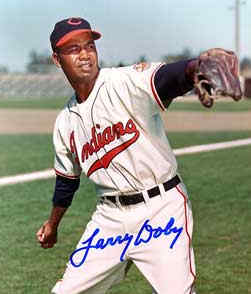
Black History, Firsts, Sports
Born on Dec. 13, 1923, in Camden, S.C., Doby grew up in New Jersey. He didn’t start out in life longing for a career in professional baseball. He once said that he grew up wanting to teach and coach in high school.
But in 1942, a Negro League umpire recommended to the owner of the Newark Eagles that Doby, still in high school at the time, get a tryout. “They gave me a tryout, and I made the team,” Doby said. “That’s how I got involved in Negro League Baseball.”
Doby proved he was star material early in his Negro League days. He was an All-Star second baseman whose baseball credentials might have been better than Robinson’s. (more…)
Black History, Education
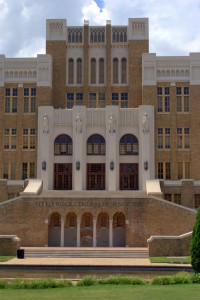
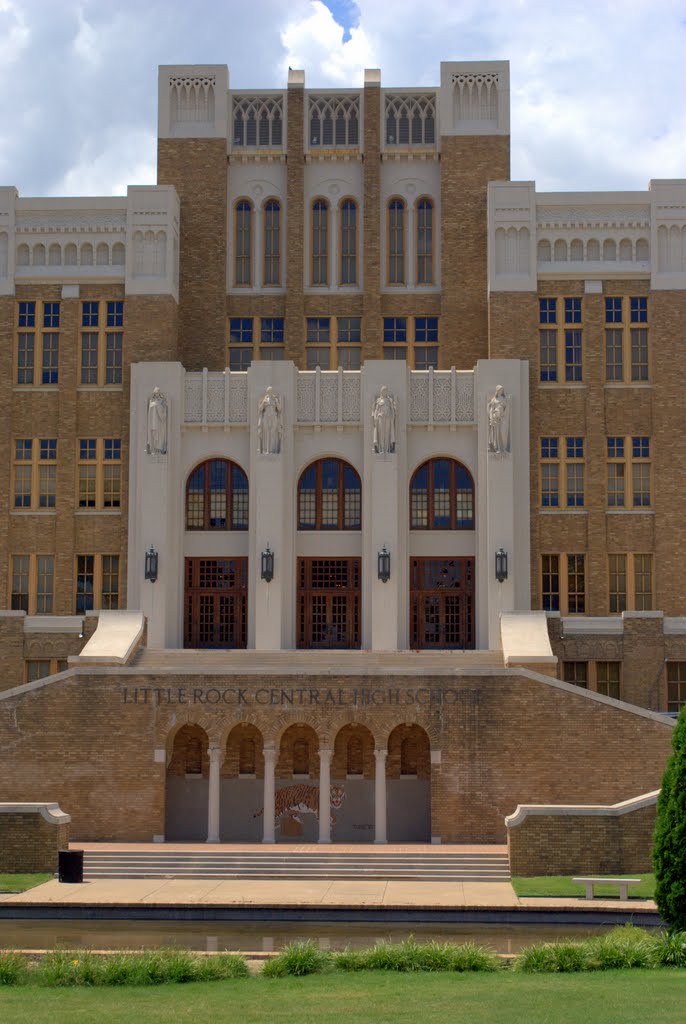
Little Rock Central HS
Three years after the U.S. Supreme Court ruled unanimously in Brown v. Board of Education that separate educational facilities are inherently unequal, nine African American students—Minnijean Brown, Terrance Roberts, Elizabeth Eckford, Ernest Green, Thelma Mothershed, Melba Patillo, Gloria Ray, Jefferson Thomas, and Carlotta Walls—attempted to integrate Central High School in Little Rock, Arkansas.
The students, known as the Little Rock Nine, were recruited by Daisy Bates, president of the Arkansas branch of the National Association for the Advancement of Colored People (NAACP). As president of the Montgomery Improvement Association, Martin Luther King wrote President Dwight D. Eisenhower requesting a swift resolution allowing the students to attend school. (more…)
Black History, Education
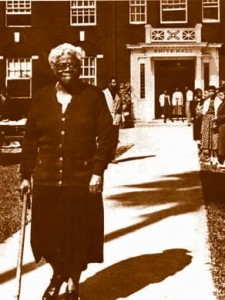
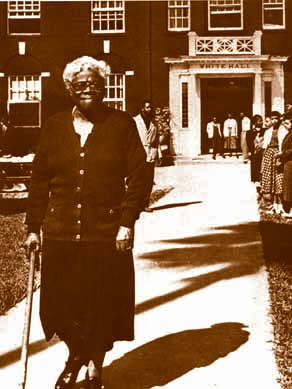
Dr. Mary Bethune in front of White Hall on the campus of Bethune-Cookman College in Daytona Beach, Florida
Mary McLeod Bethune founded the Daytona Educational and Industrial Training School in 1904. The school underwent several stages of growth and development through the years and in 1923, it merged with the Cookman Institute of Jacksonville, Florida and became a co-ed high school. A year later in 1924, it became affiliated with the Methodist Church. By 1931, the school had become a junior college.
The school became a four-year college in 1941 when the Florida Board of Education approved a 4-year baccalaureate program in Liberal Arts and Teacher Education. The name was changed to Bethune-Cookman College.On February 14, 2007, the Board of Trustees approved the name Bethune-Cookman University after the institution established its first graduate program.
In October 2010 the American Association of University Professors accused the university administration of improperly dismissing tenured members of the faculty—some for alleged sexual harassment (but, in the opinion of the AAUP, without due process), others for “budgetary reasons” but without a declaration of “financial exigency”. The university responded saying that the AAUP report contained errors and a one-sided view. (more…)