Black History, Medicine
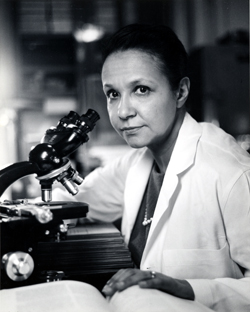
 A scientist and educator, Dr. Charles Buggs, of Brunswick, Georgia, conducted special research on why some bacteria (germs) do not react to certain medicines. In several articles, he presented his ideas on penicillin and skin grafting, and the value of chemicals in treating bone fractures.
In 1944, he contributed some of the results of his research to the world through 12 studies he helped to write. Three years later he wrote an important article on how to use germ-killing chemicals (antibiotics) to prevent and cure certain diseases. he also taught college biology, and made studies and suggestions on premedical education for African Americans. Dr. Buggs’ research and teaching contributed to a better understanding of health and of the human body.
Black History, Education
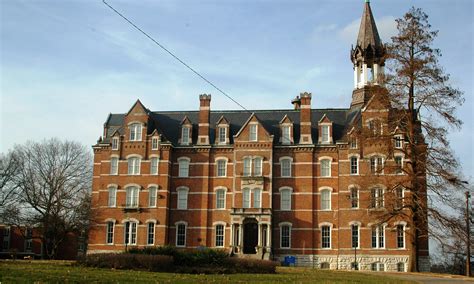 “In 1865, barely six months after the end of the Civil War and just two years after the Emancipation Proclamation, three men”John Ogden, the Reverend Erastus Milo Cravath, and the Reverend Edward P. Smith ”established the Fisk School in Nashville.
The school was named in honor of General Clinton B. Fisk of the Tennessee Freedmen’s Bureau, who provided the new institution with facilities in former Union Army barracks near the present site of Nashville’s Union Station. In these facilities Fisk convened its first classes on January 9, 1866. The first students ranged in age from seven to seventy, but shared common experiences of slavery and poverty ” and an extraordinary thirst for learning. (more…)
Black History, Space
Major Robert H. Lawrence, Jr.
Major Lawrence was born on October 2, 1935, in Chicago, Illinois. At the age of 16, he was a graduate in the top 10% of Englewood High School. At the age of 20, he became a graduate of Bradley University with a Bachelor’s Degree in Chemistry. In addition, while a student at Bradley University, he distinguished himself as Cadet Commander of the Bradley Air Force Reserve Officer Training Corps and, upon graduation, received the commission of Second Lieutenant in the Air Force Reserve Program.
At the age of 21 he had become an Air Force pilot after completing flight training at Malden Air Force Base.
At the age of 22, he married the former Ms. Barbara Cress, the daughter of Dr. and Mrs. Henry Cress of Chicago. As he approached the age of 26, he had completed an Air Force assignment as an instructor pilot in the T-33 training aircraft for members of the German Air Force.
(more…)
Black History
 Charles L. Reason was born July 21, 1818 in New York City to West Indies immigrants Michiel and Elizabeth Reason. Charles attended the African Free School along with his brothers Elmer and Patrick (both who are important historical figures in their own right).
An excellent student in mathematics, Reason became an instructor in 1832 at the school at age fourteen (this became a striking matter for the news), receiving a salary of $25 a year. He used some of his earnings to hire tutors to improve his knowledge.
Later, he decided to enter the ministry but was rejected because of his race by the General Theological Seminary of the Protestant Episcopal church in New York City. (more…)

Black History, Inventions
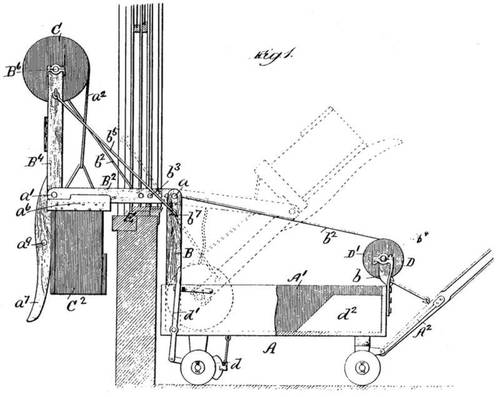
 Chicago inventor Daniel McCree invented a portable fire escape that was designed for the interior of buildings.
McCree’s fire escape could roll and had a carriage that could be raised and lowered.
It was intended to be part of a building’s own fire prevention equipment and stored on location.
D. McCree improved on the fire-escape used in bigger buildings and created a portable wooden fire escape that could be attached to a home
McCree patented his portable fire escape on November 11, 1890 and it is the basis for models used today.
(U. S. Patent # 440,322 )
- Portable Fire Escape by Daniel McCree
Black History, Medicine
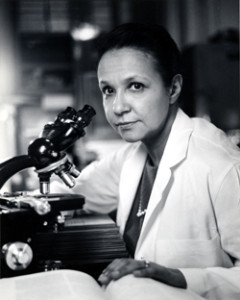
Jane Cooke Wright
Jane Cooke Wright was born in New York City in 1919. Her father, Corinne Cooke Wright is well known for his cancer research, and being a civil rights leader and cancer researcher.
Jane graduated from Smith College in 1942. She graduated from New York Medical School in 1945. She interned and did her residency at Bellevue Hospital and Harlem Hospital respectfully from 1945 to 1947.
Wright worked with her father at the Harlem Cancer Research Foundation from 1947 to 1952. She researched cancer chemotherapy here. Jane was named director of Harlem Hospital Cancer Research Foundation in 1952. She became an instructor and director of cancer research at the New York Medical School. Wright was named associate dean of the school and became the first black physician to do so. Currently she is a professor emeritus at the school.