Black History, Firsts, Sports
Earl Lloyd
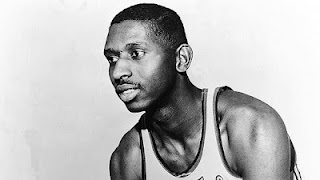
Jackie Robinson, the man who broke Major League Baseball’s color line, ranks as a national icon. Filmmaker Ken Burns go so far as to compare Robinson to Thomas Jefferson. Earl Lloyd, the first African-American to play in the National Basketball Association, ranks as a largely overlooked pioneer.
Lloyd started at power forward – with an emphasis on power – for the 1954-55 NBA champion Syracuse Nationals, who moved to Philadelphia in 1963 to become the 76ers. Lloyd now lives in a retirement community in Crossville, Tenn. He’s a major, if obscure, figure in NBA history.
He doesn’t mind his low profile. Lloyd has no interest in standing beside Robinson in the nation’s memory. Standing there would only make him nervous. (more…)
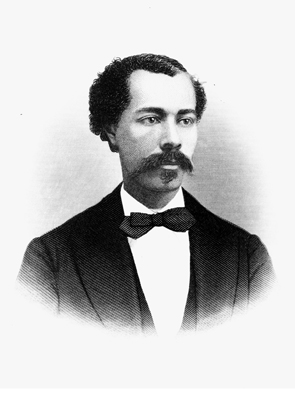
Black History, Government
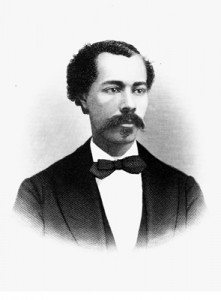
Representative, 1873-1877, Republican from Mississippi
Representative, 1882-1883, Republican from Mississippi
The only African-American Representative from Mississippi for a century, following a quick rise in politics at a young age, John Roy Lynch fought to maintain Republican hegemony in his state in the face of violent Democratic opposition. A veteran of the Civil War and, later, the Spanish-American War, Lynch emphasized his rights as an American citizen on the House Floor.
“It is certainly known by southern as well as northern men that the colored people of this country are thoroughly American,” he declared. “Born and raised upon American soil and under the influence of American institutions; not American citizens by adoption, but by birth.” (more…)
Black History, Education
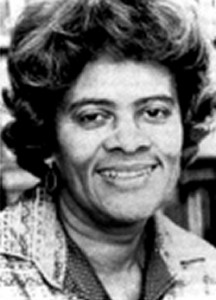
Evelyn Boyd Granville
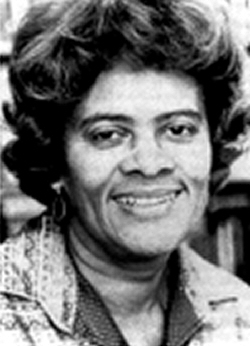
Granville was born in Washington, D.C., on May 1, 1924. Her father, William Boyd, worked as a custodian in their apartment building; he did not stay with the family, however, and Granville was raised by her mother, Julia Walker Boyd, and her mother’s twin sister, Louise Walker, both of whom worked as examiners for the U.S. Bureau of Engraving and Printing.
Granville and her sister Doris, who was a year and a half older, often spent portions of their summers at the farm of a family friend in Linden, Virginia. Evelyn Boyd grew up in Washington, D.C. and attended the segregated Dunbar High School (from which she graduated as valedictorian) maintained high academic standards. Several of its faculty held degrees from top colleges, and they encouraged the students to pursue ambitious goals. (more…)
Black History, Medicine
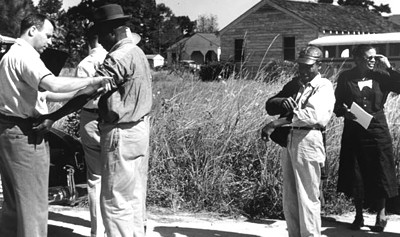
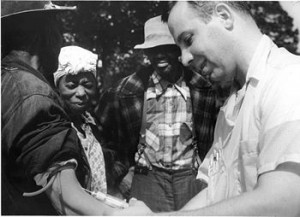
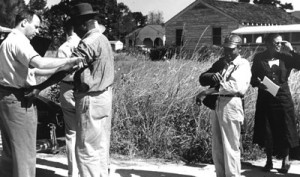 From 1932 to 1972, 399 poor black sharecroppers in Macon County, Alabama were denied treatment for syphilis and deceived by physicians of the Unites States Public Health Service. As part of the Tuskegee Syphilis Study, designed to document the natural history of the disease, these men were told that they were being treated for “bad blood.”
In fact, government officials went to extreme lengths to insure that they received no therapy from any source. As reported by the New York Times on 26 July 1972, the Tuskegee Syphilis Study was revealed as “the longest nontherapeutic experiment on human beings in medical history.” (more…)
Black History, Other
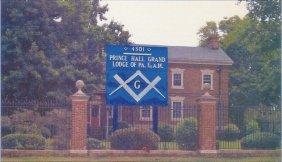
The First black Masonic Lodge
The First black Masonic Lodge was founded at Prince Hall, Boston, in 1787. It was named after Prince Hall, who is recognized as the Father of Black Masonry in the United States. He made it possible for African Americans to also be recognized and enjoy all privileges of Free and Accepted Masonry.
Many rumors of the birth of Prince Hall have arisen. Few records and papers have been found of him either in Barbados where it was rumored that he was born, but no record of birth, by church or state, has been found there, and none in Boston. All 11 countries of the day were searched and churches with baptismal records were examined without a find of the name of Prince Hall. (more…)
Black History, Inventions
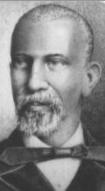
Lewis Temple
Lewis Temple was the inventor of a whaling harpoon, known as “Temple’s Toggle” and “Temple’s Iron” that became the standard harpoon of the whaling industry in the middle of the 19th century. Lewis Temple was a skilled blacksmith, not a whaler. He had never even been to sea. Temple was born a slave in Richmond, Virginia, in 1800, and arrived in New Bedford, Massachusetts in 1829.
By 1836, Temple was one of the 315,000 free black people in the United States and a successful businessman who operated a whale craft shop on the New Bedford waterfront. Temple, a well-known citizen of New Bedford, was working as a blacksmith to support his wife, Mary Clark, whom he married in 1829, and their three children. In 1845, Temple was able to open a larger store. (more…)