Black History, Slavery
 1727 – 1771. Ashby was the son of a black man and Mary Ashby, a white woman who was an indentured servant. He was born free because in Colonial times a child inherited his or her mother’s social status. But under Virginia law, he was also indentured until age 31 and was prohibited from meeting with slaves. Ashby worked as a messenger for Virginia governor Norborne Berkeley and as a carpenter. He acquired material goods, such as a silver watch, books, and candle-making equipment, that seemed out of reach of most black colonists.
He married Ann Ashby, a slave of a bricklayer, and purchased her and their two enslaved children, John and Mary, in 1769 for 150 pounds. Although he owned them, Ashby had to petition the government to win their freedom. John and Mary attended Williamsburg’s Bray School.
Black History, Sports
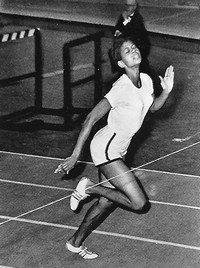
Wilma Rudolph
1940-1994 Born in St. Bethlehem, Tennessee, Wilma Rudolph was the first female American runner to win three gold medals in the Olympic Games. She earned the title of “World’s Fastest Woman” by winning the 100-meter dash and the 200-meter dash and anchoring the 400-meter relay at the 1960 Olympics in Rome.
These achievements would be considered remarkable by any standard, but in light of the fact that as a child Rudolph suffered an attack of polio and scarlet fever that left her unable to walk without braces or orthopedic shoes until age twelve, they are amazing. Rudolph’s phenomenal accomplishments helped remove barriers to women’s participation in track and field events. (more…)
Black History, The Arts
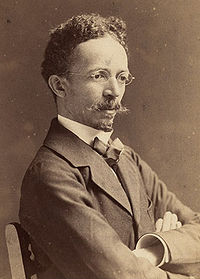
Henry Ossawa Tanner
The son of a minister in the African Methodist Episcopal Church, Henry Ossawa Tanner was raised in an affluent, well educated African-American family. Although reluctant at first, Tanner’s parents eventually responded to their son’s unflagging desire to pursue an artistic career and encouraged his ambitions. In 1879, Tanner enrolled at the Pennsylvania Academy of Fine Arts, where he joined Thomas Eakins’s coterie.
Tanner moved to Atlanta in 1889 in an unsuccessful attempt to support himself as an artist and instructor among prosperous middle class African-Americans. Bishop and Mrs. Joseph C. Hartzell arranged for Tanner’s first solo exhibition, the proceeds from which enabled the struggling artist to move to Paris in 1891. Illness brought him back to the United States in 1893, and it was at this point in his career that Tanner turned his attention to genre subjects of his own race. (more…)
Black History, Events
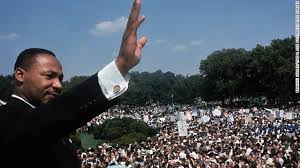
March On Washington 1963
On August 28, 1963, more than 200,000 Americans gathered in Washington, D.C., for a political rally known as the March on Washington for Jobs and Freedom. Organized by a number of civil rights and religious groups, the event was designed to shed light on the political and social challenges African Americans continued to face across the country.
The march, which became a key moment in the growing struggle for civil rights in the United States, culminated in Martin Luther King Jr.’s “I Have a Dream” speech, a spirited call for racial justice and equality.

Black History, Events, Politics

The Rainbow PUSH Coalition is the result of a merger between Operation PUSH and the Rainbow Coalition. Established in 1971 by Rev. Jackson, People United to Save Humanity (later changed from “Save” to “Serve”)–PUSH, was an organization dedicated to improving the economic conditions of black communities across the United States. In the 1970’s, PUSH expanded into areas of social and political development using direct action campaigns, a weekly radio broadcast, and awards that honored prominent blacks in the U.S. and abroad. Through Operation PUSH, Rev. Jackson established a platform from which to protect black homeowners, workers and businesses. (more…)
Black History, Music

Eubie Blake
Eubie Blake was one of the most important figures in early-20th-century African-American music, and one whose longevity made him a storehouse of the history of ragtime and early jazz music and culture. Born in Baltimore in 1883, Blake began playing piano professionally when he was 16; he wrote his first composition, “Sounds of Africa,” (later retitled “Charleston Rag”) around the same time. His career did not really take off until he met Noble Sissle in 1915. Together, Blake and Sissle wrote many hits. Blake also collaborated with Andy Razaf (on “Memories of You”), Henry Creamer, and other writers, composing more than 350 songs.
Blake, Sissle, and Europe began collaborating on the musical Shuffle Along in 1916, but were interrupted by World War I and Sissle and Europe’s military service overseas. Europe and Sissle returned to the United States in 1919. Europe died shortly after returning from Europe; Blake and Sissle continued working on the musical until its premiere in 1921. (more…)

 1727 – 1771. Ashby was the son of a black man and Mary Ashby, a white woman who was an indentured servant. He was born free because in Colonial times a child inherited his or her mother’s social status. But under Virginia law, he was also indentured until age 31 and was prohibited from meeting with slaves. Ashby worked as a messenger for Virginia governor Norborne Berkeley and as a carpenter. He acquired material goods, such as a silver watch, books, and candle-making equipment, that seemed out of reach of most black colonists.