Black History, The Arts
George Herriman
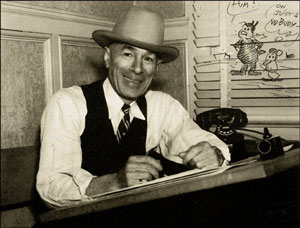
George Herriman III was born in New Orleans in 1880 to Creole parents. The family moved to Los Angeles a few years later and worked with his father as a barber and then a baker where he drove the family bread truck, but his pranksterish attitude frequently irritated his parents, and after baking a mouse into a loaf of bread his parents implored him to perform his pranks elsewhere, and relieved him of his position at the bakery.
In 1900, Herriman emigrated to New York City and in 1901, his first cartoons began to appear in Judge magazine. Shortly thereafter he landed a job at Joseph Pulitzer’s “New York World” and began creating Sunday & daily comic strips for the fledgling medium. In 1906 he left Pulitzer to do a strip for the McClure syndicate, went back to Pulitzer & finally left Pulitzer again to work for William Randolph Hearst at the “New York Journal American”. It would be here that Herriman created his most famous & popular characters, the animal residents of Coconino County, USA. (more…)
Black History, Other
1866-1955
Matthew Alexander Henson accompanied Admiral Robert Peary to the North Pole in 1909, and according to Peary’s son Kali, Peary “could not have reached the Pole without Matthew Henson.” Henson’s most valu-
able contribution to the expedition was his befriending of the Eskimo people, who respected him and taught him their language, customs, and survival skills. Henson in turn taught Peary to hunt for food, build a sledge, and drive a dogsled.
Folk history has it that Henson was the first to reach the North Pole, but the discovery was attributed entirely to Peary: Congress gave his account the official stamp of legitimacy, and Peary received numerous awards and honors. Although Peary did not share his honor with Henson, he did proclaim that “Henson is [an example] of the fact that race or color or upbringing or environment count nothing against a determined heart if it is backed and aided by intelligence.”
Black History, Music, The Arts
Quincy Jones
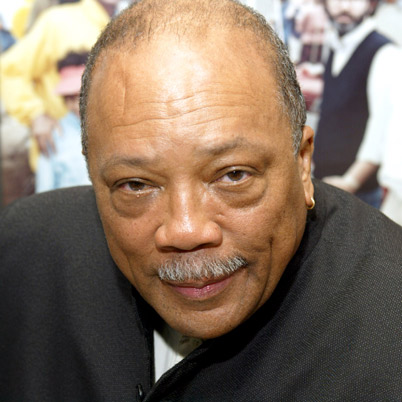
Quincy Jones has had several very successful careers, largely leaving jazz altogether by the early ’70s to make his money out of producing pop, R&B and even rap records. His earlier years were much more significant to improvised music. He grew up in Seattle and his first important job was playing trumpet and arranging for Lionel Hampton’s Orchestra (1951-53), sitting in a trumpet section with Clifford Brown and Art Farmer.
During the 1950s he started freelancing as an arranger, writing memorable charts for sessions led by Oscar Pettiford, Brown, Farmer, Gigi Gryce, Count Basie, Tommy Dorsey, Cannonball Adderley and Dinah Washington among others. He toured with Dizzy Gillespie’s big band (1956), started recording as a leader for ABC-Paramount in 1956 and worked in Paris (1957-58) for the Barclay label as an arranger and producer. In 1959 Jones toured Europe with his all-star big band which was originally put together to play for Harold Arlen’s show Free and Easy. (more…)
Black History, Education, Firsts, Other
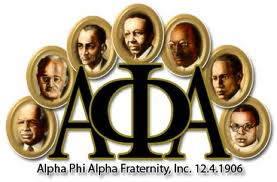 Alpha Phi Alpha is the first Black, Inter-Collegiate Greek-Lettered fraternity. It was founded on December 4, 1906 at Cornell University in Ithaca, New York. Its founders are known as the “Seven Jewels”. Alpha Phi Alpha developed a model that was used by the many Black Greek Letter Organizations (BGLOs) that soon followed in its footsteps. It employs an icon from Ancient Egypt, the Great Sphinx of Giza as its symbol, and its aims are “manly deeds, scholarship, and love for all mankind,” and its motto is First of All, Servants of All, We Shall Transcend All. Its archives are preserved at the Moorland-Spingarn Research Center.
Chapters were chartered at Howard University and Virginia Union University in 1907. The fraternity has over 185,000 members and has been open to men of all races since 1940. Currently, there are more than 730 active chapters in the Americas, Africa, Europe, the Caribbean, and Asia. (more…)
Black History, Government
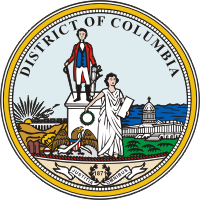 The District of Columbia, which became the nation’s capital in 1791, was by 1862 a city of contrasts: a thriving center for slavery and the slave trade, and a hub of anti-slavery activity among abolitionists of all colors. Members of Congress represented states in which slavery was the backbone of the economy, and those in which slavery was illegal.
One result of the intense struggle over slavery was the DC Compensated Emancipation Act of 1862, passed by the Congress and signed by President Abraham Lincoln. The act ended slavery in Washington, DC, freed 3,100 individuals, reimbursed those who had legally owned them and offered the newly freed women and men money to emigrate. It is this legislation, and the courage and struggle of those who fought to make it a reality, that we commemorate every April 16, DC Emancipation Day.
Though the Compensated Emancipation Act was an important legal and symbolic victory, it was part of a larger struggle over the meaning and practice of freedom and citizenship. These two words continue to be central to what it means to be a participating member of society. We invite you to think about what these concepts have meant in the past and what they mean to you today.
by Mayor Vincent C. Gray
Black History
Roland Burris
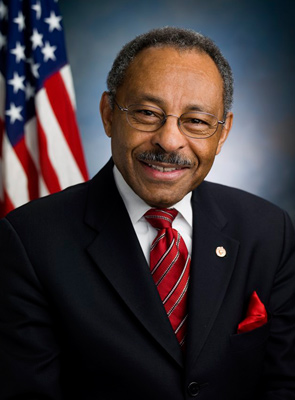
Roland Burris, a longtime Illinois state official, was named to succeed former Senator and President-elect Barack Obama on December 31, 2008, becoming the sixth African American to serve in the United States Senate.1 Burris started his political career as a teenager at a swimming pool in his hometown of Centralia, Illinois, in the south central part of the state. Burris’s father, who was vice president of the local chapter of the NAACP, had his son and four friends racially integrate the pool after a two-year struggle. The successful effort made Burris focus on law and politics: “If we, as a race of people, are going to get anywhere in this society, we’ve got to have lawyers and elected officials who are responsible and responsive–that’s what my dad said, and it resonated with me.” (more…)