Black History, Inventions
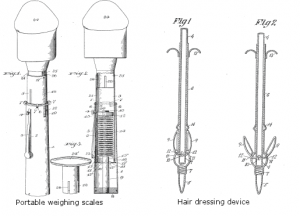
John W. Hunter, on Nov. 3, 1896, received patent number 570,553 for a portable weighing scales
John W. Hunter, on Jan. 19, 1909, received patent number 909,902 for a hair dressing device
J.H. Hunter, an African-American inventor, patented the weighing scale on November 3, 1896.It was patent number 570, 533. The weighing scale is used to determine the weight or mass of an object or individual.
On Jan. 19, 1909, he also received patent number 909,902 for a hair dressing device
Black History, The Arts
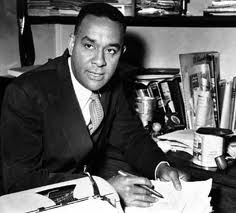
Richard Wright
(b. Sept. 4, 1908, near Natchez, Miss., U.S.–d. Nov. 28, 1960, Paris, France), novelist and short-story writer, who was among the first black American writers to protest white treatment of blacks, notably in his novel Native Son (1940) and his autobiography, Black Boy (1945). He inaugurated the tradition of protest explored by other black writers after World War II.
Wright’s grandparents had been slaves. His father left home when he was five, and the boy, who grew up in poverty, was often shifted from one relative to another. He worked at a number of jobs before joining the northward migration, first to Memphis, Tenn., and then to Chicago. (more…)
Black History, Government
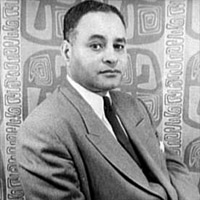
Ralph Bunche
Bunche was the first black person to win the Nobel Peace Prize, awarded in 1950. Born in Detroit, Michigan, Bunche and his sister were orphaned in 1915 and reared by their grandmother in Los Angeles. A brilliant, industrious student, Bunche graduated from Jefferson High School in 1922 as class valedictorian but was barred from the honor society because of his race.
In 1927, Bunche graduated from the University of California at Los Angeles, where he had excelled both in and outside the classroom. He wrote for the school newspaper, won oratorical contests, was sports editor of the yearbook, played guard for three years on the basketball team, and became Phi Beta Kappa. He then entered Harvard University, where in 1934 he became the first African American to earn a Ph.D. in government and international relations. (more…)
Black History, Religion
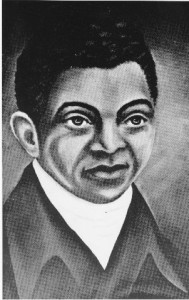 Harry Hosier (c.1750â – May 1806), better known during his life as “Black Harry”, was a black Methodist preacher during the Second Great Awakening in the early United States. Dr. Benjamin Rush said that, “making allowances for his illiteracy, he was the greatest orator in America”.
His style was widely influential but he was never formally ordained by the Methodist Episcopal Church or the Rev. Richard Allen’s separate African Methodist Episcopal Church in Philadelphia.
Black History, Sports

- Josh Gibson
Elected to Major League Baseball Hall of Fame in 1972.
Among the biggest draws in the Negro Leagues, popular Josh Gibson is generally considered one of the most prodigious power hitters in the history of professional baseball. Josh led the Negro National League in home runs for 10 consecutive years; credited with 75 home runs in 1931.
Belting home runs of more than 500 feet was not unusual for Gibson. One homer in Monessen, Pa., reportedly was measured at 575 feet. The Sporting News of June 3, 1967 credits Gibson with a home run in a Negro League game at Yankee Stadium that struck two feet from the top of the wall circling the center field bleachers, about 580 feet from home plate.
Although it has never been conclusively proven, Chicago American Giants infielder Jack Marshall said Gibson slugged one over the third deck next to the left field bullpen in 1934 for the only fair ball hit out of the House That Ruth Built. (more…)
Black History, Government
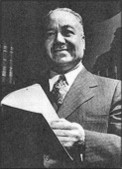
Irwin C Mollison
Irwin C Mollison (Born 1898) appointed judge of the US Customs Court. With his appointment on November 3, 1945, Judge Mollison was the first African American appointed to a position in the federal judiciary that was posthumously converted into an Article III judgeship. Judge Mollison was also the first African American to serve on the United States Customs Court. He was appointed by President Truman.


