Pioneers
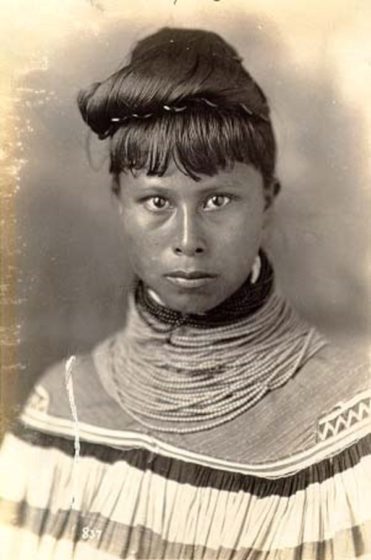
1850 – 1930. July was born to a family of Seminole Indians and former African American slaves who had left Florida and settled in northern Mexico after the Seminole War ended in 1842. By 1871 the group had crossed the U.S. border and arrived at Eagle Pass, Tex., a town on the Rio Grande. In 1871, they agreed to clear troublesome Indians from the U.S. side of the river for the U.S. Army. In return, the black Seminoles received a tract of land at Brackettville.
An old pioneer, Adam Wilson, taught July to ride when she was a girl. July preferred to ride bareback, with only a rope around the horse’s neck. With her ropes of beads, gold earrings, and colorful clothes, July was soon famous throughout the area as an expert horsewoman. She became a horse breaker after her father died and her brother moved away because it was one of the few ways she could earn a living. July tamed wild horses for soldiers at nearby Fort Duncan by riding bucking horses into the Rio Grande. She kept them there until they calmed down. The horses, nervous at being in the water, were usually grateful at being led onto dry land again. They tended to obey July after that.
When she was 18, July married a Seminole scout named Lesley and went to live with him at Fort Clark. However, July was unhappy with domestic life and yearned to be with her horses. Not long after the wedding, July left Lesley and returned to her mother’s house near the Rio Grande.

The Arts
DEREK ALTON WALCOTT (b. Jan. 23, 1930, Castries, Saint Lucia), West Indian poet and playwright noted for works that explore the Caribbean cultural experience. He received the Nobel Prize for Literature in 1992.
Walcott was of mixed black, Dutch, and English descent. He was educated at St. Mary’s College, St. Lucia, and at the University of the West Indies in Jamaica. He began writing poetry at an early age, taught at schools in St. Lucia and Grenada, and contributed articles and reviews to periodicals in Trinidad and Jamaica. Productions of his plays began in St. Lucia in 1950, and he studied theatre in New York City in 1958-59. He lived thereafter in Trinidad and the United States, teaching for part of the year at Boston University.
Walcott is best known for his poetry, beginning with In a Green Night: Poems 1948-1960 (1962). This book is typical of his early poetry in its celebration of the Caribbean landscape’s natural beauty. The verse in Selected Poems (1964), The Castaway (1965), and The Gulf (1969) is similarly lush in style and incantatory in mood as Walcott expresses his feelings of personal isolation, caught between his European cultural orientation and the black folk cultures of his native Caribbean. Another Life (1973) is a book-length autobiographical poem. In Sea Grapes (1976) and The Star-Apple Kingdom (1979), Walcott uses a tenser, more economical style to examine the deep cultural divisions of language and race in the Caribbean. The Fortunate Traveler (1981) and Midsummer (1984) explore his own situation as a black writer in America who has become increasingly estranged from his Caribbean homeland. Walcott’s Collected Poems, 1948-1984, was published in 1986.
Of Walcott’s approximately 30 plays, the best known are Dream on Monkey Mountain (produced 1967), Ti-Jean and His Brothers (1958), and Pantomime (1978). Many of his plays make use of themes from black folk culture in the Caribbean.
Entertainment
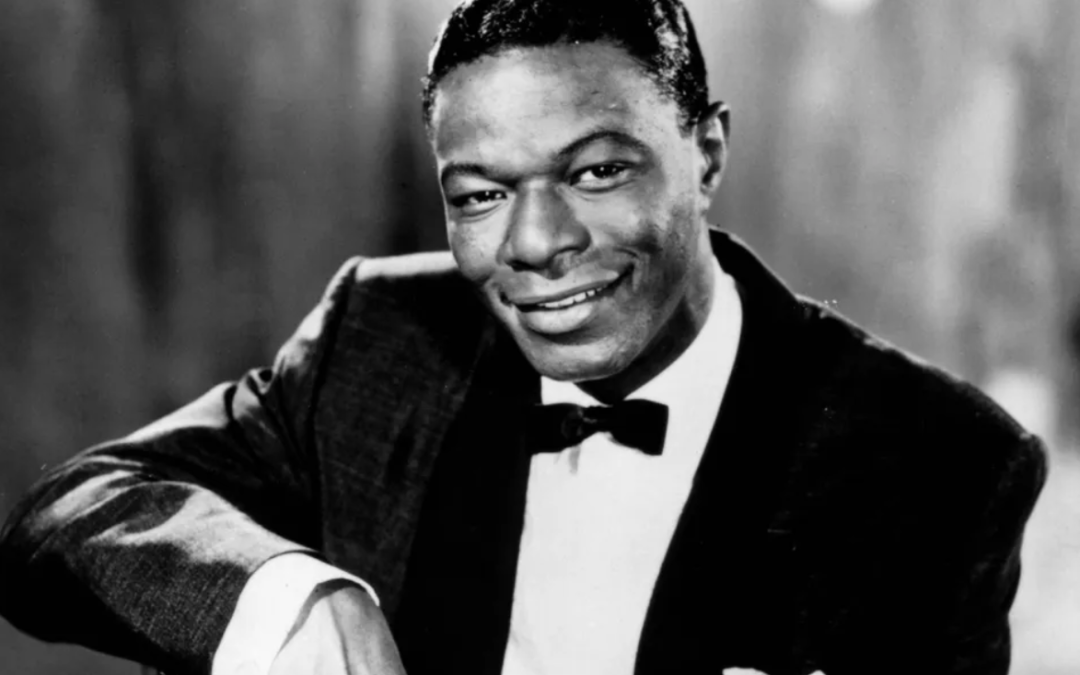
Nathaniel Adams Coles (March 17, 1919 – February 15, 1965), known professionally by his stage name Nat King Cole, was an American singer, jazz pianist, and actor. Cole’s career as a jazz and pop vocalist started in the late 1930s and spanned almost three decades where he found success and recorded over 100 songs that became hits on the pop charts.
Cole started his career as a jazz pianist in the late 1930s, when he formed The King Cole Trio, which became the top-selling group (and the only black act) on Capitol Records in the 1940s. Cole’s trio was the model for small jazz ensembles that followed. Starting in 1950, he transitioned to become a solo singer billed as Nat King Cole. Despite achieving mainstream success, Cole faced intense racial discrimination during his career. While not a major vocal public figure in the civil rights movement, Cole was a member of his local NAACP branch and participated in the 1963 March on Washington. He regularly performed for civil rights organizations. From 1956 to 1957, Cole hosted the NBC variety series The Nat King Cole Show, which became the first nationally broadcast television show hosted by an African American.
Some of Cole’s most notable singles include “Unforgettable”, “Smile”, “L-O-V-E”, “Nature Boy”, “When I Fall in Love”, “Let There Be Love”, “Mona Lisa”, “Autumn Leaves”, “Stardust”, “Straighten Up and Fly Right”, “The Very Thought of You”, “For Sentimental Reasons”, “Embraceable You” and “Almost Like Being in Love”. His 1960 Christmas album The Magic of Christmas (also known as The Christmas Song), is the best-selling Christmas album released in the 1960s; and was ranked as one of the 40 essential Christmas albums (2019) by Rolling Stone. In 2022, Cole’s recording of “The Christmas Song”, broke the record for the longest journey to the top ten on the Billboard Hot 100, when it peaked at number nine, 62 years after it debuted on the chart; and was selected by the Library of Congress for preservation in the United States National Recording Registry. NPR named him one of the 50 Great Voices. Cole received numerous accolades including a star on the Hollywood Walk of Fame (1960) and a Special Achievement Golden Globe Award. Posthumously, Cole has received the Grammy Lifetime Achievement Award (1990), along with the Sammy Cahn Lifetime Achievement Award (1992) and has been inducted into the Downbeat Jazz Hall of Fame (1997), Rock and Roll Hall of Fame (2000), and the National Rhythm & Blues Hall of Fame (2020).
Cole was the father of singer Natalie Cole (1950–2015), who covered her father’s songs in the 1991 album Unforgettable… with Love.
Read more of this article on Wikipedia.
The Arts
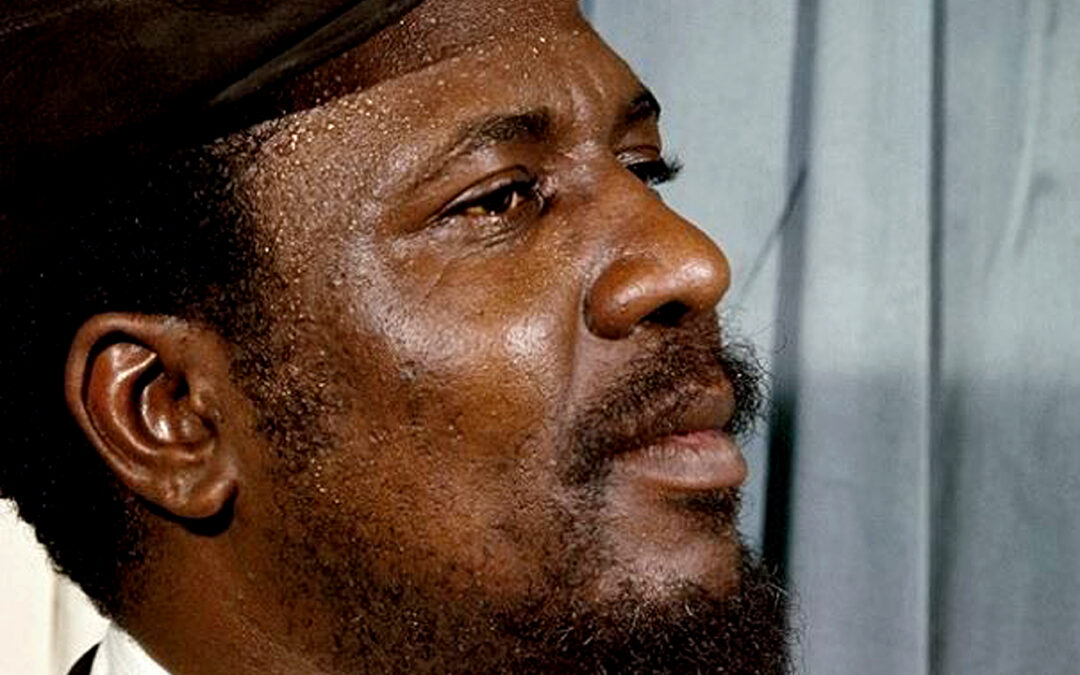
Thelonious Sphere Monk (/θəˈloʊniəs/ October 10, 1917 – February 17, 1982) was an American jazz pianist and composer. He had a unique improvisational style and made numerous contributions to the standard jazz repertoire, including “‘Round Midnight”, “Blue Monk”, “Straight, No Chaser”, “Ruby, My Dear”, “In Walked Bud”, and “Well, You Needn’t”. Monk is the second-most-recorded jazz composer after Duke Ellington.
Monk’s compositions and improvisations feature dissonances and angular melodic twists, often using flat ninths, flat fifths, unexpected chromatic notes together, low bass notes and stride, and fast whole tone runs, combining a highly percussive attack with abrupt, dramatic use of switched key releases, silences, and hesitations.
Monk’s distinct look included suits, hats, and sunglasses. He also had an idiosyncratic habit during performances: while other musicians continued playing, Monk would stop, stand up, and dance for a few moments before returning to the piano. Monk is one of five jazz musicians to have been featured on the cover of Time (the others being Louis Armstrong, Dave Brubeck, Duke Ellington, and Wynton Marsalis).
Read more of this article on Wikipedia.
The Arts
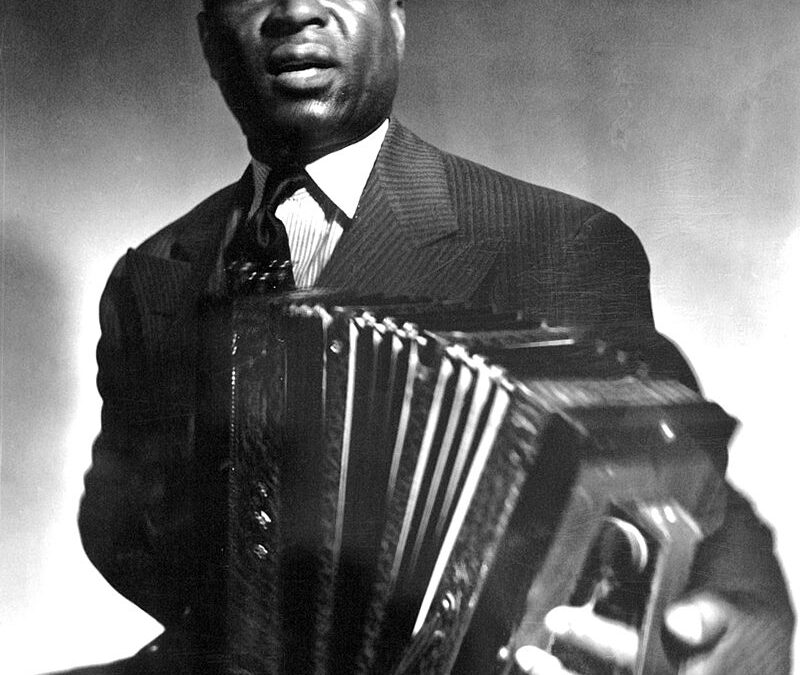
Huddie William Ledbetter ( HYOO-dee; January 1888 or 1889 – December 6, 1949), better known by the stage name Lead Belly (not Leadbelly), was an American folk and blues singer notable for his strong vocals, virtuosity on the twelve-string guitar, and the folk standards he introduced, including his renditions of “In the Pines“, “Pick a Bale of Cotton“, “Goodnight, Irene“, “Midnight Special“, “Cotton Fields“, and “Boll Weevil“.
Lead Belly usually played a twelve-string guitar, but he also played the piano, mandolin, harmonica, violin, and windjammer. In some of his recordings, he sang while clapping his hands or stomping his foot.
Lead Belly’s songs covered a wide range of genres, including gospel music, blues, and folk music, as well as a number of topics, including women, liquor, prison life, racism, cowboys, work, sailors, cattle herding, and dancing. He also wrote songs about people in the news, such as Franklin D. Roosevelt, Adolf Hitler, Jean Harlow, Jack Johnson, the Scottsboro Boys and Howard Hughes. Lead Belly was posthumously inducted into the Rock and Roll Hall of Fame in 1988 and the Louisiana Music Hall of Fame in 2008.
Though many releases credit him as “Leadbelly”, he wrote his name as “Lead Belly”. This is the spelling on his tombstone and is used by the Lead Belly Foundation.
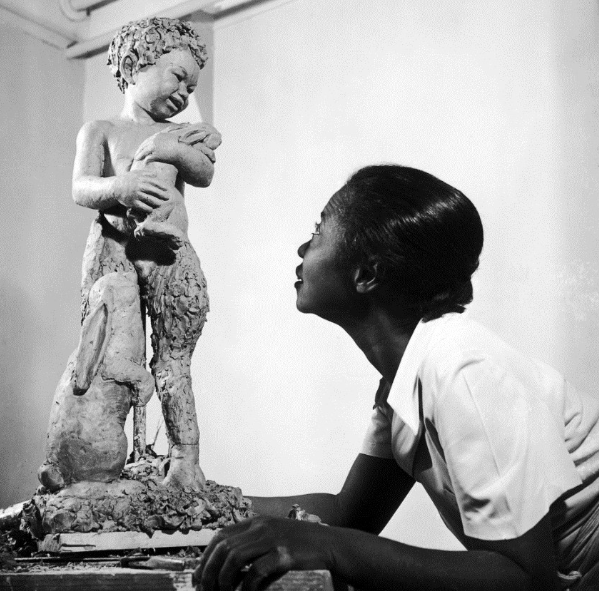
The Arts
1892 – 1962
A major Harlem Renaissance figure, Savage began creating clay figures as a child, but she did not begin formal art studies until she moved to New York City in 1921. Her bust of black intellectual W.E.B. Du Bois was well received, and Savage then produced likenesses of other prominent black figures, including Frederick Douglass and Marcus Garvey. From 1929 to 1932 Savage studied in Paris. Upon returning to New York, she founded the Savage School of Arts and Crafts in Harlem. In the 1930s she arranged for black artists to receive commissions from the Works Progress Administration. Savage also opened New York’s first black art gallery in 1939. In the 1940s, Savage retired and moved to Saugerties, N.Y.
