
Science
Elmer Samuel Imes (October 12, 1883 – September 11, 1941) was an internationally renowned American physicist who made important contributions in quantum, demonstrating for the first time that Quantum Theory could be applied to the rotational energy states of molecules, as well as the vibration and electronic levels. Imes’s work provided an early verification of Quantum Theory, and his spectroscopy instrumentation inventions, which include one of the earliest applications of high resolution infrared spectroscopy, led to development of the field of study of molecular structure through infrared spectroscopy.
He was the second African American to earn a Ph.D. in physics and the first in the 20th century. He was among the first known African-American scientists to make important contributions to modern physics; others’ prior work was unrecorded or uncredited. While working in industry, he gained four patents for instruments to be used for measuring magnetic and electric properties. As an academic, he developed and chaired the department of physics at Fisk University, serving from 1930 to 1941.
Born in Memphis, Tennessee, he was the child of college-educated parents. His father’s family were people of color who had been free since before the American Revolution. His mother’s family, former slaves, had moved to Oberlin, Ohio, after the American Civil War. Both his parents graduated from Oberlin College.
Continue reading this article on Wikipedia.

Science
1888 – 1958
A 1912 recipient of a civil engineering degree from Iowa State University, Archibald ?Archie? Alexander joined the Marsh Engineering Company where he designed the Tidal Basin bridge in Washington, D.C. After studying bridge design in London, he and George Higbee formed a general contracting business that focused on bridge design. Alexander’s designs include Washington, D.C.’s Whitehurst Freeway, the heating plant and power station at the University of Iowa, and an airfield in Tuskegee, Alabama. Alexander went on to become the first Republican territorial governor of the U.S. Virgin Islands.
Events
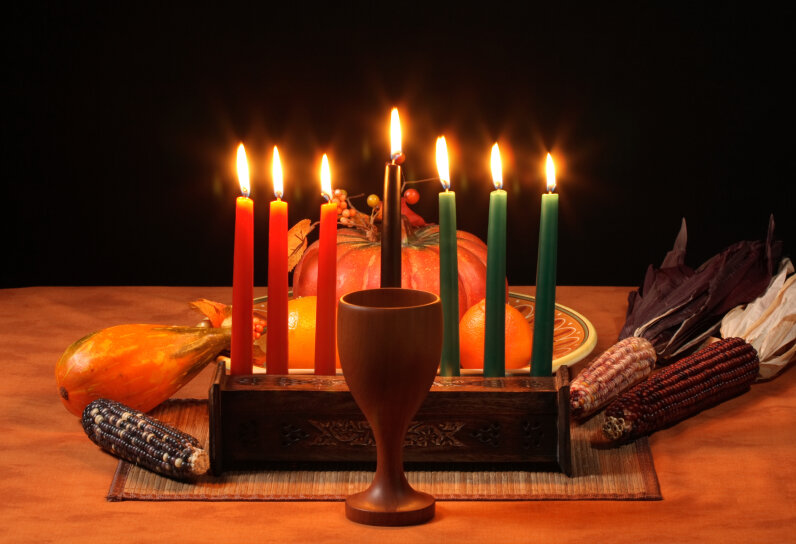
Also spelled KWANZA (Swahili: “First Fruits”), African-American holiday, celebrated each year from December 26 to January 1; it is patterned after various African harvest festivals.
Kwanzaa was created in 1966 by Maulana Karenga, a black-studies professor at California State University at Long Beach, as a nonreligious celebration of family and social values. By the early 1990s it was estimated to have more than 5 million celebrants. Each day of Kwanzaa is dedicated to one of seven principles: unity (umoja), self-determination (kujichagulia), collective responsibility (ujima), cooperative economics (ujamaa), purpose (nia), creativity (kuumba), and faith (imani).
Each evening family members gather to light one of the candles in the kinara, a seven-branched candelabra, and discuss the principle for that day; often gifts are exchanged. On December 31 the family joins other members of the community for a feast, called the karamu.
Civil Rights
1920 – 1999. The son of a preacher, Farmer attended Howard University’s School of Divinity. In 1942 he founded the Congress of Racial Equality (CORE), a civil rights organization that was the first in the United States to use nonviolent tactics to protest racial discrimination. In 1961, under the leadership of Farmer, the group organized “Freedom Rides” throughout the South. Volunteers traveled on interstate buses, with the blacks using the restaurants, restrooms, and waiting areas reserved for whites, and the whites using colored facilities. Attacked by mobs on several occasions, the Freedom Riders challenged the federal government to enforce the anti-segregation legislation that had recently been passed. Farmer was awarded the Presidential Medal of Freedom by President Clinton in 1998.

Science
1914 – 1995
Initially planning to enter medical school, Henry McBay decided instead to study chemistry, earning a B.S. degree in 1934 from Wiley University, a master’s degree from Atlanta University in 1936, and a Ph.D. in chemistry from the University of Chicago in 1945. McBay was long a professor of chemistry at Morehouse College in Atlanta, serving from 1960 to 1981 as Chair of the department.
McBay’s research with acetyl peroxide?with which many other scientists refused to work because of its volatile nature?led to the synthesis of a hormone used in the treatment of prostate cancer. Also influential in the classroom, 45 of McBay’s students earned a Ph.D. in chemistry.
The Arts
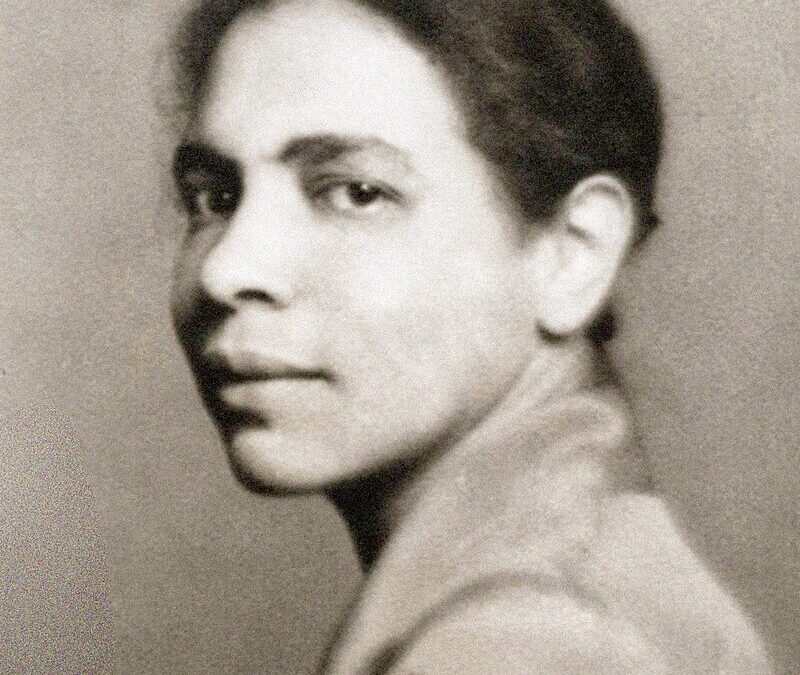
1891-1964. The only black person in her family when she was growing up, Larsen always felt like an outsider. Born Nellie Walker, she lost her West Indian father when she was two and her Danish mother remarried a Danish man. Larsen attended Fisk University, and the University of Copenhagen, and studied nursing in New York. While working as a nurse she married Dr. Samuel Elmer Imes, a prominent black physicist, who brought Larsen into Harlem’s upper class.
After publishing two essays on Danish children’s games, Larsen wrote two novels, Quicksand (1928) and Passing (1929). She won the Harmon Foundation’s Bronze Medal for Literature in 1929, and in 1930 became the first black woman to win a Guggenheim Fellowship. Although her publisher strongly defended her, Larsen was hurt by allegations of plagiarism and in 1933 she went through a humiliating public divorce. Saying she was emigrating to South America, Larsen moved to New York’s Lower East Side and worked as a nurse for 30 years. Larsen is regarded as one of the most sophisticated Harlem Renaissance novelists.
