
Inventions
Benjamin Bradley was born around 1830 as a slave in Maryland. He was able to read and write, although at the time it was illegal for a slave to do so (he likely learned from the Master’s children). He was put to work in a printing office and at the age of 16 began working with scrap he found, modeling it into a small ship. Eventually, with an intuitiveness that seemed far beyond him, he improved on his creation until he had built a working steam engine, made from a piece of a gun-barrel, pewter, pieces of round steel and some nearby junk. Those around him were so astounded by his high level of intelligence that he was placed in a new job, this time at the United States Naval Academy in Annapolis, Maryland.
In his new position he served as a classroom assistant in the science department. He helped to set up and conduct experiments, working with chemical gases. He was very good at his work, impressing the professors with his understanding of the subject matter and also with his preparedness in readying the experiments. In addition to the praise he received, he also received a salary, most of which went to his Master, but some of which (about $5.00 per month) he was able to keep.
Despite enjoying his job with the Naval Academy, Bradley had not forgotten his steam engine creation. He used the money he had been able to save from his job as well as the proceeds of the sale of his original engine (to a Naval Academy student) to build a larger model. Eventually he was able to finish an engine large enough to drive the first steam-powered warship at 16 knots. At the time, because he was a slave, he was unable to secure a patent for his engine. His master did, however, allow him to sell the engine and he used that money to purchase his freedom.
Religion
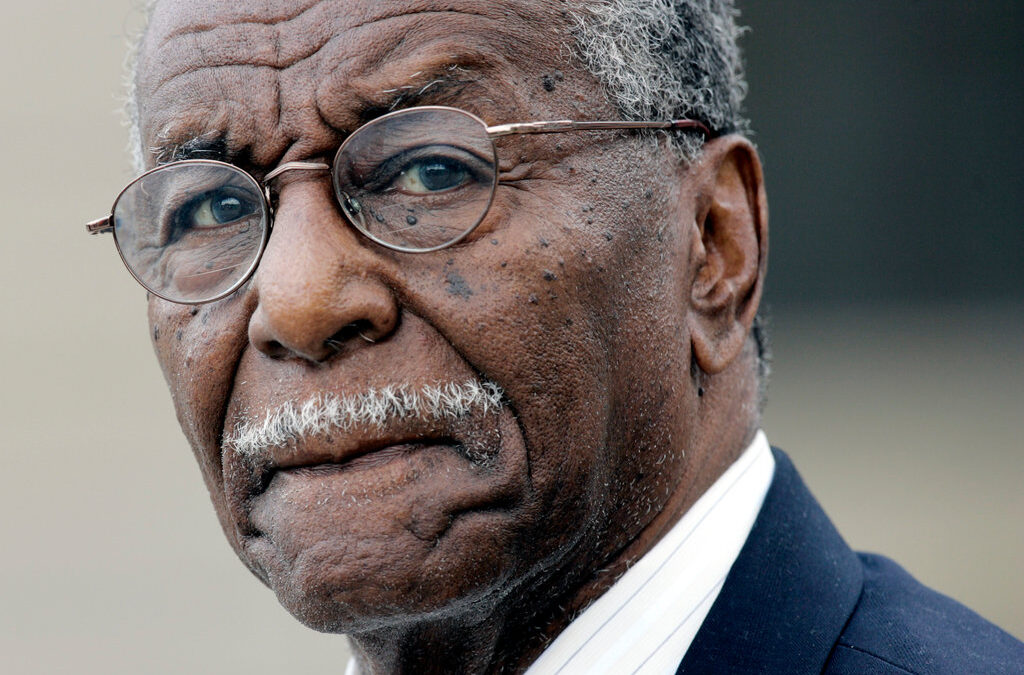
As pastor of Birmingham, Alabama’s First Baptist Church, Shuttlesworth organized the Alabama Christian Movement for Human Rights in 1956. He served as president of the group until 1969 and spearheaded the movement to integrate Birmingham’s schools, offices, and public facilities.
Shuttlesworth worked closely with Martin Luther King, Jr., establishing the Southern Christian Leadership Conference in 1958 and organizing the protests and actions in Birmingham during the spring of 1963. He was secretary of the SCLC from 1958 to 1970. He continues his campaign for racial and social justice as a minister in Cincinnati.
Sports
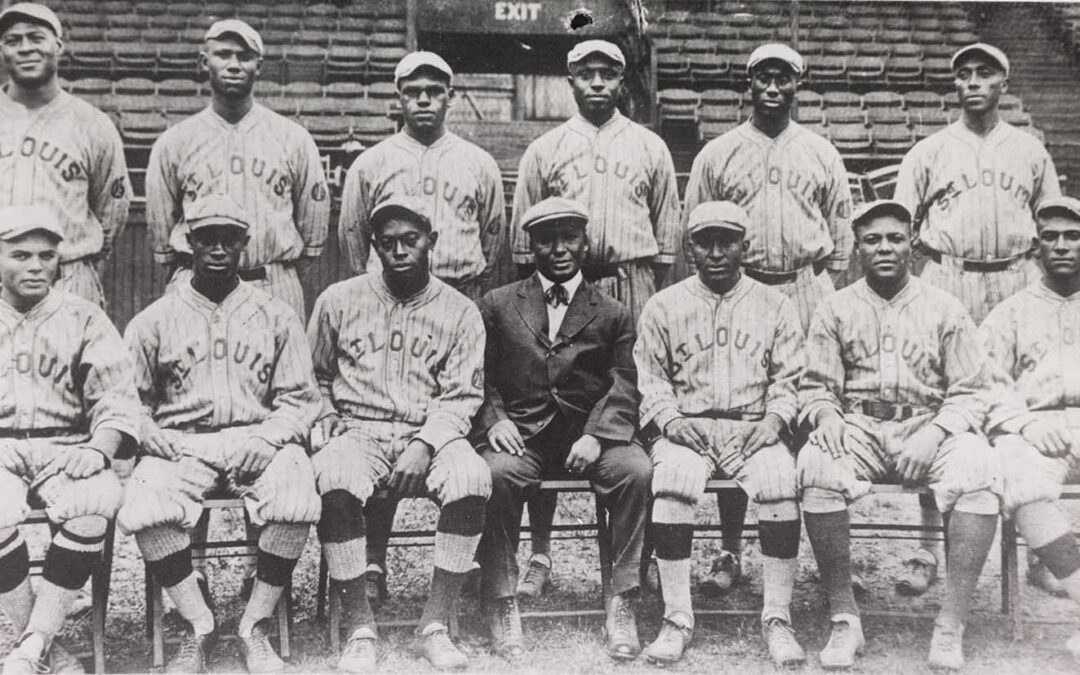
Any of the associations of teams of African-American baseball players active largely between 1920 and the late 1940s, when black players were at last contracted to play major and minor league baseball. The principal Negro leagues were the Negro National League (1920-1931, 1933-48), the Eastern Colored League (1923-28), and the Negro American League (1937-1960). In 1932, with the other leagues disbanded, some Northern teams competed in the previously regional Negro Southern League.
Two black men, Welday and Moses “Fleet” Walker, who were brothers, played major league baseball for Toledo, Ohio, in the American Association in 1884; but this initial acceptance of integrated teams in professional baseball was short-lived. A handful of all-black teams played in early organized baseball, beginning in 1885 with the Cuban Giants, formed that year on Long Island, N.Y.; the team played exhibition games and, in 1889-91, represented three successive cities in three leagues. In the early 20th century new black teams were formed to play exhibition games against white teams or in short-lived black leagues.
In 1920 Andrew “Rube” Foster, owner of the Chicago American Giants, convinced the owners of seven other Northeastern and Midwestern teams to join him in forming the Negro National League. In most years the Negro National League consisted of eight teams. After the Eastern Colored League was formed in 1923, Negro World Series were held (1924-27; 1942-49); East-West All-Star games were played from 1933 into the 1950s. Initially the leagues were centred in cities such as Chicago, New York City, Detroit, St. Louis, and Kansas City, which had large and growing black populations as a result of the 20th-century northward black migration. The leagues struggled for survival during the Great Depression, though prosperity returned in the 1940s. Financial pressures dictated that different teams would often make up the leagues from year to year, and that some teams changed leagues over the years.
The Negro leagues played short seasons, compared with those of white major league teams. Some black players competed in Caribbean winter leagues during the off-season. The short season allowed teams time to barnstorm–that is, play exhibition games on tour. Thus the Kansas City Monarchs, for example, both barnstormed and belonged to the Negro National League in the 1920s. During 1931-36 the Monarchs, without a league affiliation, barnstormed from city to city, equipped with an innovative portable park-lighting system (introduced five years before the first white major league night game). In 1934 they crossed the United States in a series of exhibition games with the Homestead Grays. In 1937 the Monarchs joined the Negro American League.
The popular success of the Harlem Globetrotters in basketball inspired some Negro league teams, notably the Indianapolis Clowns, to provide comedy and other entertainment along with their baseball games. Some of these teams were criticized, however, for presenting demeaning images of blacks; the Zulu Cannibal Giants, for example, wore grass skirts and face paint and played baseball barefoot.
The most noted Negro league teams included the Homestead Grays, based in Pittsburgh, Pa., and Washington, D.C., who won nine pennants during 1937-45 and included the great hitters Josh Gibson (catcher), James “Cool Papa” Bell (outfield), and Buck Leonard (first base). In the mid-1930s the Pittsburgh Crawfords included five future Baseball Hall of Fame members: Gibson; Bell; manager Oscar Charleston; clutch-hitting third baseman William Julius “Judy” Johnson; and the great fastball pitcher Satchel Paige. After the Crawfords won the 1936 pennant, the team’s stars were hired away to play on Rafael Trujillo’s Dominican Republic team, beginning the Crawfords’ decline. The Kansas City Monarchs won four full-season Negro National League championships and seven Negro American League championships. Among the most famous black teams were the all-star units formed annually by Paige to compete in exhibition games with white major league all-stars.
The beginning of the decline of the Negro leagues was in 1945, when the Monarchs’ rookie shortstop Jackie Robinson was signed by the Brooklyn Dodgers organization. Among the other black players who first integrated the major leagues, few were, like Paige, long-established stars. Most were younger men–such as pitcher Don Newcombe and outfielder Larry Doby (Newark Eagles), catcher Roy Campanella (Baltimore Elite Giants), and outfielders Minnie Minoso (New York Cubans), Willie Mays (Birmingham Black Barons), and Hank Aaron (Indianapolis Clowns)–who went on to spend most of their careers as major league stars.
Publishing
1799-1851. Born to a slave mother and a white American merchant father, Russwurm was educated in Quebec and graduated from Bowdoin College in 1826, making him one of the first black American college graduates. In 1827 he helped establish the first black newspaper in the U.S., Freedom’s Journal, in New York. Two years later, Russwurm closed the paper and moved to Liberia, stating that blacks had no future in the U.S. In Liberia, he served as superintendent of education, edited the Liberia Herald, became governor of the county of Maryland, and recruited American blacks to settle there.

Science
Born 1925
Emmett W. Chappelle earned a B.S. degree from the University of California in 1950, and from 1950 to 1953 he served as an instructor of biochemistry at Meharry Medical College in Nashville, Tennessee. Chappelle earned an M.S. degree from the University of Washington in 1954. From 1955 to 1958, he was a research associate at Stanford University, and from 1958 to 1963 he became scientist and biochemist for the Research Institute of Advanced Studies at Stanford University.
Between 1963 and 1966 Chappelle served as a biochemist for Hazelton Laboratories, the as an exobiologist and astrochemist. He went to work as a biochemist for the division of Research Center for Space Exploration before joining the National Aeronautics and Space Administration (NASA) as a remote sensing scientist in 1977. Among Chappelle’s discoveries is a method (developed with Grace Picciolo) of instantly detecting bacteria in water, which led to improved diagnoses of urinary tract infections.
Slavery
1760?-1830. An African American slave in Virginia, Armistead sought and received permission from his master, William Armistead, to enlist under Gen. Marquis de Lafayette, a French officer who joined George Washington’s army during the American Revolution. Lafayette was seeking men to spy on British general Cornwallis and his army at Yorktown, Va. Impressed with Armistead’s intelligence, Lafayette had Armistead pose as a laborer looking for work. He was hired at Cornwallis’s camp and was able to relay information about Cornwallis’s plans to Lafayette. Armistead also earned the trust of Cornwallis, who asked him to spy on the Americans. As a double agent, Armistead was able to move freely between both camps. He provided Lafayette with critical information that enabled the general to intercept Cornwallis’s much-needed naval support and ultimately defeat Cornwallis at Yorktown in Oct. 1781, the decisive battle that ended the Revolution.
After the war, Armistead returned to the Armistead plantation as a slave. He met with Lafayette in 1784, when the general visited the United States. He wrote a glowing recommendation for his former spy, which Armistead used when he petitioned the Virginia House of Delegates for freedom. He was finally freed on New Year’s Day 1787. He assumed Lafayette as his surname and spent the rest of his life as a farmer in Virginia.
