
Events
(1861-64), in U.S. history, series of laws passed by the federal government during the American Civil War that were designed to liberate slaves in the seceded states. The first Confiscation Act, passed on Aug. 6, 1861, authorized Union seizure of rebel property, and it stated that all slaves who fought with or worked for the Confederate military services were freed of further obligations to their masters.
President Abraham Lincoln objected to the act on the basis that it might push border states, especially Kentucky and Missouri, into secession in order to protect slavery within their boundaries. He later convinced Congress to pass a resolution providing compensation to states that initiated a system of gradual emancipation, but the border states failed to support this plan. And Lincoln repudiated the position of Generals John C. Fr
Military
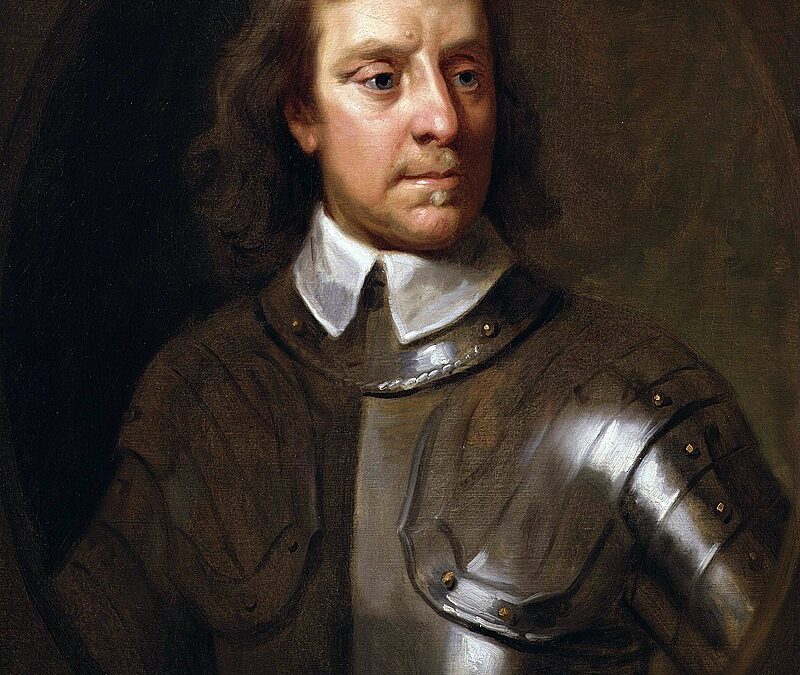
Oliver Cromwell (25 April 1599 – 3 September 1658) was an English statesman, politician, and soldier, widely regarded as one of the most important figures in British history. He came to prominence during the Wars of the Three Kingdoms, initially as a senior commander in the Parliamentarian army and latterly as a politician. A leading advocate of the execution of Charles I in January 1649, which led to the establishment of the Commonwealth of England, he ruled as Lord Protector from December 1653 until his death in September 1658.
Although elected MP for Huntingdon in 1628, much of Cromwell’s life prior to 1640 was marked by failure. He briefly contemplated emigration to New England, but became a religious Independent in the 1630s and thereafter believed his successes were the result of divine providence. In 1640, Cromwell was returned as MP for Cambridge in the Short and Long Parliaments. He joined the Parliamentarian army when the First English Civil War began in August 1642 and quickly demonstrated his military abilities. In 1645, he was appointed commander of the New Model Army cavalry under Sir Thomas Fairfax, and played a key role in winning the English Civil War.
The death of Charles I and exile of his son, followed by military victories in Ireland and Scotland, firmly established the Commonwealth and Cromwell’s dominance of the new regime. In December 1653, he was named Lord Protector, a position he retained until his death in September 1658, when he was succeeded by his son Richard, whose weakness led to a power vacuum. This culminated in the 1660 Stuart Restoration, after which Cromwell’s body was removed from Westminster Abbey and displayed at Tyburn. His head was placed on a spike outside the Tower of London, where it remained for 30 years, and ultimately reburied at Sidney Sussex College, Cambridge, in 1960.
Winston Churchill described Cromwell as a military dictator, while others view him a hero of liberty. He remains a controversial figure due to his use of military force to acquire and retain political power, his role in the execution of Charles I and the brutality of his 1649 campaign in Ireland. The debate over his historical reputation continues. First proposed in 1856, his statue outside the Houses of Parliament was not erected until 1895, most of the funds being privately supplied by Prime Minister Lord Rosebery.

Arts
b. 1915
Born in Washington, D.C., Elizabeth Catlett studied art under Grant Wood at the University of Iowa, then taught at Hampton University in Virginia. She married artist Charles White in 1941. They lived in New
York, where they mingled with other intellectuals and artists, including Jacob Lawrence and Langston Hughes.
In 1946 Catlett received a Rosenwald Fellowship, and she and White visited Mexico, where they studied painting, sculpture, and lithography and worked with Taller de Grafica Popular, a socially active artists’ collective. The following year they divorced, but Catlett remained in Mexico City, working with some of the most distinguished printmakers of the city. In 1962, she married painter-engraver Francisco Mora and made Mexico her home.
Today, Catlett continues to express a profound concern for the plight of women and the poor through her paintings and sculptures in marble, wood, and terra-cotta.
Politics
1900-1989
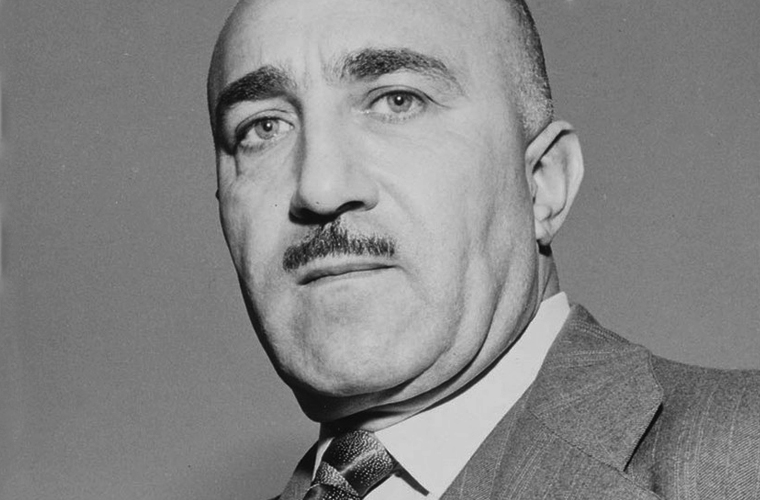
C. L. Dellums made significant social contributions as a pioneer in the union movement and as a key officer in the California chapter of the NAACP. As a young man, Dellums took a job as a Pullman porter and
soon afterward began speaking out for his rights and those of his fellow porters�much to the dismay of the Pullman Company.
He was fired for his union activity in 1927. Undaunted, Dellums organized a union for porters on the West Coast. After meeting A. Philip Randolph, Dellums joined the Brotherhood of Sleeping Car Porters and was elected its national vice president.
In 1940, Dellums and other civil rights leaders organized what would have been the first march on Washington�but the march never occurred. The impetus for the march ended when President Franklin D. Roosevelt ordered the defense industry to hire minority workers.
The Arts
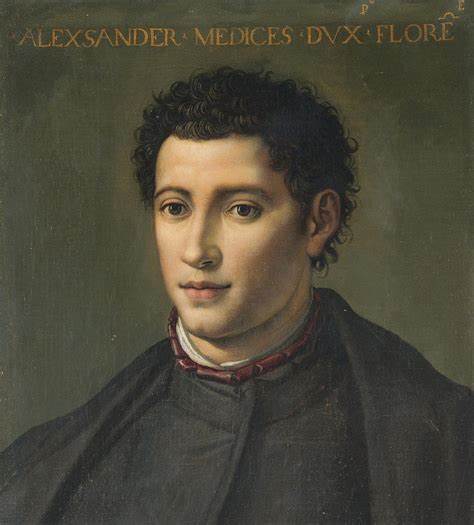
The House of Medici is credited with helping to usher in the European Renaissance, mostly through the efforts of Catherine De’ Medici, to promote the arts. Alessandro, the Duke of Florence, was questionable yet nevertheless a direct part of this great Dynasty.
Historical records are unclear regarding how the illegitimate Alessandro came into this distinguished family. How he became the Duke is also puzzling. It is thought to be the result of a political scheme concocted by Emperor Charles V and Pope Clement VII, who was widely rumored to be his father.
Alessandro was likely the son of a servant named Simonetta, who was employed by the Medici’s in Rome. He married Margaret, daughter of Charles V, but no children were born from this union. Howerver, according to anthrophotojournalist Joel Augustus Rogers, Alessandro did father several children who eventually married into Europe’s aristocracy.
As Duke, Alessandro is remembered for paying special attention not only to his rich supporters but to his peasant constituents as well, and he showed great interest in the arts. Apparently he had his enemies. He remained wary during his short reign, cautiously ordering the confiscation of all weapons in the city, as if he knew of his impending murder. On January 5, 1537, Alessandro was assassinated by his cousin Lorenzino. His death was later avenged by his successor, Cosimo I.
Politics
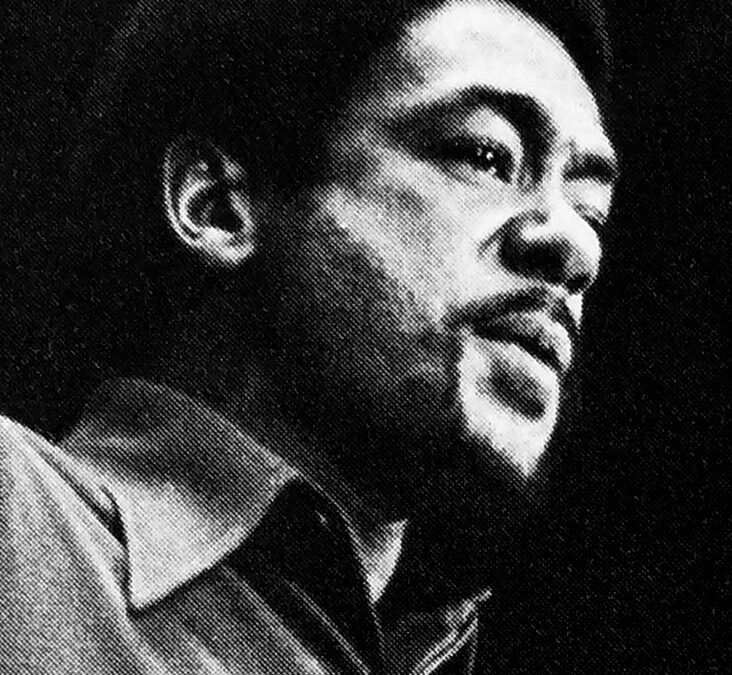
Robert Seale was born on Oct. 22, 1936, in Dallas, Texas. He was an African-American political activist and co-founder, along with Huey Newton, of the Black Panther Party. He would eventually become the national chairman of the organization. Seale was one of a generation of young African-American radicals who broke away from the traditionally nonviolent Civil Rights Movement to preach a doctrine of militant black empowerment. Following the dismissal of murder charges against him in 1971, Seale somewhat moderated his more militant views and devoted his time to effecting change from within the system.
Seale grew up in Dallas and in California. Following service in the U.S. Air Force, he entered Merritt College, in Oakland, Calif. During his time at Merrit, his political views took root in 1962, when he first heard Malcolm X speak. Seale helped found the Black Panthers in 1966. Noted for their aggressive views, they also ran medical clinics and served free breakfasts to school children, among other programs.
In 1969 Seale was indicted in Chicago for conspiracy to incite riots during the Democratic national convention the previous year. The court refused to allow him to have his choice of lawyer. When Seale repeatedly rose to insist that he was being denied his constitutional right to counsel, the judge ordered him bound and gagged. He was convicted of 16 counts of contempt and sentenced to four years in prison. In 1970-71 he and a co-defendant were tried for the 1969 murder of a Black Panther suspected of being a police informer. The six-month-long trial ended with a hung jury.
Following his release from prison, Seale renounced violence as a means to an end and announced his intention to work within the political process. He ran for mayor of Oakland in 1973, finishing second. As the Black Panther Party faded from public view, Seale took on a quieter role, working to improve social services in black neighborhoods and to improve the environment. Seale’s writings include such diverse works as Seize the Time (1970), a history of the Black Panther movement and Barbeque’n with Bobby (1988), a cookbook.
