Civil Rights
Raised in abolitionist traditions by his minister father, A. Philip Randolph mirrored those beliefs for more than 60 years as a champion of equal rights. He came to national prominence by organizing the Brotherhood of Sleeping Car Porters and achieved the first union contract signed by a white employer and an African American labor leader (in 1937). In 1941 he conceived a march on Washington, DC, to protest exclusion of African American workers from defense jobs. Faced with the public relations threat of 100,000 marchers, President Franklin Roosevelt established the wartime Fair Employment Practice Committee. Randolph founded the League for Nonviolent Civil Disobedience Against Military Segregation, which in 1948 pressured President Harry Truman into ending segregation in the armed forces. Although in later years he became less militant, Randolph was a dedicated socialist from his college days in New York. His lifelong belief in unionism and integration flowed from that philosophy, and he went into action in 1917 by co-founding The Messenger, a weekly magazine of African-American protest, and lecturing across the country. For his outspoken leadership, Randolph’s opponents characterized him as “the most dangerous Negro in America” because of his proven power to create change. He was still the acknowledged patriarch into the early 1970s and into his 80s, after his key role in organizing the historic, 250,000 strong March on Washington in 1963.

Military
1864-1922
Born in Mays Lick, Kentucky, Col. Charles Young was admitted to the U.S. Military Academy at West Point in 1884. Though he was ostracized because of racial prejudice, he persevered and graduated on August 31, 1889. Young’s military career began when blacks had just recently been allowed to serve but were still restricted to all-black regiments.
During that period, the black regiments in the Twenty-Fourth Cavalry earned respect when they rescued Theodore Roosevelt’s “rough riders” at San Juan Hill. Young, in charge of the Ninth Ohio Regiment in the Spanish-American War, advanced to become the highest-ranking black in the U.S. Army in 1918. In November 1919, he was appointed military attach
Firsts
Byname of ELIZABETH COLEMAN (b. Jan. 26, 1893, Atlanta, Texas, U.S.–d. April 30, 1926, Jacksonville, Fla.), black American aviator, a star of early aviation exhibitions and air shows.
One of 13 children, Coleman grew up in Waxahatchie, Texas, where her mathematical aptitude freed her from working in the cotton fields. She attended college in Langston, Okla., briefly, then moved to Chicago, where she worked as a manicurist and restaurant manager and became interested in the then-new profession of aviation.
Discrimination thwarted Coleman’s attempts to enter aviation schools in the United States. Undaunted, she learned French and at age 27 was accepted at the Caudron Brothers School of Aviation in Le Crotoy, France. Black philanthropists Robert Abbott, founder of the Chicago Defender, and Jesse Binga, a banker, assisted with her tuition. On June 15, 1921, she became the first American woman to obtain an international pilot’s license from the F
Firsts
1895 – 1950
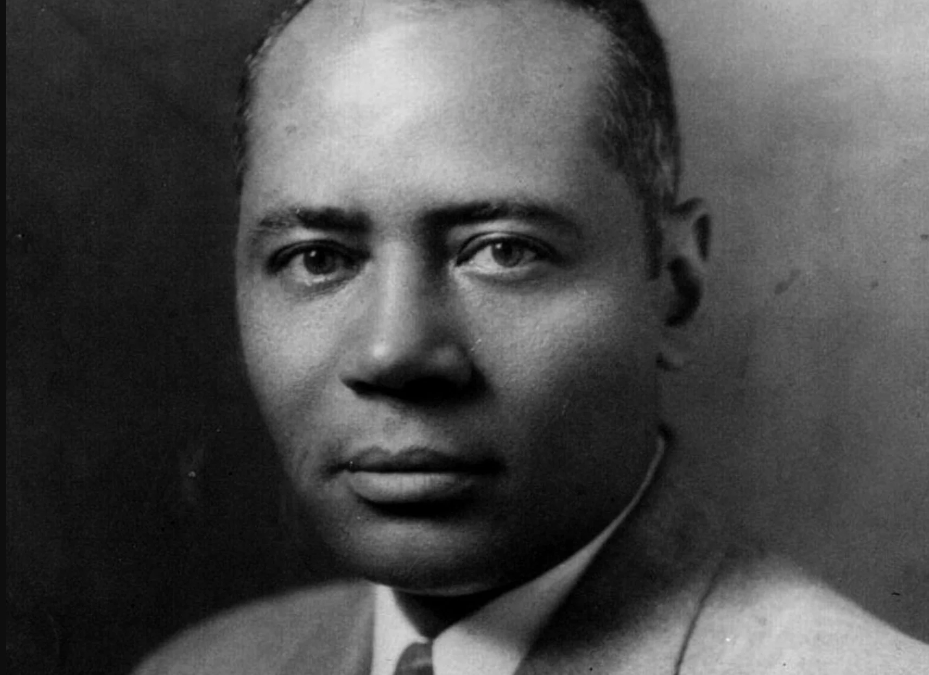
Houston, a powerful advocate of civil rights, helped gain ground for the movement by taking the fight to the court system. Houston earned his A.B. from Amherst College at age 19 and then began teaching English at Howard University. He joined the Army during World War I, serving in a segregated unit of the American Expeditionary Forces.
In 1919 Houston entered Harvard Law School, where he served as the first black editor of the Harvard Law Review. He later joined the faculty at Howard University and began preparing young black lawyers, including Thurgood Marshall, to argue cases against discrimination. Houston himself argued a number of cases before the Supreme Court, serving as special counsel to the National Association for the Advancement of Colored People (NAACP) from 1935 to 1940.
Events
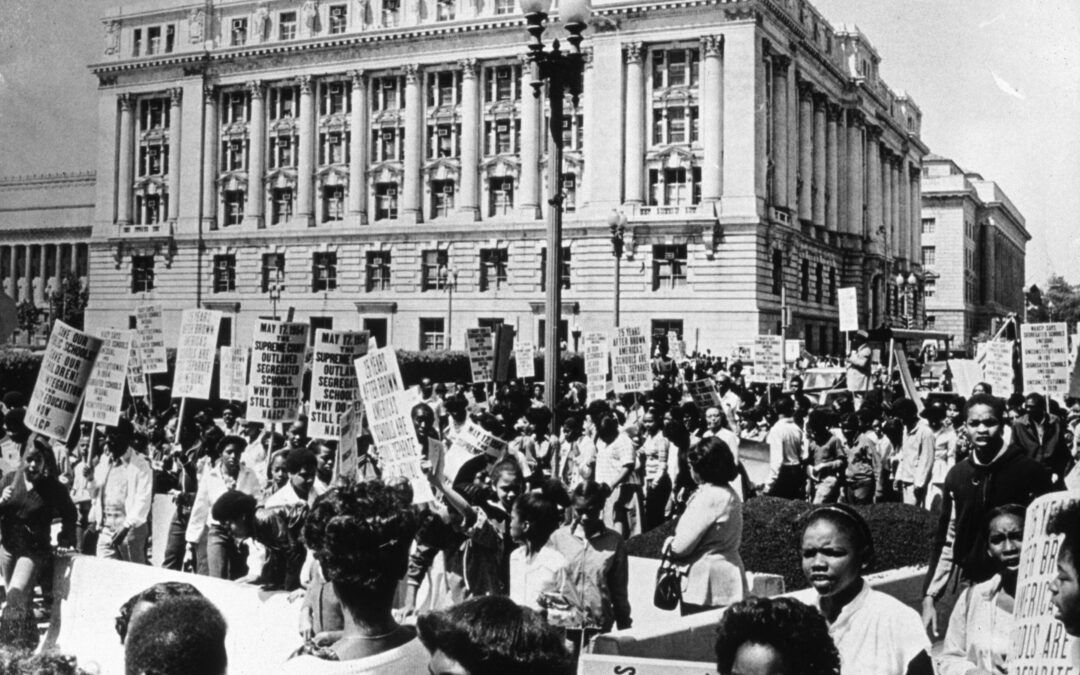
During the 1940s and 1950s, NAACP lawyer Thurgood Marshall directed a carefully constructed legal campaign against Southern segregation laws. These laws separated blacks and whites in such areas of public life as schools, restaurants, drinking fountains, bus stations, and public transportation. The NAACP focused on segregation in education, and won a number of court victories, culminating in the Supreme Court’s ruling in 1954 in Brown v. Board of Education of Topeka. This ruling declared that separate facilities were inherently unequal and therefore unconstitutional, thus reversing the 1896 Plessy v. Ferguson ruling.
However, President Dwight D. Eisenhower did not support a strong federal role in enforcing desegregation, an attitude that encouraged Southern resistance. State troopers were used in Texas to prevent integration; people who supported integration risked losing their jobs; and segregationists set off bombs in Tennessee and Alabama. In a “Southern Manifesto,” 101 congressmen vowed to resist integration.
Meanwhile, after three years of negotiation, the black community and the school board in Little Rock, Arkansas, devised a plan to enroll nine black students at Central High School. When the plan was implemented in the fall of 1957, Governor Orval Faubus used the National Guard to block the black students from entering the school. The public outcry forced Eisenhower to act. He put the National Guard under federal direction and sent federal troops to enforce the Brown decision and protect the students from white mobs. Nevertheless, the following year, Faubus closed all of Little Rock’s high schools rather than integrate them. Ten years after the Brown decision, less than two percent of Southern black children attended integrated schools.
Whites in many areas of the South organized private white schools rather than accept integration. In 1959 officials in Prince Edward County, Virginia, moved white students and state education funds to hastily organized white private schools. For four years, until privately funded black schools could be organized, black students in the county had no schools. Finally in 1963 the county complied with court rulings and reopened the public schools. During the early 1960s, it was necessary to maintain federal troops and marshals on the University of Mississippi campus to ensure the right of a black student to attend classes.

Medicine
(b. Jan. 18, 1858, Hollidaysburg, Pa.–d. Aug. 4, 1931, Idlewild, Mich.), American physician and founder of Provident Hospital in Chicago, credited with the first successful heart surgery.
Williams graduated from Chicago Medical College in 1883. He served as surgeon for the South Side Dispensary (1884-92) and physician for the Protestant Orphan Asylum (1884-93). In response to the lack of opportunity for blacks in the medical professions, he founded (1891) the nation’s first interracial hospital, Provident, to provide training for black interns and the first school for black nurses in the United States. He was a surgeon at Provident (1892-93, 1898-1912) and surgeon in chief of Freedmen’s Hospital, Washington, D.C. (1894-98), where he established another school for black nurses.
It was at Provident Hospital that Williams performed daring heart surgery on July 10, 1893. Although contemporary medical opinion disapproved of surgical treatment of heart wounds, Williams opened the patient’s thoracic cavity without aid of blood transfusions or modern anesthetics and antibiotics. During the surgery he examined the heart, sutured a wound of the pericardium (the sac surrounding the heart), and closed the chest. The patient lived at least 20 years following the surgery. Williams’ procedure is cited as the first recorded repair of the pericardium; some sources, however, cite a similar operation performed by H.C. Dalton of St. Louis in 1891.
Williams later served on the staffs of Cook County Hospital (1903-09) and St. Luke’s Hospital (1912-31), both in Chicago. From 1899 he was professor of clinical surgery at Meharry Medical College in Nashville, Tenn., and was a member of the Illinois State Board of Health (1889-91). He published several articles on surgery in medical journals. Williams became the only black charter member of the American College of Surgeons in 1913.
