Alexandre Dumas
Dumas, Alexandre (1802-1870), was a Black novelist and playwright of the romantic period in France, known as Dumas p

Dumas, Alexandre (1802-1870), was a Black novelist and playwright of the romantic period in France, known as Dumas p
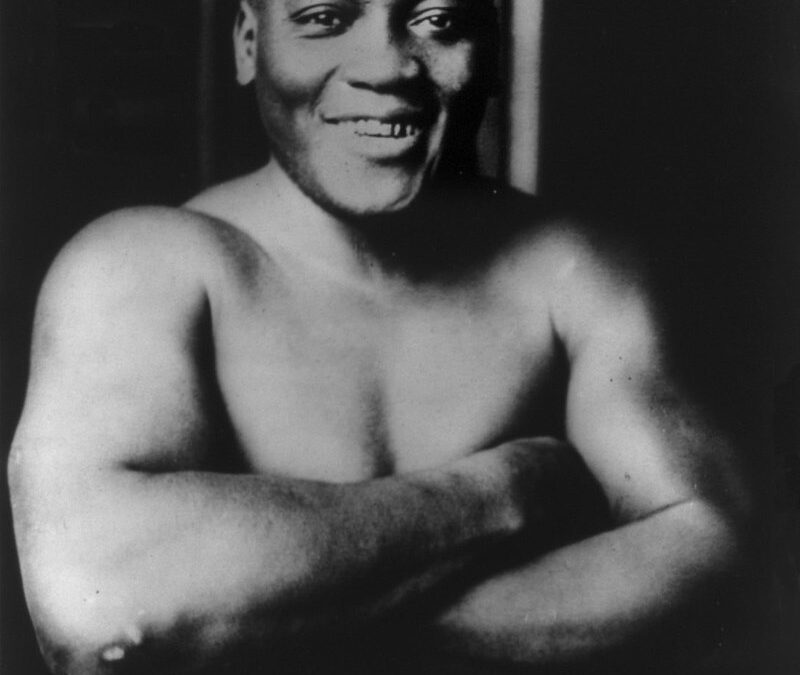
byname of JOHN ARTHUR JOHNSON (b. March 31, 1878, Galveston, Texas, U.S.–d. June 10, 1946, Raleigh, N.C.), first black to hold the heavyweight boxing championship of the world.
Johnson fought professionally from 1897 to 1928 and engaged in exhibition matches as late as 1945. He won the title by knocking out champion Tommy Burns in Sydney, Dec. 26, 1908, and lost it on a knockout by Jess Willard in 26 rounds in Havana, April 5, 1915.
Until his fight with Burns, discrimination limited Johnson’s opportunities and purses. When he became champion, a hue and cry for a “Great White Hope” produced numerous opponents.
At the height of his career Johnson was excoriated by the press for having twice married white women, and he further offended white supremacists by knocking out former champion James J. Jeffries, who was induced to come out of retirement as a “Great White Hope.” In connection with one of his marriages, Johnson was convicted in 1912 of violating the Mann Act in transporting his wife across state lines before their marriage. He was sentenced to a year in prison and was released on bond, pending appeal. Disguised as a member of a black baseball team, he fled to Canada, made his way to Europe, and was a fugitive for seven years.
He defended the championship three times in Paris before agreeing to fight Willard in Cuba. Some observers thought that Johnson, mistakenly believing that the charge against him would be dropped if he yielded the championship to a white man, deliberately lost to Willard. From 1897 to 1928, Johnson had 114 bouts, winning 80, 45 by knockouts.
In 1920 Johnson surrendered to U.S. marshals and served his sentence, fighting in several bouts within the federal prison at Leavenworth, Kan. After his release he fought occasionally and appeared in vaudeville and carnival acts, appearing finally with a trained flea act. He wrote two books of memoirs, Mes Combats (in French, 1914) and Jack Johnson in the Ring and Out (1927; reprinted 1975). He died in an automobile accident.
Frederick D. Gregory is the Associate Administrator for the Office of Space Flight. He began serving in this position, in an acting capacity, in December 2001. He was selected permanently in February 2002. He is responsible for overseeing the management of the International Space Station; Space Shuttle operations; Space Access using Expendable Launch Vehicles for commercial launch services; Space Communications; and Advanced Programs.
From June 1992 to December 2001, Mr. Gregory held the position of Associate Administrator, Office of Safety and Mission Assurance, at NASA Headquarters. As Associate Administrator, he was responsible for assuring the safety, reliability, quality, and mission assurance of all NASA programs.
Mr. Gregory has extensive experience as an astronaut, test pilot, and manager of flight safety programs and launch support operations. As a NASA astronaut, he logged 455 hours in space: as pilot for the Orbiter Orbiter Challenger (STS-51B) in 1985, as spacecraft commander aboard Discovery (STS-33) in 1989, and as spacecraft commander aboard Atlantis (STS-44) in 1991. Mr. Gregory served in several key positions as an astronaut, including Astronaut Office Representative for the first Space Shuttle flights (STS-1 and STS-2); lead Capsule Communicator (CAPCOM); Chief, Operational Safety at NASA Headquarters; and Chief, Astronaut Training. He also served on the Orbiter Configuration Control Board and Space Shuttle Program Control Board.
Mr. Gregory retired as a Colonel in the United States Air Force in December 1993 after logging 7,000 hours in more than 50 types of aircraft, including 550 combat missions in Vietnam. His 30-year Air Force career included serving as a helicopter pilot and as a fighter pilot. He graduated from the United States Naval Test Pilot School and served as an engineering test pilot for the Air Force and for NASA. He was selected as a pilot Astronaut in January 1978.
Mr. Gregory holds a Bachelor of Science degree from the United States Air Force Academy and a Master’s degree in Information Systems from George Washington University. He was awarded an honorary Doctor of Science degree from the University of the District of Columbia. He is a member or past member of numerous societies, including the Society of Experimental Test Pilots, American Helicopter Society, Air Force Academy Association of Graduates, the National Technical Association, the Tuskegee Airmen, and the Order of the Daedalians. He is on the Board of Directors for the Young Astronaut Council, Kaiser-Permanente, and Fisk University. He is on the Board of Trustees at the Maryland Science Center, and he is a member of the Executive Committee of the Association of Space Explorers. His honors include the Defense Superior Service Medal, the Legion of Merit, 2 Distinguished Flying Crosses, the NASA Distinguished Service Medal, a NASA Outstanding Leadership Award, National Intelligence Medal of Achievement, National Society of Black Engineers Distinguished National Scientist Award, the George Washington University Distinguished Alumni Award, and the Air Force Association Ira Eaker Award in addition to numerous civic and community honors.
Fredrick Augustus Washington Bailey was born in 1818 to a slave family in Talbot County, Maryland. When Douglass was a young man, he moved to Baltimore to work as a house servant for a family. Douglass was educated by the wife of the family. When Douglass turned 21, he escaped into the North by impersonating a sailor. While in the North, Douglass married Anne Murray, an aqaintance from his days in Baltimore. As an educated man, Douglass traveled Great Britain speaking on abolition. The British were so receptive of Douglass’s ideas that they started a fund to buy his freedom in America.
Douglass founded The North Star on December 3, 1847 as a vehicle to promote his political views. One of Douglass’s friends was John Brown, whose name became infamous at Harper’s Ferry. Athough Douglass was a supporter of Brown’s, he denounced his actions in John Brown, an Address. During the Civil War, Douglass’s sons were part of the 54th Massachusetts Regiment, which was composed of only African-American soldiers. Frederick Douglass was the father of five children, all by his first marriage to Anne Murray. After her death, he remarried his secretary, Helen Pitts. Douglass took a job as a publisher for the New National Era in Washington D.C, but was soon out of work due to a lack of funding. Three short year later Douglass would pass away.
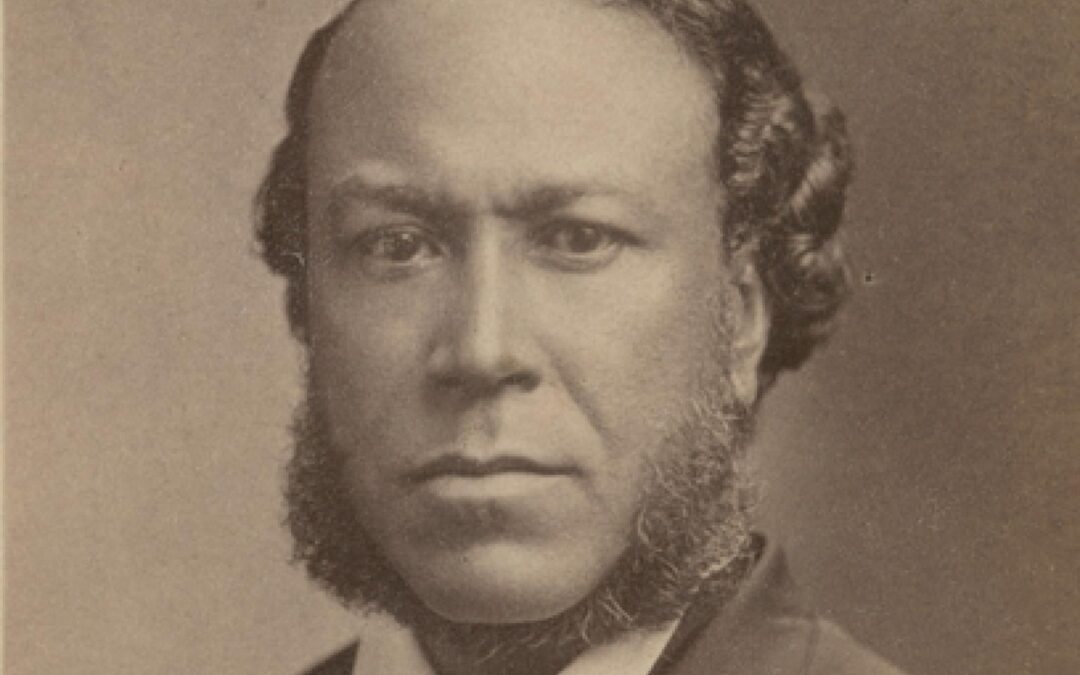
(b. June 21, 1832, Georgetown, S.C., U.S.–d. Aug. 2, 1887, Georgetown), former American slave, the first black to serve in the U.S. House of Representatives (1870-79).
The son of a barber who bought the family’s freedom, Rainey received some private schooling and took up his father’s trade in Charleston, S.C. During the American Civil War he was forced to work on the fortifications in Charleston harbour but managed to escape to the West Indies, where he remained until the end of the war (1865). Upon his return to South Carolina, he was a delegate to the state constitutional convention (1868) and served briefly in the state Senate before his election to the U.S. House of Representatives in 1870.
He was reelected four times, the longest tenure in the House of any black during the Reconstruction era. While in office he dedicated himself to the passage of civil-rights legislation, pressing the interests not only of blacks but of other minorities such as the Indians and the Chinese in California. Upon leaving the House in 1879, he was appointed U.S. internal revenue agent of South Carolina. He resigned that post in 1881 to engage in banking and brokerage enterprises in Washington, D.C.
In January 1944, the naval officer corps was all white. There were some one hundred thousand African American enlisted men in the Navy, however, none were officers. In response to growing pressure from American civil rights organizations, the leaders of the Navy reluctantly set about commissioning a few as officers.
Sixteen black enlisted men were summoned to Camp Robert Smalls, Great Lakes Naval Training Station in Illinois:
Jesse W. Arbor
Samuel Barnes
Philip Barnes
Dalton Baugh
George C. Cooper
Reginald Goodwin
James E. Hair
Graham E. Martin
Dennis Nelson
John W. Reagan
Frank E. Sublett Jr.
William S. White
Charles Lear
Lewis Williams
J. B. Pinkney
A. Alves
All had demonstrated top-notch leadership abilities as enlisted men. The pace was demanding and forced the sixteen men to band together so that all could succeed.
During their officer candidate training, they compiled a class average of 3.89, a record that has yet to be broken.
Although all passed the course, in March 1944, 13 of the group made history when they became the U.S. Navy’s first African-American officers on active duty. 12 were commissioned as ensigns; the thirteenth was made a warrant officer.
They became known as the “Golden Thirteen.”
They were often denied the privileges and respect routinely accorded white naval officers and were given menial assignments.
Only one of the Golden Thirteen made a career of the Navy, and he opened still more doors to black officers. The other members of the group made their marks in civilian life after World War II.