Black History, Religion
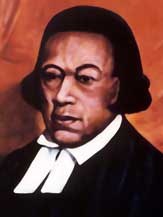
Absalom Jones
Founder of the African Episcopal Church of St. Thomas, Absalom Jones was born into slavery in Sussex County, Delaware, on November 6, 1746. He taught himself to read and knew the New Testament thoroughly at an early age. When he was 16, Absalom’s owner took him to Philadelphia, Pa., where he served as a clerk and handyman in a retail store.
He was allowed to work for himself in the evenings and keep his earning. He was married in 1770. By the time Jones was 38 years old, he had purchased his wife’s freedom, and his own, and had bought a house. Later he built two more houses and used them for rental income. (more…)
Black History, Religion
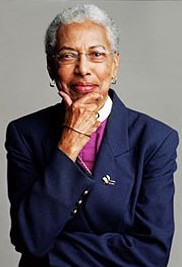
Barbara Clementine Harris
Barbara Clementine Harris made history in 1989 when she became the first woman bishop in the Worldwide Anglican Communion. She was consecrated Suffragan Bishop of the Episcopal Diocese of Massachusetts on February 11, 1989
. As the first woman bishop and an African-American, she received death threats and obscene messages. Though urged to wear a bullet-proof vest to her ordination, she refused. A contingent of the Boston police were assigned to her consecration. Her comment was merely, “I don’t take this in a personal way.” (more…)
Black History, Religion
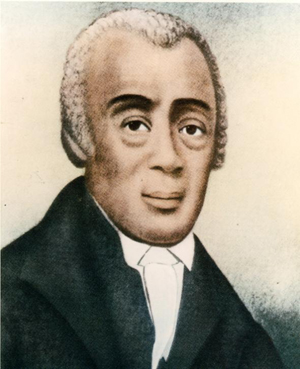
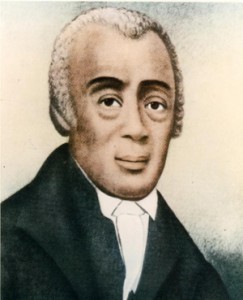 Richard Allen founded the African Methodist Episcopal (AME) Church and the Free African Society. He was born a slave in Philadelphia and with his family was sold to Stockley Sturgis, the owner of a plantation near Dover, Delaware.
With the permission of his master, Allen joined the Methodist Society, learned to read and write and started to preach at Methodist meetings. After his conversion, Allen said that he worked harder to prove that religion did not make slave worse servants. At Allen’s request, a Methodist meeting was held in the Sturgis’ home. (more…)
Religion
1749 – 1823
Although he was a slave, Williams became a sexton in the Methodist Church in 1778. When his owner returned to England in 1783, the church trustees purchased Williams. Upset that churches were segregated, Williams helped establish the African Methodist Episcopal Zion Church, chartered in 1801. The first black church in New York, it is the forerunner of the denomination of that name today.
Religion
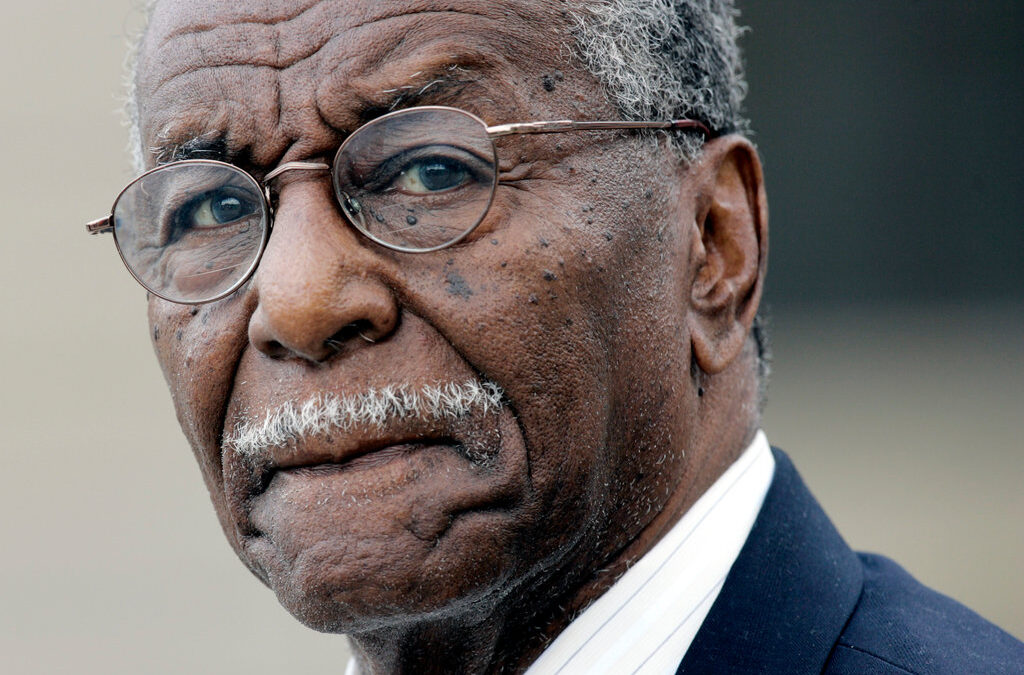
As pastor of Birmingham, Alabama’s First Baptist Church, Shuttlesworth organized the Alabama Christian Movement for Human Rights in 1956. He served as president of the group until 1969 and spearheaded the movement to integrate Birmingham’s schools, offices, and public facilities.
Shuttlesworth worked closely with Martin Luther King, Jr., establishing the Southern Christian Leadership Conference in 1958 and organizing the protests and actions in Birmingham during the spring of 1963. He was secretary of the SCLC from 1958 to 1970. He continues his campaign for racial and social justice as a minister in Cincinnati.
Religion
1882 ? 1965. b. probably near Savannah, Ga. and named George Baker. After preaching in the South, he moved to Harlem (1915) in New York City, became one of the neighborhood’s biggest landlords, acquired wealth through other businesses, including restaurants and grocery stores, and began styling himself Major M. J. Divine, later Father Divine. Although once dismissed as a cult leader, he built the largest religious movement in northern ghettos during the Great Depression. His role as an early civil-rights activist?he led anti-lynching campaigns, instituted economic cooperatives, and organized political action against racial discrimination?has come to be more appreciated. The movement spread beyond New York City to other places in the United States and abroad, sometimes after the group sent whites to purchase property in segregated areas. During the 1940s, his health and influence declined, but his movement symbolized the progressive spirit in the black church and helped define the church’s active role in the civil-rights movement.