The Arts
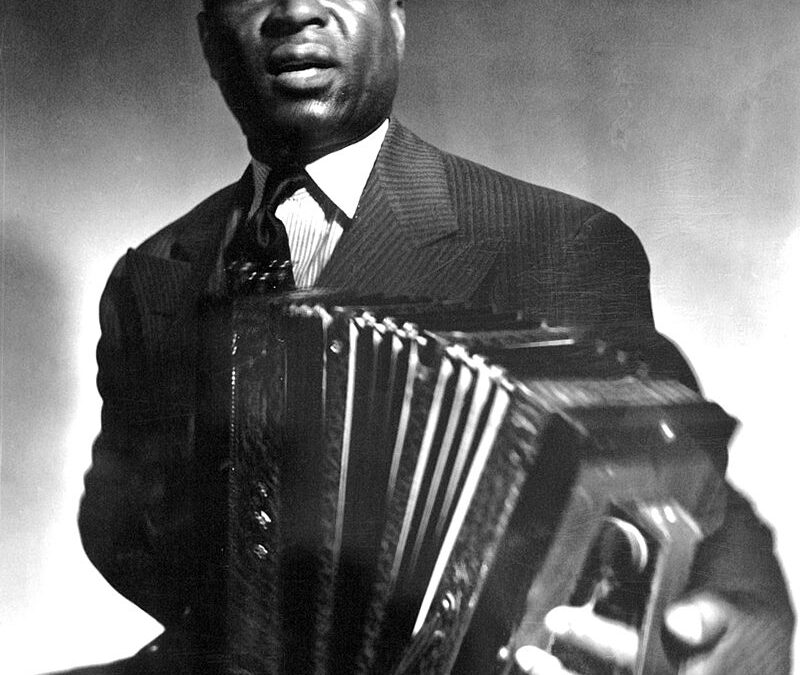
Huddie William Ledbetter ( HYOO-dee; January 1888 or 1889 – December 6, 1949), better known by the stage name Lead Belly (not Leadbelly), was an American folk and blues singer notable for his strong vocals, virtuosity on the twelve-string guitar, and the folk standards he introduced, including his renditions of “In the Pines“, “Pick a Bale of Cotton“, “Goodnight, Irene“, “Midnight Special“, “Cotton Fields“, and “Boll Weevil“.
Lead Belly usually played a twelve-string guitar, but he also played the piano, mandolin, harmonica, violin, and windjammer. In some of his recordings, he sang while clapping his hands or stomping his foot.
Lead Belly’s songs covered a wide range of genres, including gospel music, blues, and folk music, as well as a number of topics, including women, liquor, prison life, racism, cowboys, work, sailors, cattle herding, and dancing. He also wrote songs about people in the news, such as Franklin D. Roosevelt, Adolf Hitler, Jean Harlow, Jack Johnson, the Scottsboro Boys and Howard Hughes. Lead Belly was posthumously inducted into the Rock and Roll Hall of Fame in 1988 and the Louisiana Music Hall of Fame in 2008.
Though many releases credit him as “Leadbelly”, he wrote his name as “Lead Belly”. This is the spelling on his tombstone and is used by the Lead Belly Foundation.
The Arts
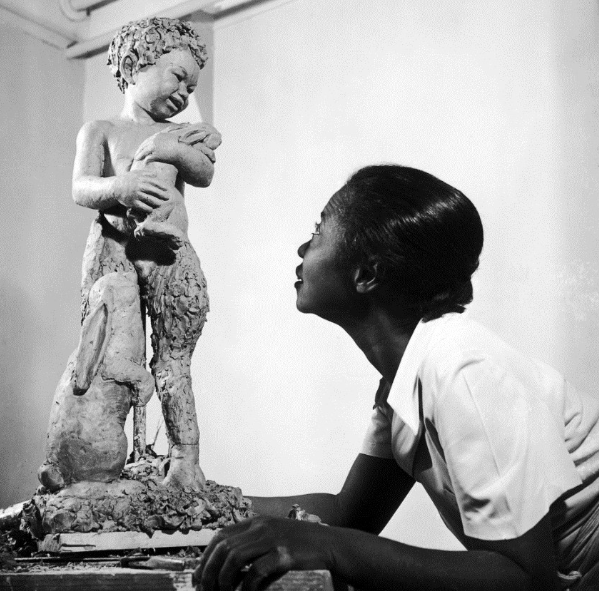
1892 – 1962
A major Harlem Renaissance figure, Savage began creating clay figures as a child, but she did not begin formal art studies until she moved to New York City in 1921. Her bust of black intellectual W.E.B. Du Bois was well received, and Savage then produced likenesses of other prominent black figures, including Frederick Douglass and Marcus Garvey. From 1929 to 1932 Savage studied in Paris. Upon returning to New York, she founded the Savage School of Arts and Crafts in Harlem. In the 1930s she arranged for black artists to receive commissions from the Works Progress Administration. Savage also opened New York’s first black art gallery in 1939. In the 1940s, Savage retired and moved to Saugerties, N.Y.
The Arts
b. New York City. Mitchell studied in New York City and appeared on Broadway and with various companies at home and abroad. He joined the New York City Ballet in 1956, becoming a soloist in 1959. The first black principal dancer of a major company in history, he remained with the company for 20 years. His performance as Puck in A Midsummer Night’s Dream (1964) was especially acclaimed. He also performed with distinction in Western Symphony, Agon, Afternoon of a Faun, and Ebony Concerto. In 1968, Mitchell founded a ballet school in Harlem, New York City, in order to provide classical academic training to black students. By 1970 under his direction the school developed into the Dance Theatre of Harlem, the first black classical ballet company. His works include Rhythmetron (1968) and Ode to Otis (1969).
The Arts
1917 ? 2000
b. Atlantic City, N.J. In Lawrence’s work social themes, often detailing the African-American experience, are expressed in angular, colorful, and richly decorative effects. He has executed many cycles of paintings, including the Migration, (completed 1941, Museum of Modern Art and Phillips Collection, Washington, D.C.), Coast Guard, and Builders series. His War series and Tombstones are in the Whitney Museum of American Art, New York City. Lawrence is also known for his vivid prints and has taught at several major art schools in New York City.
The Arts
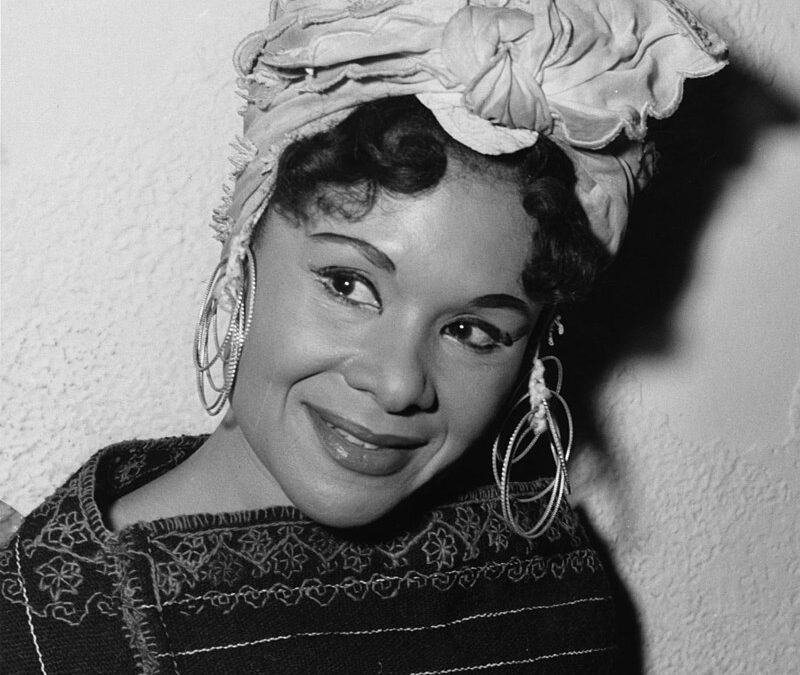
b. Chicago. She studied anthropology at the Univ. of Chicago, where she began her studies on dances of the Caribbean. In addition to teaching anthropology, from the late 1930s until the 1960s, she directed her own dance company, which toured the United States and Europe. Her choreography combines Caribbean and African movements and rhythms with those of modern dance.
In 1965, she accepted a position as adviser to the cultural ministry of Senegal. In 1967, she became director of the Performing Arts Training Center at the East St. Louis branch of Southern Illinois Univ., where she works with youth groups. Through her choreography, teaching, and appearances in different media, she brought African dance to the attention of the public and exerted tremendous influence on the evolution of modern dance. Her works include Chorus and Bal Negre. She also choreographed the film Cabin in the Sky (1940) and Aida (1963) at the Metropolitan Opera in New York City.
The Arts
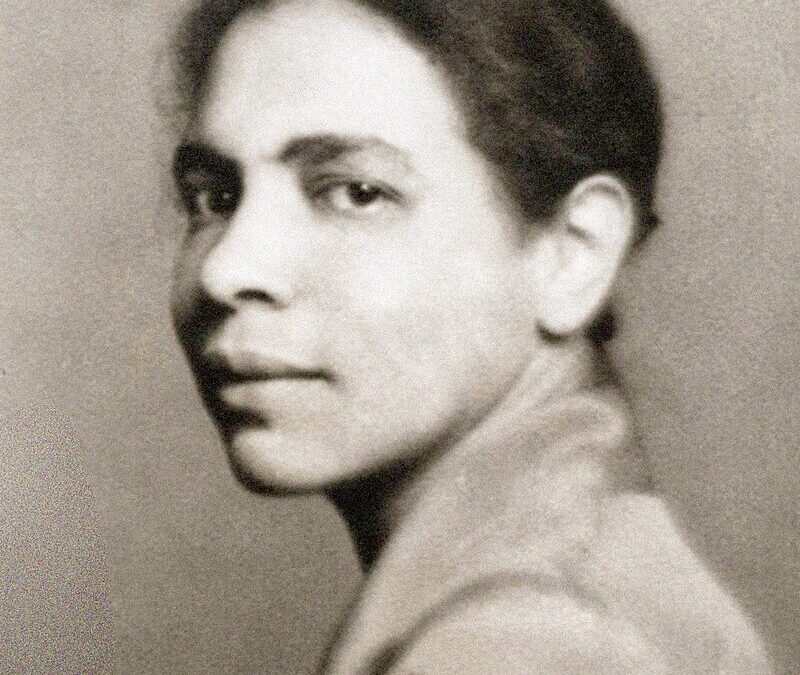
1891-1964. The only black person in her family when she was growing up, Larsen always felt like an outsider. Born Nellie Walker, she lost her West Indian father when she was two and her Danish mother remarried a Danish man. Larsen attended Fisk University, and the University of Copenhagen, and studied nursing in New York. While working as a nurse she married Dr. Samuel Elmer Imes, a prominent black physicist, who brought Larsen into Harlem’s upper class.
After publishing two essays on Danish children’s games, Larsen wrote two novels, Quicksand (1928) and Passing (1929). She won the Harmon Foundation’s Bronze Medal for Literature in 1929, and in 1930 became the first black woman to win a Guggenheim Fellowship. Although her publisher strongly defended her, Larsen was hurt by allegations of plagiarism and in 1933 she went through a humiliating public divorce. Saying she was emigrating to South America, Larsen moved to New York’s Lower East Side and worked as a nurse for 30 years. Larsen is regarded as one of the most sophisticated Harlem Renaissance novelists.
