Black History, Inventions
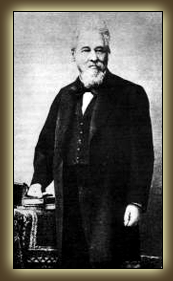
Norbert Rillieux
Norbert Rillieux was born on March 17, 1806 in New Orleans, Louisiana. Norbert was born a free man, although his mother was a slave. His father was a wealthy White engineer involved in the cotton industry. As a child Norbert was educated in the Catholic school system in New Orleans but was sent to Paris, France for advanced schooling.
He studied at the L’Ecole Centrale, the top engineering school in the country and at age 24 became an instructor of applied mechanics at the school, the youngest person to achieve this position. He published a series of papers related to “the Functions and Economic Implications of the Steam Engine.” Eventually, in 1834, Rillieux returned home to his father’s plantation which was now also being used to process and refine sugar.
(more…)
Black History, Literature
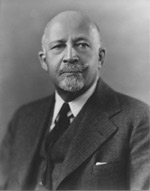
W.E.B. DuBoise
(b. February 23, 1868, Great Barrington, Mass.; d. August 27, 1963, Accra, Ghana), writer, social scientist, critic, and public intellectual; cofounder of the Niagara Movement, the National Association for the Advancement of Colored People (NAACP), and the Pan-African Congress; editor of the NAACP magazine, The Crisis.
Along with Frederick Douglass and Booker T. Washington, historians consider W. E. B. Du Bois one of the most influential African Americans before the Civil Rights Movement of the 1960s. Born only six years after emanicipation, Du Bois was active well into his nineties, dying in 1963, on the eve of the March on Washington. (more…)
Black History, Literature
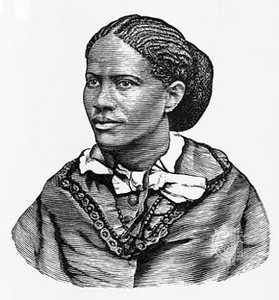
Frances Ellen Watkins Harper
Frances Ellen Watkins Harper was born on September 24, 1825 to free parents. A few years later, she was orphaned. Harper received her education at a school for free African-Americans run by her uncle, William Watkins. The school was located at the present day site of the Baltimore Convention Center.
At the age of 13, Harper’s formal education came to an end when she took a job as a nursemaid.
Harper’s first publication was a collection of poetry and prose entitled Autumn Leaves. It was published while she was a teenager. Harper moved to Philadelphia. She published another volume of poems entitled Poems on Miscellaneous Subjects (1857). This work sold over 10,000 copies within its first five years of publication. In 1860, Harper married the love of her life, Fenton Harper. (more…)
Black History, Firsts, Sports
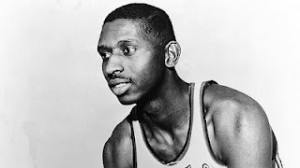
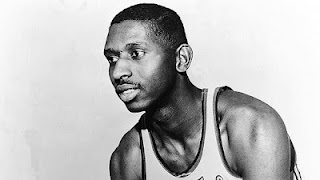
Earl Lloyd
Jackie Robinson, the man who broke Major League Baseball’s color line, ranks as a national icon. Filmmaker Ken Burns go so far as to compare Robinson to Thomas Jefferson. Earl Lloyd, the first African-American to play in the National Basketball Association, ranks as a largely overlooked pioneer.
Lloyd started at power forward – with an emphasis on power – for the 1954-55 NBA champion Syracuse Nationals, who moved to Philadelphia in 1963 to become the 76ers. Lloyd now lives in a retirement community in Crossville, Tenn. He’s a major, if obscure, figure in NBA history.
He doesn’t mind his low profile. Lloyd has no interest in standing beside Robinson in the nation’s memory. Standing there would only make him nervous. (more…)
Black History, Government
Representative, 1873-1877, Republican from Mississippi
Representative, 1882-1883, Republican from Mississippi
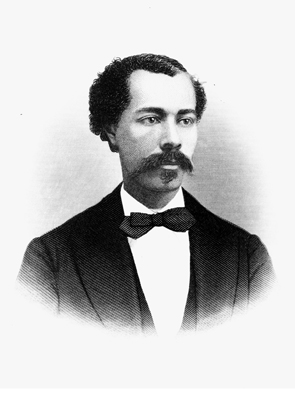
The only African-American Representative from Mississippi for a century, following a quick rise in politics at a young age, John Roy Lynch fought to maintain Republican hegemony in his state in the face of violent Democratic opposition. A veteran of the Civil War and, later, the Spanish-American War, Lynch emphasized his rights as an American citizen on the House Floor.
“It is certainly known by southern as well as northern men that the colored people of this country are thoroughly American,” he declared. “Born and raised upon American soil and under the influence of American institutions; not American citizens by adoption, but by birth.” (more…)