Abolition, Black History
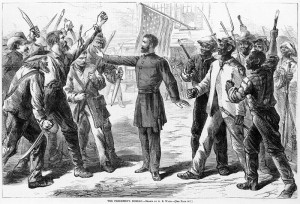 The Bureau of Refugees, Freedmen and Abandoned Lands, often referred to as the Freedmen’s Bureau, was established in the War Department by an act of March 3, 1865. The Bureau supervised all relief and educational activities relating to refugees and freedmen, including issuing rations, clothing and medicine.
The Bureau also assumed custody of confiscated lands or property in the former Confederate States, border states, District of Columbia, and Indian Territory. The bureau records were created or maintained by bureau headquarters, the assistant commissioners and the state superintendents of education and included personnel records and a variety of standard reports concerning bureau programs and conditions in the states.
Black History, The Arts
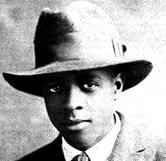
- Wallace Thurman
Thurman, Wallace (1902–1934), novelist, editor, poet, playwright, and literary critic. After leaving his native Salt Lake City, Utah, for the University of Southern California, Wallace Thurman established the Outlet, a magazine similar to those being published as part of the artistic renaissance then blossoming in Harlem, New York.
When it failed after just six months, he himself headed for Harlem, arriving in September 1925. The younger Thurman became a scathing critic of the bourgeois attitudes that motivated the Harlem Renaissance old guards like Alain Locke and W. E. B. Du Bois, charging that they professed their intellectual and artistic freedom while seeking white approval with slanted portrayals of African Americans. (more…)
Black History, Dance

Janet Collins was the first Black Artist to perform in a Met Opera
Janet Collins was born on March 2, 1917 in New Orleans, Louisiana. She grew up in Los Angeles, California. She auditioned for the Ballet Russe de Monte Carlo when she was only 15. She was very talented, but she was not accepted because she was black.
They told her she would have to dance in a white face. She said no thanks. She went to New York City in 1948. She had a chance to dance at the 92nd Street YMHA in February 1948. Many other black dancers got their big chance there.In 1951 she became the first African American prima ballerina at the Metropolitan Opera in NY, NY.
She made a lot of African American little girls want to be ballerinas. Janet taught at the School of American Ballet in New York City. She moved to California and continued to teach dance. In the 1960s, Janet taught dance at Manhattanville College in Purchase, NY. (very close to Pocantico Hills School.) Janet Collins opened the door for other African American girls and women who want to be ballet dancers. (more…)
Black History, Education, Firsts, Science
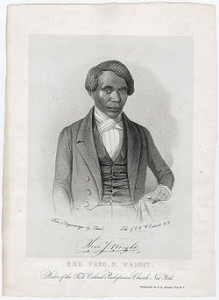
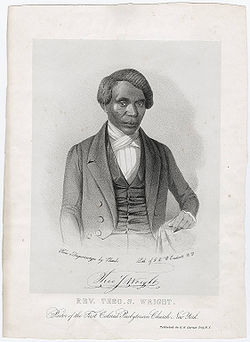
Theodore S. Wright
Theodore S. Wright (1797-1847) was an African-American abolitionist and minister who was active in New York City, where he led the First Colored Presbyterian Church as its second pastor. He was the first African American to attend Princeton Theological Seminary (and any United States theological seminary), from which he graduated in 1829. In 1833 he was a founding member of the American Anti-Slavery Society, and served on its executive committee until 1840.
Theodore Sedgwick Wright was born about 1797 to free parents. He is believed to have moved into New York City with his family, where he attended the African Free School.[1] With the aid of Governor DeWitt Clinton and Arthur Tappan of the New York Manumission Society, and men from Princeton Theological Seminary, Wright was aided in his studies at the graduate seminary. In 1829 he was the first African American to graduate from there, and the first to complete theological studies at a seminary in the United States.
Before 1833, Wright was called as the second minister of New York’s First Colored Presbyterian Church and served there the rest of his life. (It was later known as Shiloh Presbyterian Church and is now St. James Presbyterian Church in Harlem.) He followed the founder, Samuel Cornish. (more…)
Black History, Civil Rights, Politics

Nelson Mandela
South Africa’s First Black President, Nelson Rolihlahla Mandela (7/18/1918 – 12/5/2013) was a South African anti-apartheid revolutionary, politician and philanthropist who served as President of South Africa from 1994 to 1999. He was the first black South African to hold the office, and the first elected in a fully representative election.
His government focused on dismantling the legacy of apartheid through tackling institutionalised racism, poverty and inequality, and fostering racial reconciliation. Politically an African nationalist and democratic socialist, he served as President of the African National Congress (ANC) from 1991 to 1997. Internationally, Mandela was Secretary General of the Non-Aligned Movement from 1998 to 1999. (more…)

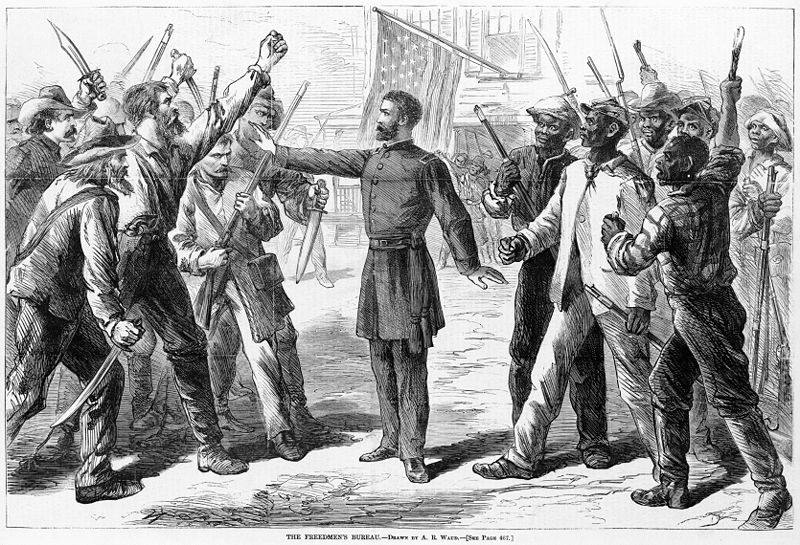 The Bureau of Refugees, Freedmen and Abandoned Lands, often referred to as the Freedmen’s Bureau, was established in the War Department by an act of March 3, 1865. The Bureau supervised all relief and educational activities relating to refugees and freedmen, including issuing rations, clothing and medicine.