Politics
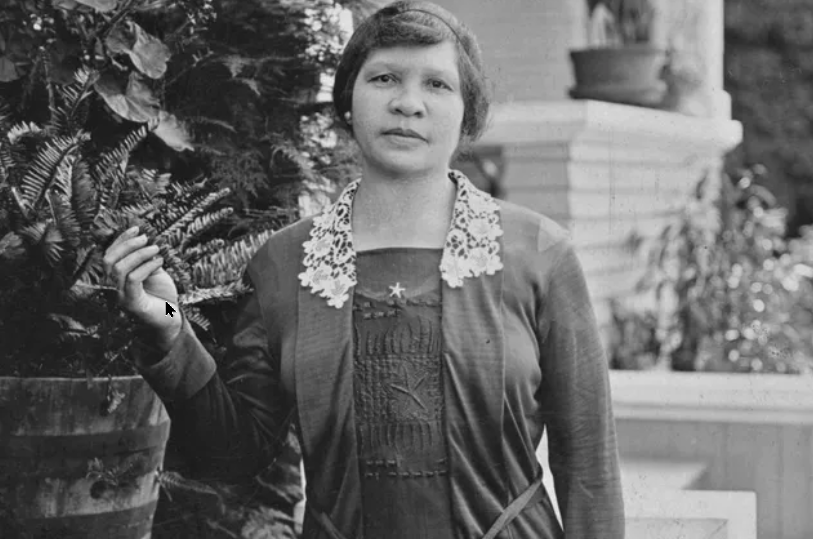
In 1950, Elizabeth Simpson Drewry became the first African- American woman elected to the West Virginia Legislature. She was born in Motley, Virginia, on September 22, 1893. She moved to McDowell County, West Virginia, as a small child and had a daughter at the age of fourteen. Her husband was Bluefield professor William H. Drewry, who died in Chicago in 1951.
Elizabeth Drewry began teaching in the black schools of coal camps along Elkhorn Creek in 1910, and later taught in the McDowell County black public school system. Drewry received her education at Bluefield Colored Institute, Wilberforce University, and the University of Cincinnati, and received a degree from Bluefield State College in 1933.
She first entered politics as a Republican precinct poll worker in 1921. In 1936, Drewry switched her party affiliation to Democrat and became involved in the state Federation of Teachers. She took an interest in local organizations such as the American Red Cross and the McDowell County Public Library. Drewry served on the Northfork Town Council and rose to the position of associate chairperson of the powerful McDowell County Democratic Executive Committee.
In 1948, she ran for the House of Delegates for the first time, but was defeated in the primary election by Harry Pauley of Iaeger. Five Democrats and five Republicans from McDowell County were elected in the primary to run in the general election. Since McDowell County was overwhelmingly Democratic, it virtually assured the five Democratic nominees of winning. Drewry was announced as the winner of the fifth spot on the Democratic ticket in the initial vote count, but Pauley protested the result. In a recount, 64 disputed ballots were all given to Pauley and he defeated Drewry by 32 votes.
In 1950, Drewry ran again and won the fifth spot on the Democratic ticket. In the general election, she received nearly 18,000 votes, becoming the first African-American woman elected to the legislature. In 1927, Minnie Buckingham Harper was appointed to succeed her late husband in the West Virginia Legislature, becoming the first black woman in the nation to serve in a state legislature. However, Harper was never elected.
During her thirteen years in the legislature, Drewry was a leading advocate for education and labor. She chaired both the Military Affairs and Health committees and served on the Judiciary, Education, Labor and Industry, Counties, Districts and Municipalities, Humane Institutions, and Mining committees. She introduced legislation in 1955 allowing women to serve on juries. West Virginia was the last state to eliminate this form of discrimination. In 1956, Ebony magazine honored Drewry as one of the ten outstanding black women in government. She retired due to poor health in 1964, having served longer in the legislature than any other McDowell Countian. Drewry died in Welch on September 24, 1979, at the age of eighty-five.
Publishing
Charlotta Amanda Spears Bass (February 14, 1874 – April 12, 1969) was an American educator, newspaper publisher-editor, and civil rights activist. She also focused on various other issues such as housing rights, voting rights, and labor rights, as well as police brutality and harassment.[1] Bass is believed to be the first African American woman to own and operate a newspaper in the United States; she published the California Eagle from 1912 until 1951.[2] In 1952, Bass became the first African American woman nominated for Vice President, as a candidate of the Progressive Party.
Due to her activities, Bass was repeatedly accused of being part of the Communist Party, for which there was no evidence and which Bass herself repeatedly denied. She was monitored by the FBI, who continued to view her as a potential security threat until she was in her nineties.
Reas more of this article on Wikipedia.
Publishing
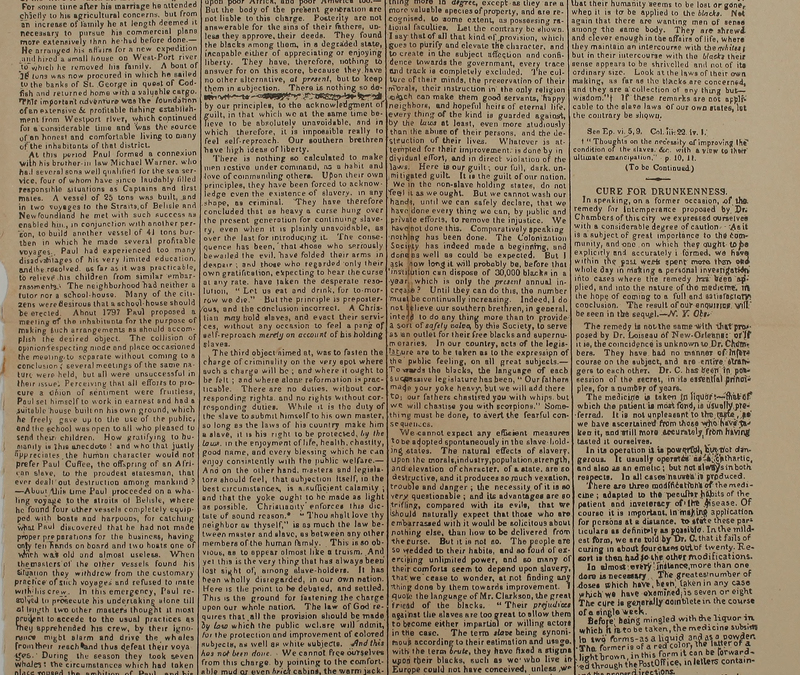
Freedom’s Journal was founded on March 16, 1827 as a four-page, four-column standard-sized weekly. The newspaper was also the first black-owned and operated newspaper in the United States, and was established the same year that slavery was abolished in New York State. The paper attempted to respond to racist material published in other forms of media.
Samuel E. Cornish and John B. Russwurm served as editors. Freedom’s Journal was similar to other reform papers in that its contents consisted of current events, anecdotes, and editorials and was used to address contemporary issues such as slavery and “colonization,” a concept which was conceived by members of The American Colonization Society, a mostly white pro-emigration organization founded in 1816 to repatriate free black people to Africa. Freedom’s Journal provided its readers with regional, national, and international news. It sought to improve conditions for newly freed black men and women living in the North. Freedom’s Journal published birth, death and wedding announcements. To encourage black achievement it featured biographies of renowned black figures such as Paul Cuffee, a black Bostonian who owned a trading ship staffed by free black people.
Russwurm became sole editor of Freedom’s Journal following the resignation of Cornish in September 1827, and began to promote the colonization movement. The majority of the public did not support the paper’s radical shift in support of colonization, and in March 1829, Freedom’s Journal ceased publication. Soon after, Russwurm emigrated to the American Colonization Society of Liberia, and became governor of the Maryland Colony.
Abolition
A twenty eight year-old man who “was tall, and well-made, and possessed of a considerable share of intelligence.” After being whipped severely by his master and hearing of being auctioned off in the near future, Ford decided to enlist the help of the committee running the Underground Rail Road in order to escape his dismal fate. Still recounts Ford’s flight to freedom:
The first day of the woods he passed in prayer incessantly, all alone. In this particular place of seclusion he reamined “four days and nights,” “two days suffered severely from hunger, cold and thrist.” However, one who was a “friend” to him, and knew his whereabouts, managed to to get some food to him and consoling words; but at the end of the four days this friend got inot some difficulty and thus Sheridan was left to “wade through deep waters and head winds” in an almost hopeless state. There he could not consent to stay and starve to death. Accordingly, he left and found another place od seclusion-with a friend in the town- for a pecuniary consideration. A secret passage was procured for him on one of the steamers running between Philadelphia and Richmond, Va. When he left his poor wife, Julia, she was then “lying in prison to be sold,” on the simple charge of having been suspected of conniving at her husband’s escape. As a woman she had known something of the “barbarism of slavery,” from every-day experience, which the large scars about her head indicated-according to Sheridan’s testimony. She was the mother of two children, but had never been allowed to have the care of either of them. The husband, utterly powerless to offer the least sympathy in word or deed, left his dark habitation of cruelty, as above referred to, with no hope of ever seeing wife or child again in this world.
Education
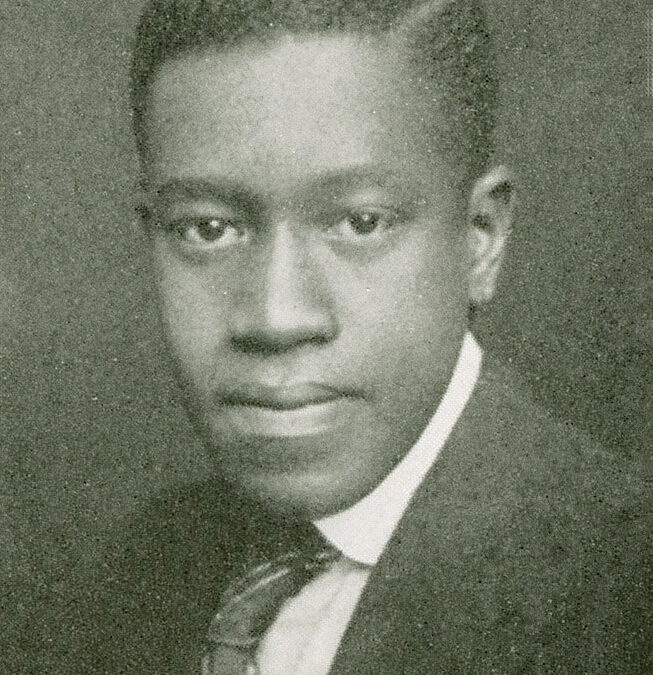
Elbert Frank Cox was born in Evansville, Indiana, in December 1895. He earned the baccalaureate degree from the University of Indiana in 1917 with a major in mathematics. After serving in the US Army in France during World War I, he returned to pursue a career in teaching. Before enrolling in the graduate mathematics program at Cornell University in September 1922, he taught mathematics in the public schools in Henderson, Kentucky and later at Shaw University in Raleigh, North Carolina. In 1925 he was awarded the Doctor of Philosophy degree in mathematics from Cornell and thus, he is the first known Black to receive the Ph.D. in Mathematics in the United States; in fact, in the world.
Cox’s thesis advisor was William Lloyd Garrison Williams, a McGill University mathematics professor from 1924-1952. Before arriving at McGill University, Williams taught at Cornell University, where he met Cox.; Despite having only a bachelor’s degree in mathematics, Cox had shown outstanding ability as an instructor at North Carolina’s Shaw University, thereby earning the Erastus Brooks Fellowship that allowed him to pursue his Ph.D. at Cornell. The two mathematicians became life-long friends and Williams arranged for Cox to come to Montreal for the final stages of his dissertation on the properties of difference equations.
When Williams realized that Cox had the chance to be recognized not only as the first Black in the United States, but as the first Black in the world to receive a Ph.D. in mathematics, he urged his student to send his thesis to a university in another country so that Cox’s status in this regard would not be disputed. Universities in England and Germany turned Cox down (possible for reasons of race), but Japan’s Imperial University of San Deigo accepted the dissertation.
In September 1925, Cox accepted a teaching position at West Virginia State College. He stayed there four year and in 1929 moved to Howard University. Cox remained at Howard until his retirement in 1965 and served as chairman of the Mathematics Department from 1957-1961. In 1975, the Howard University Mathematics Department, at the time of the inauguration of the Ph.D. program, established the Elbert F. Cox Scholarship Fund for undergraduate mathematics majors to encourage young Black students to study mathematics at the graduate level.
While Cox did not live to see the inauguration of the Ph.D. program at Howard, it is believed by many that Cox did much to make it possible. Cox helped to build up the department to the point that the Ph.D. program became a practical next step. He gave the department a great deal of credibility; primarily because of this personal prestige as a mathematician, as being the first Black to receive a Ph.D. in mathematics, because of the nature and kinds of appointments to the faculty that were made while he chaired the Department, and because of the kinds of students that he attracted to Howard to study mathematics at both the undergraduate and graduate (master’s) levels. Cox’s portrait hangs in Howard’s Mathematics Common Room as a reminder of his contribution to the Mathematics Department, the University, and the Community of scholars in general.
In 1980, the National Association of Mathematicians (NAM) honored Cox with the inauguration of the Cox-Talbot Address which is given annually at NAM’s National Meeting.
