Abolition
A twenty eight year-old man who “was tall, and well-made, and possessed of a considerable share of intelligence.” After being whipped severely by his master and hearing of being auctioned off in the near future, Ford decided to enlist the help of the committee running the Underground Rail Road in order to escape his dismal fate. Still recounts Ford’s flight to freedom:
The first day of the woods he passed in prayer incessantly, all alone. In this particular place of seclusion he reamined “four days and nights,” “two days suffered severely from hunger, cold and thrist.” However, one who was a “friend” to him, and knew his whereabouts, managed to to get some food to him and consoling words; but at the end of the four days this friend got inot some difficulty and thus Sheridan was left to “wade through deep waters and head winds” in an almost hopeless state. There he could not consent to stay and starve to death. Accordingly, he left and found another place od seclusion-with a friend in the town- for a pecuniary consideration. A secret passage was procured for him on one of the steamers running between Philadelphia and Richmond, Va. When he left his poor wife, Julia, she was then “lying in prison to be sold,” on the simple charge of having been suspected of conniving at her husband’s escape. As a woman she had known something of the “barbarism of slavery,” from every-day experience, which the large scars about her head indicated-according to Sheridan’s testimony. She was the mother of two children, but had never been allowed to have the care of either of them. The husband, utterly powerless to offer the least sympathy in word or deed, left his dark habitation of cruelty, as above referred to, with no hope of ever seeing wife or child again in this world.
Education
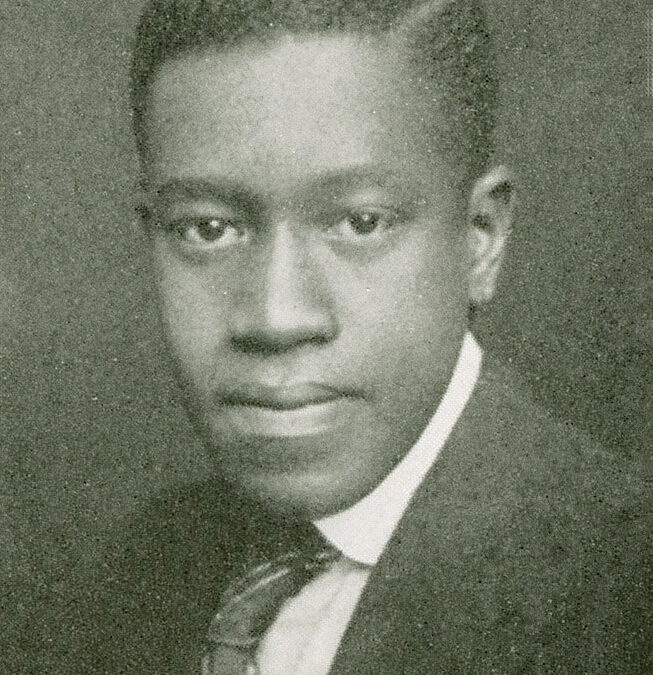
Elbert Frank Cox was born in Evansville, Indiana, in December 1895. He earned the baccalaureate degree from the University of Indiana in 1917 with a major in mathematics. After serving in the US Army in France during World War I, he returned to pursue a career in teaching. Before enrolling in the graduate mathematics program at Cornell University in September 1922, he taught mathematics in the public schools in Henderson, Kentucky and later at Shaw University in Raleigh, North Carolina. In 1925 he was awarded the Doctor of Philosophy degree in mathematics from Cornell and thus, he is the first known Black to receive the Ph.D. in Mathematics in the United States; in fact, in the world.
Cox’s thesis advisor was William Lloyd Garrison Williams, a McGill University mathematics professor from 1924-1952. Before arriving at McGill University, Williams taught at Cornell University, where he met Cox.; Despite having only a bachelor’s degree in mathematics, Cox had shown outstanding ability as an instructor at North Carolina’s Shaw University, thereby earning the Erastus Brooks Fellowship that allowed him to pursue his Ph.D. at Cornell. The two mathematicians became life-long friends and Williams arranged for Cox to come to Montreal for the final stages of his dissertation on the properties of difference equations.
When Williams realized that Cox had the chance to be recognized not only as the first Black in the United States, but as the first Black in the world to receive a Ph.D. in mathematics, he urged his student to send his thesis to a university in another country so that Cox’s status in this regard would not be disputed. Universities in England and Germany turned Cox down (possible for reasons of race), but Japan’s Imperial University of San Deigo accepted the dissertation.
In September 1925, Cox accepted a teaching position at West Virginia State College. He stayed there four year and in 1929 moved to Howard University. Cox remained at Howard until his retirement in 1965 and served as chairman of the Mathematics Department from 1957-1961. In 1975, the Howard University Mathematics Department, at the time of the inauguration of the Ph.D. program, established the Elbert F. Cox Scholarship Fund for undergraduate mathematics majors to encourage young Black students to study mathematics at the graduate level.
While Cox did not live to see the inauguration of the Ph.D. program at Howard, it is believed by many that Cox did much to make it possible. Cox helped to build up the department to the point that the Ph.D. program became a practical next step. He gave the department a great deal of credibility; primarily because of this personal prestige as a mathematician, as being the first Black to receive a Ph.D. in mathematics, because of the nature and kinds of appointments to the faculty that were made while he chaired the Department, and because of the kinds of students that he attracted to Howard to study mathematics at both the undergraduate and graduate (master’s) levels. Cox’s portrait hangs in Howard’s Mathematics Common Room as a reminder of his contribution to the Mathematics Department, the University, and the Community of scholars in general.
In 1980, the National Association of Mathematicians (NAM) honored Cox with the inauguration of the Cox-Talbot Address which is given annually at NAM’s National Meeting.

Literature
Toni Morrison was born in Lorain, Ohio, in the United States. Her works comprise novels and essays. In her academic career she is a professor in the humanities at the University of Princeton, New Jersey.
She has written six novels, each of them of great interest. Her oeuvre is unusually finely wrought and cohesive, yet at the same time rich in variation. One can delight in her unique narrative technique, varying from book to book and developed independently, even though its roots stem from Faulkner and American writers from further south. The lasting impression is nevertheless sympathy, humanity, of the kind which is always based on profound humour.
“Song of Solomon” (1978) with its description of the black world in life and legend, forms an excellent introduction to the work of Toni Morrison. Milkman Dead’s quest for his real self and its source reflects a basic theme in the novels. The Solomon of the title, the southern ancestor, was to be found in the songs of childhood games. His inner intensity had borne him back, like Icarus, through the air to the Africa of his roots. This insight finally becomes Milkman’s too.
“Beloved” (1987) continues to widen the themes and to weave together the places and times in the network of motifs. The combination of realistic notation and folklore paradoxically intensifies the credibility. There is enormous power in the depiction of Sethe’s action to liberate her child from the life she envisages for it, and the consequences of this action for Sethe’s own life.
In her latest novel “Jazz” (1992), Toni Morrison uses a device which is akin to the way jazz itself is played. The book’s first lines provide a synopsis, and in reading the novel one becomes aware of a narrator who varies, embellishes and intensifies. The result is a richly complex, sensuously conveyed image of the events, the characters and moods.
As the motivation for the award implies, Toni Morrison is a literary artist of the first rank. She delves into the language itself, a language she wants to liberate from the fetters of race. And she addresses us with the lustre of poetry.
The Arts
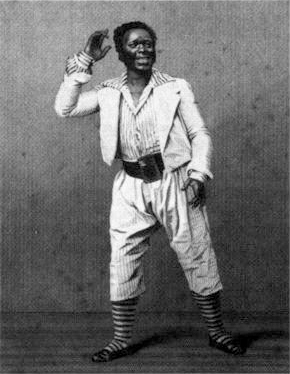
Ira Aldridge was born around 1805. His place of birth has been listed as Africa but more often Bel Air, Maryland. He was apprenticed as a carpenter under a German immigrant. Aldridge learned carpentry as well as German. Because of the lack of schools for African-Americans in Maryland, Aldridge moved to New York and attended the African Free School and Schenectady College. It was at Schenectady that Aldridge became interested in acting. He raised money and moved to Glasgow, Scotland.
He studied at the University of Glasgow, developing voice projection and dramatic skills. Aldridge was so gifted that by 1837 he was drawing crowds to see him portray Shakespearian roles. Aldridge was such a great actor that he performed for the president of the U.S., Queen Victoria and the Archduch of Chambory. He received many awards and was heavily decorated. Aldridge was even the first African-American to become a knight. He married twice and was divorced once. Aldridge died in Poland in 1867. At the Shakespearean Memorial Theatre in Stratford-On-Avon, England, a chair is dedicated to the memory of Ira Aldridge.

Music
Eubie Blake, ragtime composer and performer, was born on February 7,1883 in Baltimore, Md. When he was around four or five, Blake began playing his family’s pump organ. Noticing his interest in music, Blake’s parents signed him up for piano lessons with a neighborhood teacher. In 1898, at the age of 15, Blake became interested in ragtime, to his mother’s dismay. Against her wishes and without her knowing, he began his professional music career by playing ragtime piano in Baltimore brothels, honky tonks and bars. He later played in clubs and saloons. Blake’s work led him to meet the major musicians of the time. One of whom, Noble Sissle, would later become his partner.
The pair met in 1915. Sissle joined Blake’s band as a singer. Noble Sissle and Eubie Blake created an vaudeville act, the Dixie Duo. They wrote songs and performed. Sophie Tucker sang their first song, “It’s all your fault.” The song was an instant hit. Then Blake and Sissle teamed up with another duo to create Shuffle Along The Broadway all-star cast included Josephine Baker Florence Mills and Paul Robeson. Many of Blake’s most famous songs come from Shuffle Along including “I’m Just Wild about Harry” and “Love Will Find a Way”. The play was so popular that in 1921 it was being performed by three different touring companies. After the success of Shuffle Along ,
Blake and Sissle collaborated on Elsie and Chocolat Dandies. Blake also created some shows on his own including Swing It, Blackbirds and Eubie! Then, as the popularity of ragtime faded, Eubie Blake took a twenty-three year break from show business. In 1969, at the age of 56 he returned. Blake toured the world playing piano and giving lectures on ragtime music. He made an album called The Fifty-six Years of Blake and he formed his own company. Just over one hundred years after his life began, on February 12, 1983, Eubie Blake died in Brooklyn, New York.
