Politics
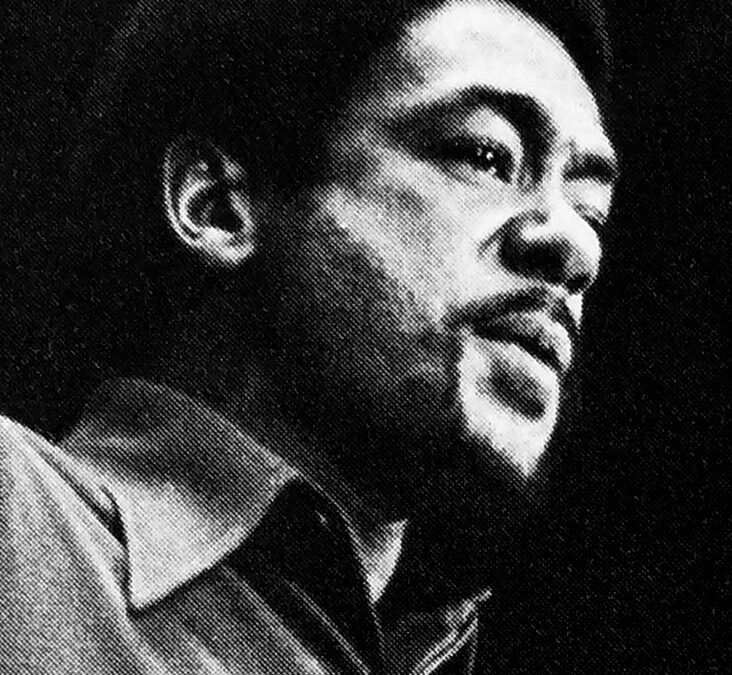
Robert Seale was born on Oct. 22, 1936, in Dallas, Texas. He was an African-American political activist and co-founder, along with Huey Newton, of the Black Panther Party. He would eventually become the national chairman of the organization. Seale was one of a generation of young African-American radicals who broke away from the traditionally nonviolent Civil Rights Movement to preach a doctrine of militant black empowerment. Following the dismissal of murder charges against him in 1971, Seale somewhat moderated his more militant views and devoted his time to effecting change from within the system.
Seale grew up in Dallas and in California. Following service in the U.S. Air Force, he entered Merritt College, in Oakland, Calif. During his time at Merrit, his political views took root in 1962, when he first heard Malcolm X speak. Seale helped found the Black Panthers in 1966. Noted for their aggressive views, they also ran medical clinics and served free breakfasts to school children, among other programs.
In 1969 Seale was indicted in Chicago for conspiracy to incite riots during the Democratic national convention the previous year. The court refused to allow him to have his choice of lawyer. When Seale repeatedly rose to insist that he was being denied his constitutional right to counsel, the judge ordered him bound and gagged. He was convicted of 16 counts of contempt and sentenced to four years in prison. In 1970-71 he and a co-defendant were tried for the 1969 murder of a Black Panther suspected of being a police informer. The six-month-long trial ended with a hung jury.
Following his release from prison, Seale renounced violence as a means to an end and announced his intention to work within the political process. He ran for mayor of Oakland in 1973, finishing second. As the Black Panther Party faded from public view, Seale took on a quieter role, working to improve social services in black neighborhoods and to improve the environment. Seale’s writings include such diverse works as Seize the Time (1970), a history of the Black Panther movement and Barbeque’n with Bobby (1988), a cookbook.
Firsts
Byname of ELIZABETH COLEMAN (b. Jan. 26, 1893, Atlanta, Texas, U.S.–d. April 30, 1926, Jacksonville, Fla.), black American aviator, a star of early aviation exhibitions and air shows.
One of 13 children, Coleman grew up in Waxahatchie, Texas, where her mathematical aptitude freed her from working in the cotton fields. She attended college in Langston, Okla., briefly, then moved to Chicago, where she worked as a manicurist and restaurant manager and became interested in the then-new profession of aviation.
Discrimination thwarted Coleman’s attempts to enter aviation schools in the United States. Undaunted, she learned French and at age 27 was accepted at the Caudron Brothers School of Aviation in Le Crotoy, France. Black philanthropists Robert Abbott, founder of the Chicago Defender, and Jesse Binga, a banker, assisted with her tuition. On June 15, 1921, she became the first American woman to obtain an international pilot’s license from the F
Civil Rights
Raised in abolitionist traditions by his minister father, A. Philip Randolph mirrored those beliefs for more than 60 years as a champion of equal rights. He came to national prominence by organizing the Brotherhood of Sleeping Car Porters and achieved the first union contract signed by a white employer and an African American labor leader (in 1937). In 1941 he conceived a march on Washington, DC, to protest exclusion of African American workers from defense jobs. Faced with the public relations threat of 100,000 marchers, President Franklin Roosevelt established the wartime Fair Employment Practice Committee. Randolph founded the League for Nonviolent Civil Disobedience Against Military Segregation, which in 1948 pressured President Harry Truman into ending segregation in the armed forces. Although in later years he became less militant, Randolph was a dedicated socialist from his college days in New York. His lifelong belief in unionism and integration flowed from that philosophy, and he went into action in 1917 by co-founding The Messenger, a weekly magazine of African-American protest, and lecturing across the country. For his outspoken leadership, Randolph’s opponents characterized him as “the most dangerous Negro in America” because of his proven power to create change. He was still the acknowledged patriarch into the early 1970s and into his 80s, after his key role in organizing the historic, 250,000 strong March on Washington in 1963.
The Arts
Dumas, Alexandre (1802-1870), was a Black novelist and playwright of the romantic period in France, known as Dumas p
The Arts
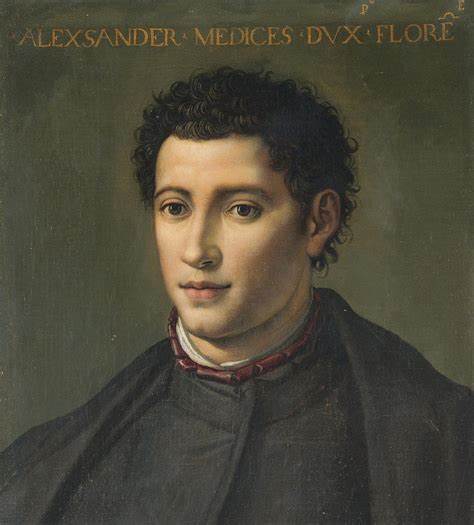
The House of Medici is credited with helping to usher in the European Renaissance, mostly through the efforts of Catherine De’ Medici, to promote the arts. Alessandro, the Duke of Florence, was questionable yet nevertheless a direct part of this great Dynasty.
Historical records are unclear regarding how the illegitimate Alessandro came into this distinguished family. How he became the Duke is also puzzling. It is thought to be the result of a political scheme concocted by Emperor Charles V and Pope Clement VII, who was widely rumored to be his father.
Alessandro was likely the son of a servant named Simonetta, who was employed by the Medici’s in Rome. He married Margaret, daughter of Charles V, but no children were born from this union. Howerver, according to anthrophotojournalist Joel Augustus Rogers, Alessandro did father several children who eventually married into Europe’s aristocracy.
As Duke, Alessandro is remembered for paying special attention not only to his rich supporters but to his peasant constituents as well, and he showed great interest in the arts. Apparently he had his enemies. He remained wary during his short reign, cautiously ordering the confiscation of all weapons in the city, as if he knew of his impending murder. On January 5, 1537, Alessandro was assassinated by his cousin Lorenzino. His death was later avenged by his successor, Cosimo I.
