Black History, Civil Rights, Other

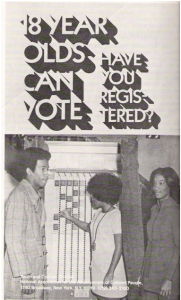 The NAACP’s official organ, The Crisis Magazine, carried information on young people and encouraged formation of youth units for a number of years before any action was taken to form a division in the Association devoted to youth activities. In 1935, during the St. Louis Convention, a fiery address was made by one of the youth delegates, Miss Juanita Jackson, to create a department for youth.
Subsequently, on September 15, 1935, Miss Jackson joined the Association’s staff and became the first Youth Secretary. The NAACP National Board of Directors passed a resolution formally creating the Youth and College Division in March of 1936. Under the guidance of Ms. Jackson, a National Youth Program was created for youth members of the NAACP. This program provided national activities for youth that were supported by monthly meetings discussing local needs of the community. The major national youth activities were demonstrations against lynching and seminars and group discussions on the inequalities in public education. (more…)

Black History, Civil Rights
Mary Church TerrellMary Church was born in Memphis, Tennessee, on 23rd September, 1863. Both her parents, Robert Church and Louisa Ayers, were both former slaves. Robert was the son of his white master, Charles Church.
During the Memphis race riots in 1866 Mary’s father was shot in the head and left for dead. He survived the attack and eventually became a successful businessman. He speculated in the property market and was considered to be the wealthiest black man in the South.
Mary was an outstanding student and after graduating from Oberlin College, Ohio, in 1884, she taught at a black secondary school in Washington and at Wilberforce College in Ohio. Through her father, Mary met Frederick Douglass and Booker T. Washington. She was especially close to Douglass and worked with him on several civil rights campaigns. (more…)
Black History, Civil Rights
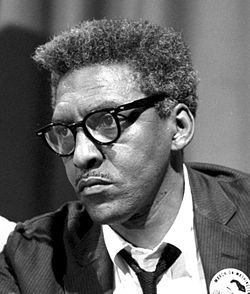
Bayard Rustin
Bayard Rustin was active in the struggle for human rights and economic Justice for over 50 years Born in 1912, he was reared in West Chester, Pennsylvania where he excelled as a student, athlete and musician. He attended Wilberforce University, Cheyney State College, the City College of New York, and the London School of Economics, earning tuition at odd jobs and singing professionally with Josh White’s Carolinians and Leadbelly.
A Quaker, Mr. Rustin placed his religious conviction above his musical interests, and in 1941 began a long association with the Fellowship of Reconciliation (FOR). Serving as its Race Relations Secretary, he toured the country conducting Race Relations Institutes designed to facilitate communication and understanding between racial groups.
(more…)
Black History, Civil Rights, Other

Watts Burns
The Watts Riots (or Watts Rebellion) took place in the Watts neighborhood of Los Angeles from August 11 to 17, 1965. The six-day riot resulted in 34 deaths, 1,032 injuries, 3,438 arrests, and over $40 million in property damage. It was the most severe riot in the city’s history until the Los Angeles riots of 1992.
In the Great Migration of the 1920s, major populations of African-Americans moved to Northern cities like Detroit, Chicago, and New York City to escape racial segregation, Jim Crow Laws, violence, and racial bigotry in the Southern States. This wave of migration largely bypassed Los Angeles. In the 1940s, in the Second Great Migration, black Americans migrated to the West Coast in large numbers, in response to defense industry recruitment at the start of World War II. The black population in Los Angeles leaped from approximately 63,700 in 1940 to about 350,000 in 1965, making the once small black community visible to the general public.
Black History, Civil Rights
 On June 25, 1941, President Roosevelt signed Executive Order 8802 creating the Fair Employment Practices Committee (FEPC). The order banned racial discrimination in any defense industry receiving federal contracts by declaring “there shall be no discrimination in the employment of workers in defense industries or government because of race, creed, color, or national origin.” The order also empowered the FEPC to investigate complaints and take action against alleged employment discrimination. (more…)
Black History, Civil Rights

Montgomery Bus Boycott
The Montgomery Bus Boycott, in which African Americans refused to ride city buses in Montgomery, Alabama, to protest segregated seating, took place from December 5, 1955, to December 20, 1956, and is regarded as the first large-scale demonstration against segregation in the U.S. On December 1, 1955, four days before the boycott began, Rosa Parks, an African-American woman, refused to yield her seat to a white man on a Montgomery bus.
She was arrested and fined. The boycott of public buses by blacks in Montgomery began on the day of Parks’ court hearing and lasted 381 days. The U.S. Supreme Court ultimately ordered Montgomery to integrate its bus system, and one of the leaders of the boycott, a young pastor named Martin Luther King Jr. (1929-68), emerged as a prominent national leader of the American civil rights movement in the wake of the action.

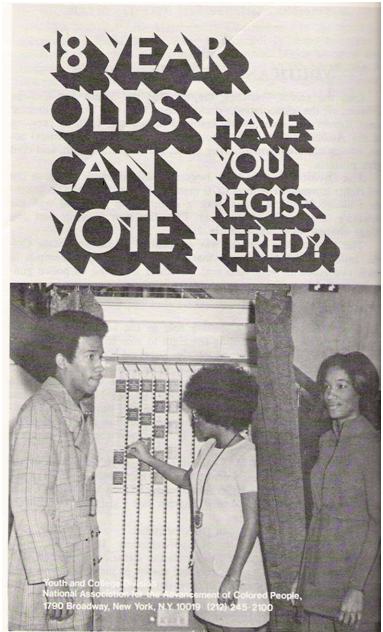 The NAACP’s official organ, The Crisis Magazine, carried information on young people and encouraged formation of youth units for a number of years before any action was taken to form a division in the Association devoted to youth activities. In 1935, during the St. Louis Convention, a fiery address was made by one of the youth delegates, Miss Juanita Jackson, to create a department for youth.