Education
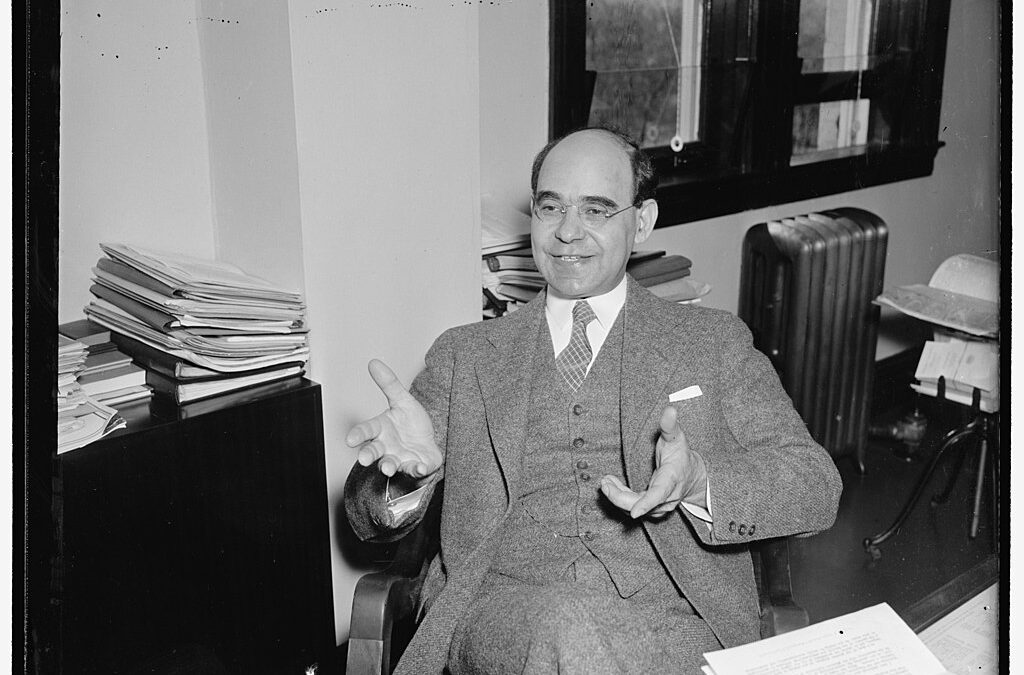
At Blackwell became the seventh African American to earn a Ph.D. in mathematics and is considered by many to be the greatest black mathematician. He in the first African American to be named to the National Academy of Science and in 1979 won the von Neumann Theory Prize.
Education
Mordecai Wyatt Johnson (January 4, 1890 – September 10, 1976) was an American educator and pastor. He served as the first African American president of Howard University from 1926 until 1960. Johnson has been considered one of the three leading African American preachers of the early 20th-century, along with Vernon Johns and Howard Thurman.
Johnson was born on January 12, 1890, in Paris, Tennessee, to parents who were former slaves. His father was Reverend Wyatt J. Johnson, a preacher and mill worker. His mother, Carolyn Freeman, was a domestic worker for one of the prominent families in town.
Read more of this article on Wikipedia.

Education
Among the most outstanding African-American educators of the post-reconstruction era of the late nineteenth century to the middle of the twentieth century were Dr. Anna Julia Cooper and Ms. Nannie Helen Burroughs. During this extremely difficult and rocky period for African-Americans these dedicated sisters were confronted with the arduous tasks of struggling for racial uplift, economic justice and social equality.
Anna Julia Cooper (the eldest of the two women) was born Anna Julia Haywood on August 10, 1858 in Raleigh, North Carolina, the daughter of an enslaved African woman, Hannah Stanley, and her White master. From early on Cooper possessed an unrelenting passion for learning and a sincere conviction that Black women were equipped to follow intellectual pursuits. This thinking ran strongly against the popular opinion of the day. To the contrary, Cooper later said that “not far from kindergarten age” she decided to become a teacher. In Cooper’s words, speaking on the lack of the emphasis on formal education for Black girls, “Not the boys less, but the girls more.” In 1867 Cooper entered St. Augustine’s Normal School and Collegiate Institute in Raleigh. In 1925, at the age of sixty-seven, she earned a Ph.D. from Sorbonne University in Paris, France, becoming only the fourth African-American woman to obtain such a degree. At the tender age of 105, after a lifetime of educating African-American youth, Dr. Cooper died peacefully in her home in Washington, D.C.
Although exceptionally brilliant Anna Julie Cooper was not an isolated phenomenon. Nannie Helen Burroughs, another remarkable sister, was born on May 2, between 1879 to 1883 in Orange, Virginia, to John and Jennie Burroughs. Nannie Helen Burroughs, described as a “majestic, dark-skinned woman,” was only twenty-one years old when she became a national leader, catapulted to fame after presenting a dynamic speech entitled “How the Sisters are Hindered from Helping” at the annual conference of the National Baptist Convention in Richmond, Virginia in 1900.
Education
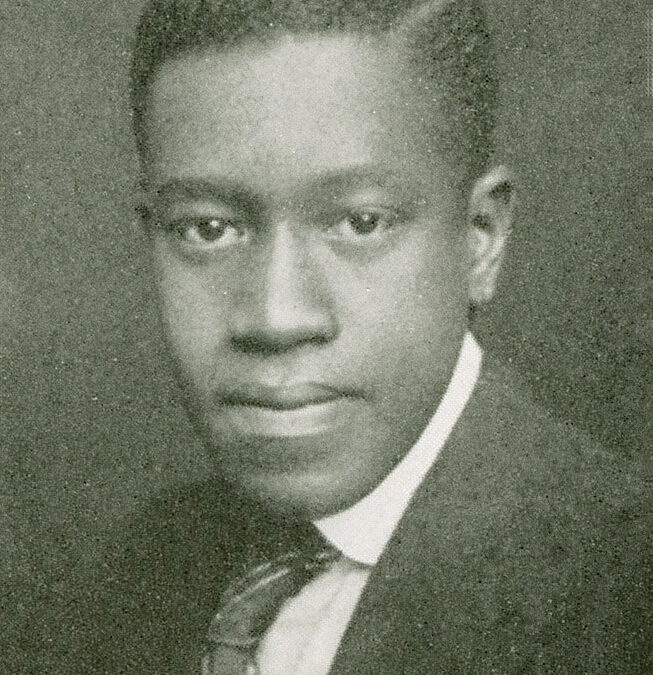
Elbert Frank Cox was born in Evansville, Indiana, in December 1895. He earned the baccalaureate degree from the University of Indiana in 1917 with a major in mathematics. After serving in the US Army in France during World War I, he returned to pursue a career in teaching. Before enrolling in the graduate mathematics program at Cornell University in September 1922, he taught mathematics in the public schools in Henderson, Kentucky and later at Shaw University in Raleigh, North Carolina. In 1925 he was awarded the Doctor of Philosophy degree in mathematics from Cornell and thus, he is the first known Black to receive the Ph.D. in Mathematics in the United States; in fact, in the world.
Cox’s thesis advisor was William Lloyd Garrison Williams, a McGill University mathematics professor from 1924-1952. Before arriving at McGill University, Williams taught at Cornell University, where he met Cox.; Despite having only a bachelor’s degree in mathematics, Cox had shown outstanding ability as an instructor at North Carolina’s Shaw University, thereby earning the Erastus Brooks Fellowship that allowed him to pursue his Ph.D. at Cornell. The two mathematicians became life-long friends and Williams arranged for Cox to come to Montreal for the final stages of his dissertation on the properties of difference equations.
When Williams realized that Cox had the chance to be recognized not only as the first Black in the United States, but as the first Black in the world to receive a Ph.D. in mathematics, he urged his student to send his thesis to a university in another country so that Cox’s status in this regard would not be disputed. Universities in England and Germany turned Cox down (possible for reasons of race), but Japan’s Imperial University of San Deigo accepted the dissertation.
In September 1925, Cox accepted a teaching position at West Virginia State College. He stayed there four year and in 1929 moved to Howard University. Cox remained at Howard until his retirement in 1965 and served as chairman of the Mathematics Department from 1957-1961. In 1975, the Howard University Mathematics Department, at the time of the inauguration of the Ph.D. program, established the Elbert F. Cox Scholarship Fund for undergraduate mathematics majors to encourage young Black students to study mathematics at the graduate level.
While Cox did not live to see the inauguration of the Ph.D. program at Howard, it is believed by many that Cox did much to make it possible. Cox helped to build up the department to the point that the Ph.D. program became a practical next step. He gave the department a great deal of credibility; primarily because of this personal prestige as a mathematician, as being the first Black to receive a Ph.D. in mathematics, because of the nature and kinds of appointments to the faculty that were made while he chaired the Department, and because of the kinds of students that he attracted to Howard to study mathematics at both the undergraduate and graduate (master’s) levels. Cox’s portrait hangs in Howard’s Mathematics Common Room as a reminder of his contribution to the Mathematics Department, the University, and the Community of scholars in general.
In 1980, the National Association of Mathematicians (NAM) honored Cox with the inauguration of the Cox-Talbot Address which is given annually at NAM’s National Meeting.
Education
1874-1958. b. Richmond, Va. The daughter of former slaves, Randolph became a teacher at age 16. As a teacher at the Mountain Road School in Virginia’s Henrico County, Randolph taught her students woodworking, sewing, cooking, and gardening, as well as academics. In 1908 she was named the first Jeanes Supervisor Industrial Teacher. In this position she oversaw 23 schools in Henrico County, training rural black teachers and improving the curriculum at each of the schools. She chronicled her progress in the Henrico Plan, which became a reference for many Southern schools. The Virginia Randolph Training School opened in 1915 and expanded to include dormitories. The school is now called the Virginia Randolph Education Center.
Education
Born in Philadelphia and raised in Boston,
Greener attended Oberlin and Phillips Academy
before entering Harvard University, where he
became the first African-American graduate in 1870.
After his graduation, he taught high school in Philadelphia and Washington, D.C., and in 1873 accepted the chair of mental and moral philosophy, sacred literature, and evidences of Christianity at the University of South Carolina. As a teacher of philosophy, Latin, Greek, and law, and in the University?s preparatory school, Greener was a student favorite. He was active on campus and in state politics as well. Greener also served as the University?s librarian, being credited with restoring order to the library, which had been in disarray since the war. When the University was closed by South Carolina?s conservative government in 1877, Greener left USC for the position of dean of the School of Law at Howard University. After that law school closed, he embarked on a law career in Washington, D.C., served as secretary of the Grant Monument Association in New York, and later served as U.S. consul to Vladivostok. He died in 1922
