Black History, Firsts, Government
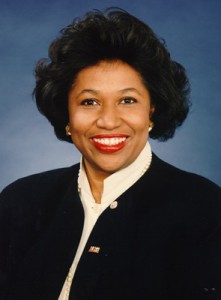
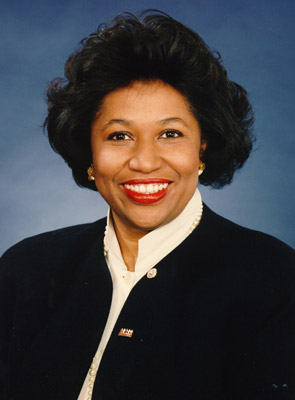
Carol Moseley-Braun
The first African-American woman Senator, Carol Moseley-Braun was also only the second black Senator since the Reconstruction Era. “I cannot escape the fact that I come to the Senate as a symbol of hope and change,” Moseley-Braun said shortly after being sworn in to office in 1993. “Nor would I want to, because my presence in and of itself will change the U.S. Senate.” During her single term in office, Senator Moseley-Braun advocated for civil rights issues and for legislation on crime, education, and families.
Carol Moseley was born in Chicago, Illinois, on August 16, 1947. Her parents, Joseph Moseley, a policeman, and her mother, Edna (Davie) Moseley, a medical technician, divorced in 1963. The oldest of the four Moseley children in a middle-class family, Carol graduated from Parker High School in Chicago and earned a B.A. in political science from the University of Illinois in 1969. (more…)
Black History, Firsts
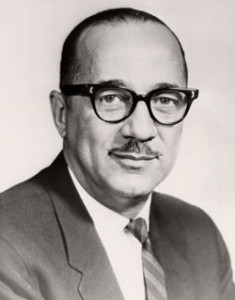
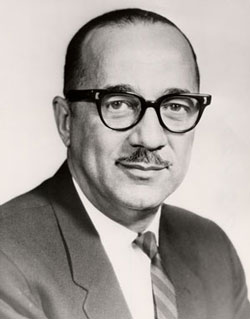
William Hastie
William Hastie had one of the most distinguished careers as an earlier Black political pioneer but today remains unknown to most Americans. As a politician, an educator and a jurist, Hastie made inroads and left a legacy that is hard to match in history.
William Hastie was born on November 17, 1904 in Knoxville, Tennessee, the son of William, a clerk in the United States Pension Office and Roberta, a school teacher. After the family moved to Washington D.C. in 1916, William attended Paul Lawrence Dunbar high school where he excelled as a student athlete and graduated as the school valedictorian in 1921. He attended Amherst College in Amherst, Massachusetts where he majored i mathematics. He graduated from the school in 1925 where he finished first in his class and graduated Phi Beta Kappa, Magna Cum Laude and the valedictorian of his class. After teaching for two years in Brodertown, New Jersey, he attended Harvard Law School where he was a member of the law review and graduated with an LL.B. in 1930. (more…)
Black History, Business, Firsts
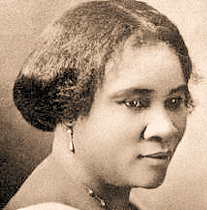
Madame C.J. Walker
Born Sarah Breedlove on December 23, 1867 on a Delta, Louisiana plantation, this daughter of former slaves transformed herself from an uneducated farm laborer and laundress into one of the twentieth century’s most successful, self-made women entrepreneurs.
Orphaned at age seven, she often said, “I got my start by giving myself a start.” She and her older sister, Louvenia, survived by working in the cotton fields of Delta and nearby Vicksburg, Mississippi. At 14, she married Moses McWilliams to escape abuse from her cruel brother-in-law, Jesse Powell.
Her only daughter, Lelia (later known as A’Lelia Walker) was born on June 6, 1885. When her husband died two years later, she moved to St. Louis to join her four brothers who had established themselves as barbers. (more…)
Black History, Firsts, Law
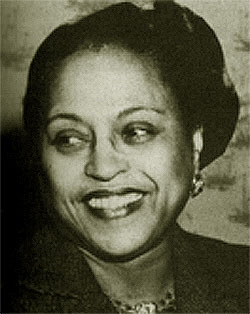
Edith Sampson
On October 13, 1898, Edith Sampson was born in Pittsburgh, the first black woman elected judge to a municipal court. She was born Edith Spurlock, one of seven children.
Her father, Louis Spurlock, earned $75 per month as a shipping clerk in a cleaning, pressing, and dyeing business. Her mother, Elizabeth Spurlock, worked at home making buckram hat frames and twisting switches of false hair.
Edith graduated from Peabody High School, and three years later married Rufus Sampson, a field agent for the Tuskegee Institute. She also attended the New York School of Social Work. There, one of her instructors was George W. Kirchwey, also a professor at Columbia University Law School. After distinguishing herself in his criminology class, he told her she had the talent to be a lawyer. (more…)
Black History, Business, Firsts, Other
John W Cromwell
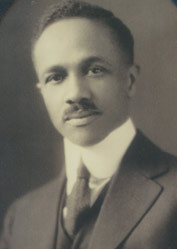
In 1921, John W. Cromwell, Jr., became the first African-American to earn the designation of CPA, some 25 years after the first CPA certificate was granted in the United States. Cromwell was a member of one of the leading African-American families in the country. His father was a teacher, political activist, attorney, and chief examiner for the U.S. Post Office. Cromwell’s older sister, Otelia, was the first African-American alumna of Smith College and went on to earn a Ph.D. in English at Yale. Cromwell was exceptional himself. He graduated from Dartmouth as the best student in science in the class of 1906. A year later he completed his master’s degree there.
The profession most open to African-Americans at the time was teaching. After finishing at Dartmouth, Cromwell returned home to Washington, D.C., and became a mathematics teacher at the Dunbar School, the most prestigious black high school in the country.
Fifteen years passed before John Cromwell became a CPA. He was not allowed to sit for the CPA exam in Washington, D.C., Virginia, or Maryland. In addition, all those places had experience requirements. The biggest barrier to African-Americans in becoming CPAs has always been the experience requirement: In order to become a CPA you have to work for a CPA, and for the first two-thirds of the last century, most firms would not hire African-Americans. (more…)
Black History, Education, Firsts
Cheyney University of Pennsylvania
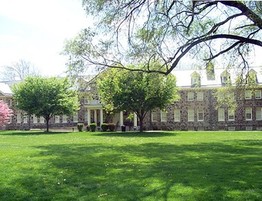
Founded in 1837 as the Institute for Colored Youth, Cheyney University of Pennsylvania is known as the first institution for higher learning for African Americans. The founding of Cheyney University was made possible by Richard Humphreys, a Quaker philanthropist who bequeathed $10,000, one tenth of his estate, to design and establish a school to educate the descendents of the African race.
Born on a plantation in the West Indies, Richard Humphreys came to Philadelphia in 1764. Having witnessed the struggles of African Americans competing unsuccessfully for jobs due to the influx of immigrants, he became interested in their plight. In 1829, race riots heightened and it was that year Richard Humphreys wrote his will and charged thirteen fellow Quakers to design an institution: “…to instruct the descendents of the African Race in school learning, in the various branches of the mechanic Arts, trades and Agriculture, in order to prepare and fit and qualify them to act as teachers….” (more…)