Black History, Religion
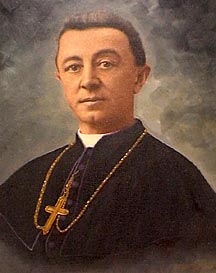
James Augustine Healy the first black bishop ordained in the U.S.
James Augustine Healy, was appointed February 12, 1875, and consecrated as Bishop of Portland (Maine) at the Cathedral of the Immaculate Conception (see Cathedral) on June 2, 1875. James Augustine Healy became the first black bishop ordained in the United States. He was the son of an Irish immigrant, Michael Healy, who became a prosperous plantation-owner in Georgia, and a mulatto woman who was actually a slave.
James was educated in northern schools and later attended the newly established Holy Cross College. There he made his decision to enter the priesthood. He furthered his studies in Montreal and Paris where he was ordained in 1854 at the Cathedral of Notre Dame. After ordination Father Healy was assigned to Bishop John Fitzpatrick’s Boston Diocese. He remained there serving first at the House of the Angel Guardian, then as Chancellor of the Diocese and finally as pastor of St. James Church. When his appointment came as the second Bishop of Portland, he was forty-five years old. (more…)
Black History, Business, Education
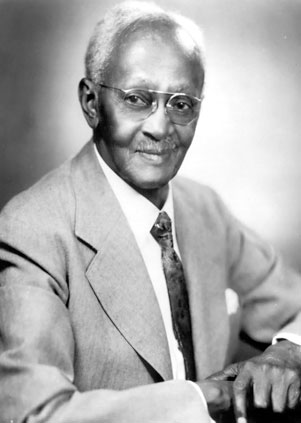
Richard Robert Wright, Sr.
Despite being born a slave on May 16, 1855, Major Richard Robert Wright, Sr. was a post-reconstruction pioneer and trailblazer, who made remarkable contributions in education, banking, politics, publishing, journalism, real estate, and civic affairs. Among his many accomplishments, he founded a high school, a college, and a bank; and owned several newspapers.
He also founded the National Freedom Day Association, and worked toward establishing a national day to commemorate freedom for all people.
On February 1, 1941, Major Wright invited national and local leaders to meet in Philadelphia to formulate plans to set aside February 1st each year to memorialize the signing of the 13th Amendment to the Constitution by President Lincoln on February 1, 1865. One year after Wright’s death in 1947, a bill passed both U.S. Houses of Congress, making February 1st National Freedom Day, and was signed into law on June 30, 1948. (more…)
Black History, Firsts, Politics
National Colored Convention in 1869v
The Colored National Labor Union arrived shortly after the development of the National Labor Union, which happened to be the first major organization founded by Andrew Cameron in 1866. The National Labor Union was dedicated with helping unions such as construction and other skilled groups and even sometimes towards farmers.
At this point in time African Americans were struggling to be noticed and taken seriously in the work field and in society they felt that if they started their own national union it would help their position in society because they were not given any help from the National Labor Union. The only thing that the National Union offered to African Americans was to encourage them to organize and separate that could be affiliated with the National Labor Union, but this plan was clearly not designed to help with racial unity because it left black workers only fighting for an entry into the union.
(more…)
Black History, The Arts
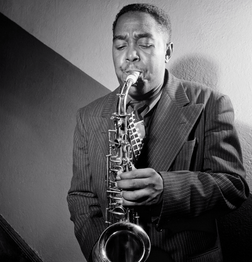
Charlie ‘Bird’ Parker
Charlie Parker was one of the most influential improvising soloists in jazz, and a central figure in the development of bop in the 1940s. A legendary figure in his own lifetime, he was idolized by those who worked with him, and he inspired a generation of jazz performers and composers.
Parker was the only child of Charles and Addle Parker. In 1927, the family moved to Kansas City, Missouri, an important center of African-American music in the 1920s and 1930s. Parker had his first music lessons in the local public schools; he began playing alto saxophone in 1933 and worked occasionally in semi-professional groups before leaving school in 1935 to become a full-time musician. (more…)
Black History, Religion
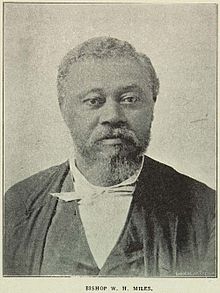 William Henry Miles (1828-1892) was a founder and the first senior bishop of the Colored Methodist Episcopal Church in America, a Methodist denomination formed in 1870 to serve African-American Methodists in the American South. Miles College in Birmingham, Alabama is named in his honor.
Miles was born in Springfield, Kentucky. He was a slave of Mrs. Mary Miles; when she died in 1854, she willed William his freedom (although he was not freed until 1864)
Black History, Politics
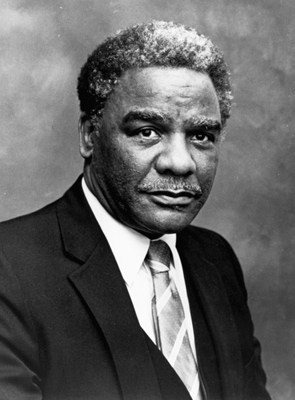
Harold Washington
b. April 15, 1922, Chicago, Ill., U.S.–d. Nov. 25, 1987, Chicago), American politician who gained national prominence as the first African-American mayor of Chicago (1983-87).
Washington graduated from Roosevelt University (B.A., 1949), earned a law degree from Northwestern University (1952), and established a private law practice in Chicago. He succeeded his father, a part-time Methodist minister, as Democratic precinct captain before working as a city attorney (1954-58) and a state labour arbitrator (1960-64). He then served in the Illinois House of Representatives (1965-76), the Illinois State Senate (1976-80), and the U.S. House of Representatives (1980-83). (more…)