Black History, Business, Government
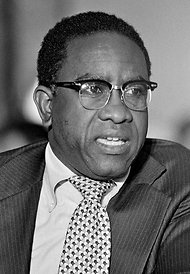
William E. Sauro/The New York Times
Andrew F. Brimmer in 1974, shortly after he resigned from the Fed board.
Andrew F. Brimmer, a Louisiana sharecropper’s son, was the first black member of the Federal Reserve Board. Dr. Brimmer, an economist, held a number of high-ranking posts in Washington and taught at Harvard, but the economic conditions of poor, powerless, uneducated blacks was an abiding concern. He spoke about what he called the “schism� between blacks who were educated and had marketable skills and those who did not. In later years he spoke frequently about how government policies no longer supported programs to help blacks enter the economic mainstream.
Dr. Brimmer was the assistant secretary of commerce for economic affairs when President Lyndon B. Johnson named him to the Fed board in 1966.
At the time, the Federal Reserve was bitterly divided over monetary policy. The chairman, William McChesney Martin Jr., threatened to resign if Mr. Johnson appointed a liberal who would vote in favor of lower interest rates. (more…)
Black History, Publishing
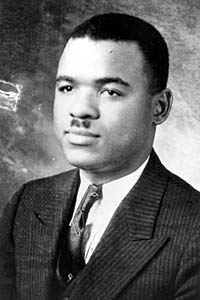
William Alexander Scott II
William Alexander Scott II came to Atlanta to receive an education and ended up, at the tender age of 26, founding a newspaper that would become the first successful African-American daily in the nation. The son of a minister, Scott did not allow the presence of another Black newspaper, The Atlanta Independent, to deter him from starting the Atlanta World on Aug. 5, 1928.
The publishers of the Atlanta World have felt the need of a Southern Negro Newspaper, published by Southern Negroes, to be read by Southern Negroes, Scott wrote in the first issue. By 1930, the newspaper was one of the most widely circulated Black papers in the South. Using the Atlanta World as fuel, Scott charged ahead, establishing the first chain of African-American newspapers in 1931. The Scott Newspaper Syndicate eventually would include 50 newspapers. On March 12, 1932, Scott achieved another goal when the Atlanta World went daily. (more…)
Artists, Black History
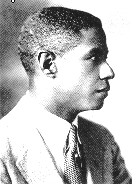
James Amos Porter
was born in Baltimore in 1903. At an early age, he learned to draw and loved pictures. In school, Porter worked hard to perfect his artistic skills. By the time he reached high school, people recognized that he would become an artist and a scholar.
After high school, Porter attended Howard University in Washington D.C. There he received his bachelor’s degree in art. In 1927, Porter was appointed as an assistant professor at Howard. Later, he studied with Dimitri Ramanowsky in New York at the Art Students’ League and at the Sorbonne in Paris. His studies came to an end after Porter received a master’s degree in art from New York University in 1936. (more…)
Civil Rights, Politics
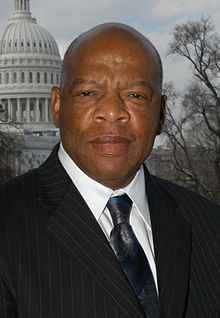
John Robert Lewis, (born February 21, 1940, Troy, Alabama, U.S. — died July 17, 2020, Atlanta, Georgia), American civil rights leader and politician best known for his chairmanship of the Student Nonviolent Coordinating Committee (SNCC) and for leading the march that was halted by police violence on the Edmund Pettus Bridge in Selma, Alabama, in 1965, a landmark event in the history of the civil rights movement that became known as “Bloody Sunday.” 1
Lewis left the SNCC in 1966 and continued his work to enfranchise minorities. In 1970, he became director of the Voter Education Project. During his tenure, the VEP helped to register millions of minority voters.
Lewis won a seat on the Atlanta City Council in 1981, then the House of Representatives in 1986. As a representative of Georgia’s 5th District until his death, he was one of the most respected members of Congress. He championed healthcare reform, education improvements and he oversaw multiple renewals of the Voting Rights Act. When the Supreme Court struck down part of the law in 2013 Lewis decried the decision as a “dagger into the heart” of voting rights.
>>> Read More HERE at Biography.
1Encyclopedia Brittanica
Black History, Politics
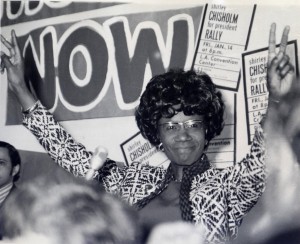
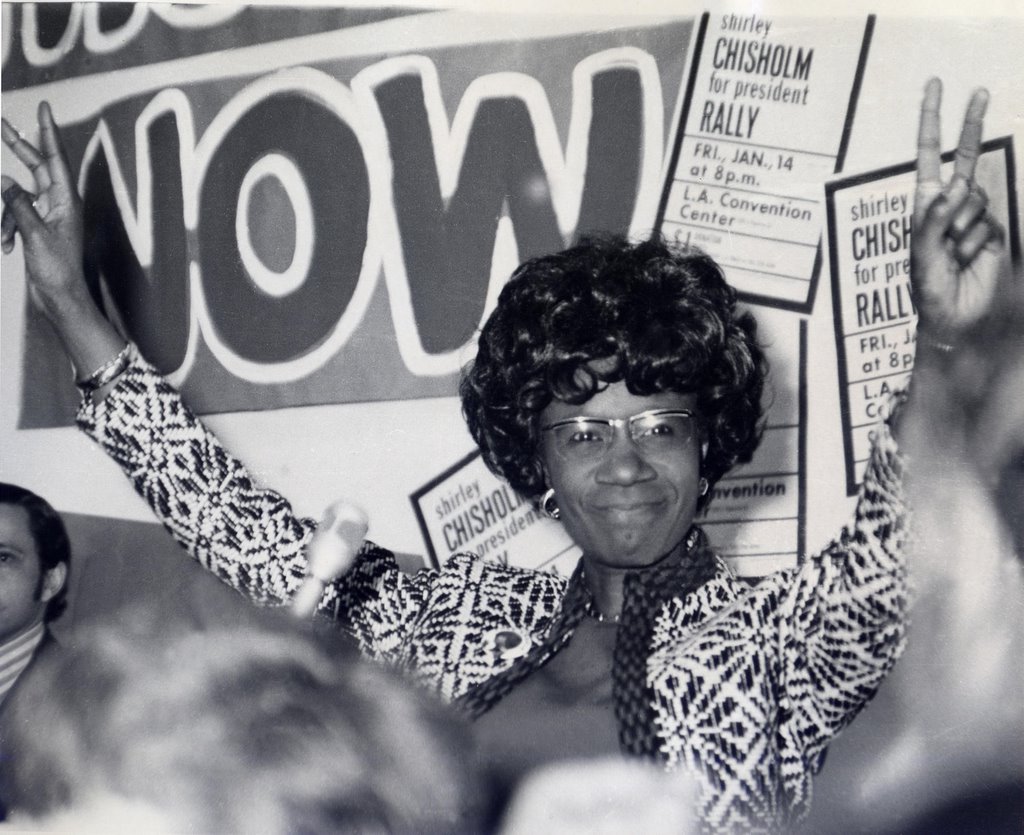
Shirley Chisholm
Shirley Chisholm attended Brooklyn College on a scholarship and then earned a master’s degree in education from Columbia University. After becoming an expert on early childhood education, she worked as a consultant to New York City’s Bureau of Child Welfare, from 1959 to 1964.
In 1968 Chisholm became the first black woman to win a seat in the U.S. House of Representatives. In 1972 Chisholm declared her candidacy for the office of president of the United States. She was the first black and the first woman to make this bid�an effort described in her book The Good Fight. She later published an autobiography, Unbought and Unbossed.
Chisholm retired from Congress in 1983 and taught at Mount Holyoke College in Massachusetts. She spoke out against the Vietnam War until it ended, and she has continued to speak out for the interests of the urban poor.
Black History, Education
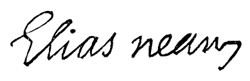 French colonish Elias Neau opened a school for enslaved African Americans in New York City. It was a catechizing school. As early as 1703 he called athe attention of the Society to the great number, of slaves in New York ” who were without God in the world, and of whose souls there was no manner of care taken” and proposed the appointement of acatechist to undertake their instruction. Neau’s task was not an easy one. At first he went from house to house, but afterwards arranged for some of the slaves to attend him.
In that colony, the instruction of the Negro and Indian slaves to prepare them for conversion, baptism, and communion was a primary charge oft repeated to every missionary and schoolmaster of the Society. In addition to the general efforts put forth in the colonies, there was in New York a special provision for the employment of sixteen clergymen and thirteen lay teachers mainly for the evangelization of the slaves and the free Indians. For the Negro slaves a catechizing school was opened in New York City in 1704 under the charge of Elias Neau. (more…)