Black History, Slavery
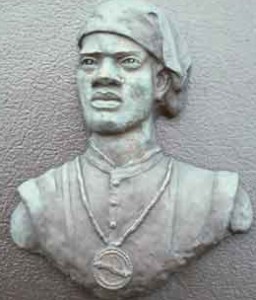
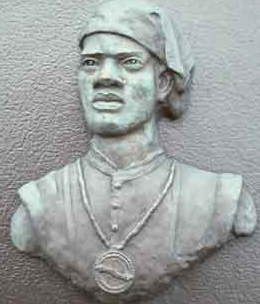
Matthias de Sousa
In 1634 Matthias de Sousa and John Price were picked up on the island of Barbados by two small ships that were sailing towards the Chesapeake Bay. Neither of the men had any money to pay for their voyage, so they agreed to work for up to seven years in order to repay the debt. Once their term of service was over, they were both to be declared freemen. Not much is known about the life of John Price after the seven years of service, but there is some documented records concerning Matthias de Sousa.
Matthias de Sousa was a passenger on the Dove when it landed on St. Clemens Island on March 25, 1634. “He was an aide to Father White, the Jesuit priest who came with the founding company of the state of Maryland.” (more…)

Black History, Inventions, Science
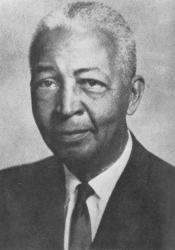
Lloyd August Hall
Born: June 20, 1894
Died: January 2, 1971
Birthplace: Elgin, Illinois
Occupation: Chemist and Inventor
Lloyd August Hall received his Bachelor of Science from Northwestern University in 1914, a Master of Science from Northwestern in 1916, and a Doctor of Science (D.Sc.) from Virginia State College in 1944. Dr. Hall has served as junior and senior Sanitary Chemist of the Department of Health laboratories for the city of Chicago, Illinois from 1915 to 1919. He also served as chief chemist for John Morrel and Company of Ottuma, Illinois (1919-1921). He was President of the Chemical Products Corporation, Chicago from 1921 to 1924. Dr. Hall served as Consultant for Griffith’s Laboratories from 1925 to 1929, later as Technical Director and Chief Chemist of Griffith’s Laboratories in Chicago, Illinois from 1929 to 1946. From 1946 to 1959 Lloyd hall served as Technical Director. (more…)
Black History, The Arts
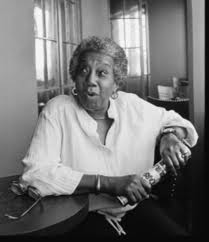
Vinnette Carroll
Vinnette Carroll was the first African-American woman to direct a production on Broadway. Vinnette Carroll was born on March 11, 1922 in New York City to Florence and Edgar Carroll. When Vinnette was three the family moved to Jamaica; subsequently, she spent much of her childhood in the West Indies. She received a BA from Long Island University in 1944; and an MA from New York University in 1946; followed by doctoral work in psychology at Columbia University. Carroll’s father encouraged his daughters to become physicians, and as a compromise, Vinnette chose psychology. Carroll worked as a clinical psychologist with the NYC Bureau of Child Guidance before beginning to study acting.
In 1948 she accepted a scholarship to attend the Erwin Piscator’s Dramatic Workshop at the New School for Social Research and studied with Lee Strasberg, Stella Adler, Margaret Barker, and Susan Steele. She made her professional stage debut at the Falmouth Playhouse acting in Shaw’s Androcles and the Lion. (more…)
Abolition, Black History

Weems escaping in male attire
According to Underground Rail Road records, Anna Maria Weems disguised her gender and used several male aliases in order to escape her plight and acquire freedom. At the time of her escape, she was a “bright mulatto, well-grown, smart and good-looking” fifteen year old girl. Her family members, including her mother, have been sold before she turned thirteen. Because her owners feared that she would escape, they made her sleep in their chamber in order to prevent her from doing so. Finally she had the means to escape with the help of the Underground Railroad. William Still describes her escape in “The Underground Railroad” (1870): (more…)
Black History, Firsts

Capital Savings
After the demise of Freedman’s Savings and Trust Company, it would take 14 years for African Americans to rally behind another bank. The first bank organized and operated by African Americans was Capital Savings Bank in Washington, D.C. Just four years after it opened, its deposits had grown to over $300,000.
Capital Savings Bank provided the capital essential to the growth of black businesses, capital that white-owned banks were unwilling to lend. The community proudly deposited its money in Capital Savings Bank. The public’s confidence in Capital was rock solid in the early days, enabling the bank to exert a strong, positive economic impact on the community it served. During the Panic of 1893, the bank rode out the tide and was able to honor every obligation on demand. Capital Savings Bank helped many African-American businesses and property owners until it closed in 1902. (more…)
Black History, Civil Rights
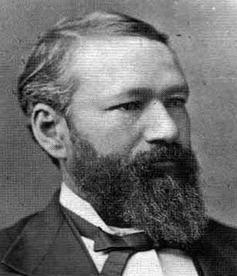
Homer Plessy
Plaintiff for a landmark Supreme Court case, Homer A. Plessy was born on March 17, 1863 in New Orleans. He was a light-skinned Creole of Color during the post-reconstruction years.
With the aid of the Comité des Citoyens, a black organization in New Orleans, Homer Plessy became the plaintiff in the famous Plessy v. Ferguson case decided by the U.S. Supreme Court in May 1896. The decision established the “separate but equal” policy that made racial segregation constitutional for the next six decades.
In order to challenge the 1890 Louisiana statute requiring separate accommodations for whites and blacks, Homer Plessy and the Comité des Citoyens used Plessy’s light skin to their advantage. On June 7, 1892 Plessy bought a first class ticket on the East Louisiana Railway. (more…)