Black History, Education

Peabody Education Fund
Founded of necessity due to damage caused largely by the American Civil War, the Peabody Education Fund was established by George Peabody in 1867 for the purpose of promoting “intellectual, moral, and industrial education in the most destitute portion of the Southern States.” The gift of foundation consisted of securities to the value of $2,100,000, of which $1,100,000 were in Mississippi State bonds, afterward repudiated. In 1869 an additional $1,000,000 was given by Mr. Peabody, with $384,000 of Florida funds, also repudiated later. The main purpose of the fund was to aid elementary education by strengthening existing schools. Because it was restricted from founding new schools, it did not benefit freedmen in the South, as there were no established schools for blacks.
“The fund introduced a new type of benefaction in that it was left without restriction in the hands of the trustees to administer. Power to close the trust after thirty years was provided on condition that two-thirds of the fund be distributed to educational institutions in the Southern states.” (more…)
Abolition, Black History
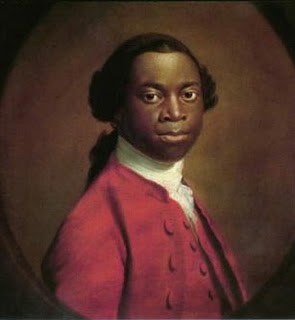
Olaudah Equiano
aka Gustavus Vassa
Captured far from the African coast when he was a boy of 11, Olaudah Equiano was sold into slavery, later acquired his freedom, and, in 1789, wrote his widely-read autobiography, The Interesting Narrative of the Life of Olaudah Equiano, or Gustavus Vassa, the African.
The youngest son of a village leader, Equiano was born among the Ibo people in the kingdom of Benin, along the Niger River. He was “the greatest favourite with [his] mother.” His family expected to follow in his father’s footsteps and become a chief, an elder, a judge. Slavery was an intregal part of the Ibo culture, as it was with many other African peoples. His family owned slaves, but there was also a continual threat of being abducted, of becoming someone else’s slave. This is what happened, one day, while Equiano and his sister were at home alone. (more…)
Black History, Music
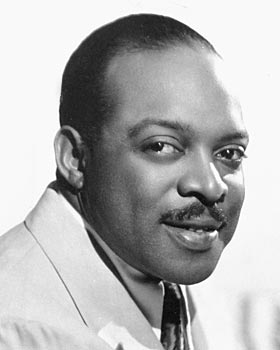
William James “Count” Basie
William James “Count” Basie (August 21, 1904 – April 26, 1984[1]) was an American jazz pianist, organist, bandleader, and composer. His mother taught him to play the piano and he started performing in his teens. Dropping out of school, he learned to operate lights for vaudeville and to improvise accompaniment for silent films at a local movie theater in his home town of Red Bank, New Jersey. By 16, he increasingly played jazz piano at parties, resorts and other venues. In 1924, he went to Harlem, where his performing career expanded; he toured with groups to the major jazz cities of Chicago, St. Louis and Kansas City. In 1929 he joined Bennie Moten’s band in Kansas City, and played with them until Moten’s death in 1935. (more…)
Black History, Inventions, Other
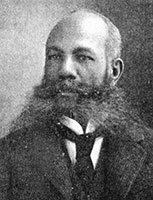
Alexander Miles
Alexander Miles, who contributed to the elevator industry, was an African-American inventor of the late 19th century who was able to transcend racial barriers in the United States.
Miles attached a flexible belt to the elevator cage, and when the belt came into contact with drums positioned along the elevator shaft just above and below the floors, it allowed the elevator shaft doors to operate at the appropriate times. The elevator doors themselves were automated through a series of levers and rollers.
Before working on elevator engineering, Miles experimented with the creation of hair products. The influence of his elevator patent is still seen in modern designs, since the automatic opening and closing of elevator and elevator shaft doors is a standard feature.
Miles, who was born in Duluth, Minnesota, designed an elevator that was able to open and close its own doors and the elevator shaft doors. When the elevator would arrive or depart from a given floor, the doors would move automatically. Previously, the opening and closing of the doors of both the shaft and the elevator had to be completed manually by either the elevator operator or by passengers, contributing greatly to the hazards of operating an elevator.
Black History, Publishing
In 1879, John James Neimore established The Ca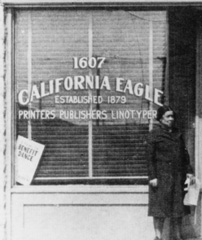 lifornia Owl as a means to help ease the black settlers’ transition to the western way of life. The Eagle provided many disparaged settlers with job, housing, and information on local charities.
When The California Eagle shut down its presses in 1964, it was one of the oldest black-owned and operated papers in the United States. John James Neimore had established it in Los Angeles as The California Owl in 1879, to ease black settlers’ transition to the West. The paper provided them with housing and job information, and other information essential to surviving in a new environment. (more…)
Black History, Religion

Lemuel Haynes
Lemuel Haynes was the first black to serve as minister to a white congregation.
Little is known of his early life. He was born in West Hartford, Connecticut, to a reportedly Caucasian mother of some status and a man named Haynes, who was said to be “of some form of African extraction”. According to the African American National Biography, his birth date is 18 July 1753 and he died the 28 September 1833.
At the age of five months, Lemuel Haynes was given over to indentured servitude in Granville, Massachusetts. Although serving as an agricultural worker, part of the agreement required educating him. Through accompanying his masters to church, he became exposed to Calvinistic thought. At about twenty years of age, he saw the Aurora Borealis, and, fearing the approach of the Day of Judgment as a result, he soon accepted Christianity. (more…)
