Black History, Law
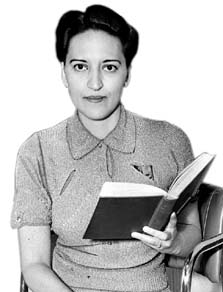
- Jane Bolin
In 1939 Jane Matilda Bolin was appointed to the New York City Court of Domestic Relations by Mayor Fiorello Laguardia, becoming the first Black woman judge.
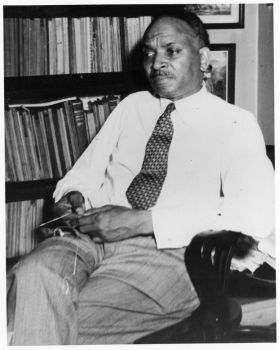
She was born, Jane Matilda Bolin on April 11, 1908. She was the youngest of four children. Her father was Gaius Charles Bolin. He was the first African American (also part Native American) to attend Williams College, in the Berkeshire Mountains of Western Massachusetts. Upon graduation, he established a law practice in Poughkeepsie, NY. His practice saw great success, and he quickly rose to prominence in the community, as well as in surrounding areas.
He was Poughkeepsie’s first black lawyer, and the first black president of the Dutchess County Bar Association. Naturally looked upon as a leader in the black community, G. Charles also helped found the Dutchess County branch of the NAACP. While solidly establishing his roots in Poughkeepsie, he met and married Matilda Emery, an English immigrant. Matilda died when Jane was only eight years old. (more…)
Black History, Religion
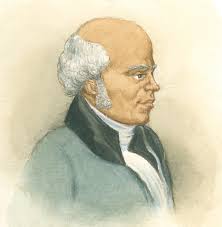 James Varick was born near Newburgh, New York, on January 10, 1750. His mother was a slave of the Varicks, or Van Varicks, and was later freed. His father, Richard, was born in Hackensack, New Jersey, where he was baptized in the Dutch Church. The family lived in New York City while James Varick was young, where he acquired an elementary education in New York schools. For many years, he worked as a shoemaker and later as a tobacco cutter to support himself and his family, because the church with which he was associated did not pay its preachers. About 1790, he married Aurelia Jones. The couple had four sons and three daughters. (more…)
Black History, Media
Claude Barnette
Claude Albert Barnett, entrepreneur and founder of the Associated Negro Press (1919-1967), was born in Sanford, Florida to William Barnett and Celena Anderson. At nine months he was brought to Mattoon, Illinois to live with his maternal grandmother. Barnett grew up in Illinois, attending schools in Oak Park and Chicago. In 1904 he entered Tuskegee Institute. Two years later in 1906 he received a diploma and was granted the Institute’s highest award.
Following graduation Barnett returned to Chicago and became a postal worker. Through his new employment he read numerous magazines and newspapers. Fascinated by the advertisements, in 1913 Barnett began reproducing photographs of notable black luminaries, which he sold through advertising in African American newspapers. By 1917 Barnett had transformed this endeavor into a thriving mail-order enterprise.
After this initial success, Barnett and several partners started the Kashmir Chemical Company, a cosmetics business where he served as advertising manager. Shortly thereafter he resigned his post office position and traveled the country, promoting both his photographs and beauty products to mostly black customers. As he placed his ads in various black newspapers across the country he noticed a common trend, these newspapers were in dire need of substantive news to report. (more…)
Black History, Education

Prudence Crandall
(1803-1890) opened an academy on the Canterbury Green in 1831 to educate daughters of wealthy local families. The school was extremely successful until the following fall when she admitted Sarah Harris, a 20-year-old black woman. Sarah had hoped to become a teacher with the help of the education the academy could provide. Reflecting the attitudes of the times, Sarah’s admittance to the academy led parents to withdraw their daughters.
Miss Crandall made contacts throughout the northeast’s free black communities to attract young black women students. They came from as far away as Boston, New York City and Philadelphia. The state responded by passing the “Black Law” which made it illegal for Crandall to operate her school. (more…)
Black History, Religion
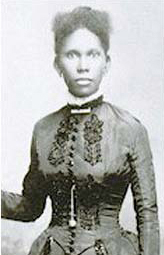
Mother Matelda Beasley
When Mathilde (later spelled Mathilda) Taylor was born on November 14, 1832 in New Orleans, to Caroline, a slave owned by James C. Taylor, few would have believed that she would later successfully defy the very laws that kept her and her mother from their freedom. It was speculated that her father was Native American and Mathilda inherited her “extreme height and her commanding figure� from him.
Little is known of Mathilda’s early years in Louisiana and there is no record of how she achieved her freedom to move to Savannah as a young woman. But by 1859, records indicate that she had been operating a secret school for African-American children at a time in history when “punishment for teaching slaves or free person of color to readâ€� was a “fine and whipping.â€� Facing great personal risks, she was committed to educating children who otherwise would have no opportunity for schooling and because there is little information about her school, she seems to have achieved her goal of keeping her efforts from the authorities. (more…)
Black History, Inventions, Science
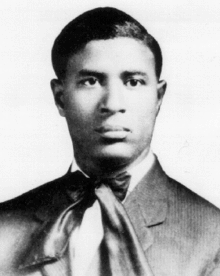
Garrett Morgan
Garrett A. Morgan (1875-1963), inventor; born in Paris, Tenn.
Morgan developed his first invention, a belt fastener for sewing machines, in 1901, and he sold it for $150. In 1914 he won the First Grand Prize gold medal at the Second International Exposition of Sanitation and Safety for his breathing helmet and smoke protector (prototype to the gas mask).
In 1916 he demonstrated the use of this device in the rescue operation following an explosion in a tunnel at the Cleveland Waqterworks that trapped many men below Lake Erie. In 1923, Morgan developed an automatic stop sign to aid the movement of traffic, selling the rights to this invention to General Electric for $40,000.
At the Emancipation Centennial Celebration in Chicago, Illinois, in August 1963, Morgan was nationally recognized. Although in ill-health, and nearly blind, he continued to work on his inventions; one of his last was a self-extinguishing cigarette, which employed a small plastic pellet filled with water, placed just before the filter.