Black History, Civil Rights, Other

 The NAACP’s official organ, The Crisis Magazine, carried information on young people and encouraged formation of youth units for a number of years before any action was taken to form a division in the Association devoted to youth activities. In 1935, during the St. Louis Convention, a fiery address was made by one of the youth delegates, Miss Juanita Jackson, to create a department for youth.
Subsequently, on September 15, 1935, Miss Jackson joined the Association’s staff and became the first Youth Secretary. The NAACP National Board of Directors passed a resolution formally creating the Youth and College Division in March of 1936. Under the guidance of Ms. Jackson, a National Youth Program was created for youth members of the NAACP. This program provided national activities for youth that were supported by monthly meetings discussing local needs of the community. The major national youth activities were demonstrations against lynching and seminars and group discussions on the inequalities in public education. (more…)
Black History, Inventions

Andrew Jackson Beard
Andrew Jackson Beard was born a slave in Jefferson County, Alabama. He was emancipated at the age of 15, and married at 16. Beard was a farmer near Birmingham, Alabama for some five years, but recalled visiting Montgomery in 1872 with 50 bushels of apples drawn by oxen. He said, “It took me three weeks to make the trip. I quit farming after that.” Instead he built and operated a flourmill in Hardwicks, Alabama. He began pondering the mechanics of his subsequent plow invention. Beard’s idea grew and, in 1881, he patented one of his plows and sold it, in 1884, for $4,000.
On December 15, 1887, Beard invented another plow and sold it for $5,200. With this money he went into the real estate business and made about $30,000. In 1889, Beard invented a rotary steam engine, patented on July 5,1892. He claimed that his steam engine was cheaper to build and operate than steam engines and it would not explode. (more…)
Black History, The Arts
Hallie Quinn Brown
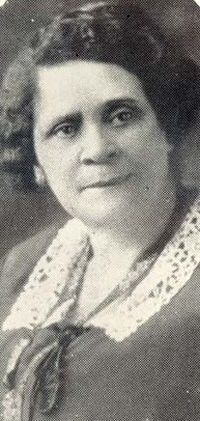
Hallie Quinn Brown was born in Pittsburgh, Pennsylvania in 1845, the daughter of two former slaves. Her father, Thomas Arthur Brown, became known as “Mr. Brown, the walking encyclopedia.” Brown’s mother, Frances Jane Scroggins, was also well educated; she was an unofficial advisor and counselor to the students of Wilberforce school, a private, coed, liberal arts college. Both Thomas and Frances were actively involved with the Underground Railroad. Her parents’ commitment to the cause would later influence the organizations Brown founded and participated in.
Brown’s family moved from Pittsburgh to Canada in 1864 and then to Wilberforce, Ohio, in 1870. In Ohio, the author experienced her first all black school at Wilberforce University. Brown graduated in 1873 with a Bachelor of Science degree. After graduation, she began teaching on the Senora Plantation in Mississippi and went on to teach on several plantations during her life. (more…)
Black History
 On Memorial Day in 1948, the Columbia River, swirling fifteen feet above normal, punched a hole in a railroad embankment that served as a dike, starting a flood that would leave 18,000 people homeless and alter race relations in Portland forever.
For eight years, the embankment had kept the river out of a newly developed 648-acre complex called Vanport, then the largest public housing project in the United States. Originally meant to be temporary, Vanport was shipbuilding-magnate Henry Kaiser’s answer to a lack of local housing in the early days of World War II, when he was importing men and women from across the United States to work in his Portland-area shipyards. At the height of the war in 1944, close to 40,000 people lived in Vanport, including 6,000 African Americans, three times as many as had lived in all of Portland two years before. (more…)

Black History, Business, Other
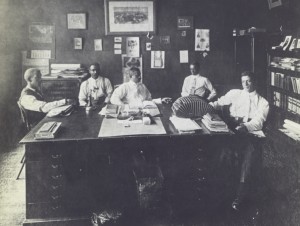
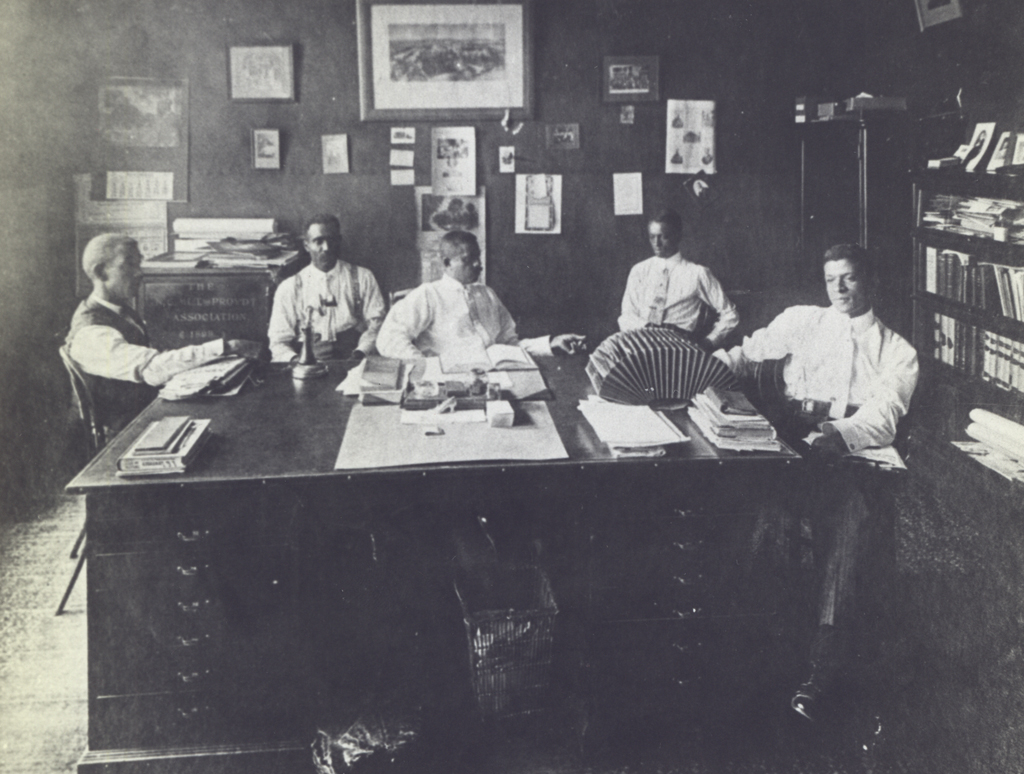
Officers of the North Carolina Mutual Life Insurance Company in 1911
Since its beginning in 1898, North Carolina Mutual Life Insurance Company has grown to become one of the nation’s most widely-known and successful business institutions. It is the only insurance company domiciled in North Carolina with a charter dated before 1900. North Carolina Mutual is the oldest and largest African American life insurance company in the United States.
The Company’s seven organizers were men who were active in business, educational, medical and civic life of the Durham community. An early financial crisis tested their resolve and the company was reorganized in 1900 with only John Merrick and Dr. Aaron M. Moore remaining. Charles C. Spaulding was named General Manager, under whose direction the company grew and achieved national prominence. (more…)
Black History, Events
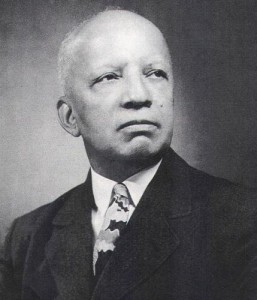
Carter G. Woodson
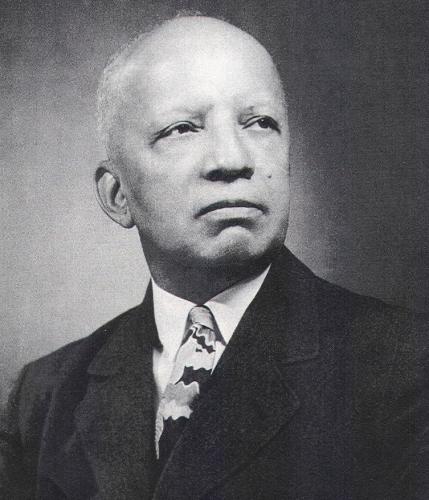
Historian Carter G. Woodson was born to poor, yet land-owning, former slaves in New Canton, Virginia on December 19, 1875. During the 1890s, he hired himself out as a farm and manual laborer, drove a garbage truck, worked in coalmines, and attended high school and college in Berea College, Kentucky—from which he earned a B.L. degree in 1903.
In the early 1900s, he taught black youth in West Virginia. From late 1903 until early 1907, Woodson worked in the Philippines under the auspices of the U.S. War Department. (more…)

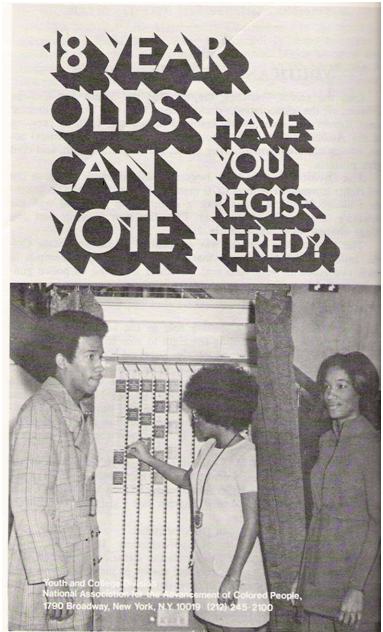 The NAACP’s official organ, The Crisis Magazine, carried information on young people and encouraged formation of youth units for a number of years before any action was taken to form a division in the Association devoted to youth activities. In 1935, during the St. Louis Convention, a fiery address was made by one of the youth delegates, Miss Juanita Jackson, to create a department for youth.