“Mark Ruffin’s Bebop Fairy Tales captures the heart and soul of the American experience during the 20th century with humor, wit and accuracy, just like the solos of the jazz musicians he uses as his artistic muse. It’s the best kind of history: poetic, noetic and hip.” – Ben Sidran, Musician, Broadcaster, Author of “The Ballad of Tommy LiPuma”.
“The world needs Mark Ruffin’s Bebop Fairy Tales now more than ever. When he writes, The rhythm of the game allows her to interact with her husband without disturbing his enjoyment, I thought he was channeling me and how I learned to love baseball from Dexter Gordon. Baseball, Bebop, the drama of life, all together here. Yes, Bebop is the music of the future and these fairy tales teach us the truth.” – Maxine Gordon, Author of “Sophisticated Giant: The Life and Legacy of Dexter Gordon”
Founded in Maryland, 1872, Morgan State University (commonly referred to as MSU, Morgan State, or Morgan) is a historically black college (HBCU) in Baltimore, Maryland, United States.
Morgan is Maryland’s designated public urban university and the largest HBCU in the state of Maryland. In 1890, the institution name formerly known as Centenary Biblical Institute was changed to honor the Reverend Lyttleton Morgan, the first chairman of its Board of Trustees, who donated land to the college.[2]. The University is a member-school of Thurgood Marshall College Fund.
Though it is a public institution, Morgan is not a part of the University System of Maryland; the school opted out of becoming a part of the system and possesses its own governing Board of Regents.
The year was 1861. The American Civil War had shortly begun and the Union Army held control of Fort Monroe in Hampton, Virginia at the mouth of the Chesapeake Bay. In May of that year, Union Major General Benjamin Butler decreed that any escaping slaves reaching Union lines would be considered “contraband of war” and would not be returned to bondage. This resulted in waves of enslaved people rushing to the fort in search of freedom. A camp to house the newly freed slaves was built several miles outside the protective walls of Fort Monroe. It was named “The Grand Contraband Camp” and functioned as the United States’ first self-contained African American community.
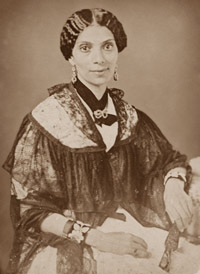
In order to provide the masses of refugees some kind of education, Mary Peake, a free Negro, was asked to teach, even though an 1831 Virginia law forbid the education of slaves, free blacks and mulattos. She held her first class, which consisted of about twenty students, on September 17, 1861 under a simple oak tree. This tree would later be known as the Emancipation Oak and would become the site of the first Southern reading of the Emancipation Proclamation in 1863. Today, the Emancipation Oak still stands on the Hampton University campus as a lasting symbol of the promise of education for all, even in the face of adversity.
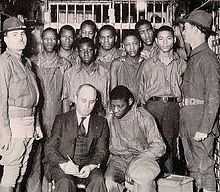
The Scottsboro Boys, with attorney Samuel Leibowitz, under guard by the state militia, 1932
The Scottsboro Boys were nine black teenagers accused of rape in Alabama in 1931. The landmark set of legal cases from this incident dealt with racism and the right to a fair trial. The case included a frameup, an all-white jury, rushed trials, an attempted lynching, an angry mob, and is an example of an overall miscarriage of justice.
On March 25, 1931, several people were hoboing on a freight train traveling between Chattanooga and Memphis, Tennessee. Several white teenagers jumped off the train and reported to the sheriff that they had been attacked by a group of black teenagers. The sheriff deputized a posse, stopped and searched the train at Paint Rock, Alabama, arrested the black teenagers, and found two young white women who accused the teenagers of rape.
The case was first heard in Scottsboro, Alabama in three rushed trials, where the defendants received poor legal representation. All but thirteen-year-old Roy Wright were convicted of rape and sentenced to death, the common sentence in Alabama at the time for black men convicted of raping white women. But with help from the American Communist Party, the case was appealed. (more…)
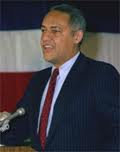
Cliffors Alexander Jr. first African American Secretary of the Army
Clifford Alexander Jr. was born and raised in Harlem prior to his education at Fieldstone Ethical Culture, Harvard (1955) and Yale Law School (1958). Early influences were his mother and father. Edith served as the Deputy Director then Executive Director of the Mayor’s Committee on Unity under NYC Mayor LaGuardia. The Mayor’s Committee on Unity was the precursor to the NYC Commission on Human Rights and fought discrimination in employment practices, public accommodations, and housing.
His father was one of several Harlem community leaders who founded the Carver Bank in response to discriminatory lending practices and worked to integrate the Riverton Apartments while serving as its manager. Alexander joined the National Guard after Law School and began working as an attorney in New York. He was asked to come to Washington D.C. in 1963 to join the staff of the National Security Council in the Kennedy administration. (more…)
.During the Jim Crow era, African American college teams were barred from the National Collegiate Athletic Association (NCAA) and the National Invitational Tournament (NIT). But a brave few found ways around these restrictions. A secret game held in 1944 between a white team from Duke University and a black team from North Carolina Central University was one of the first integrated sports events in the South.
In early 1944, black and white students from North Carolina Central University and Duke University met at the Durham YMCA for clandestine prayer meetings. A friendly challenge led to a basketball game between the NCCU varsity team and the team from Duke’s medical school to determine the best team in Durham. (more…)