Black History, Education
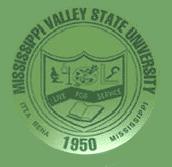
Mississippi Valley State University (commonly referred to as MVSU or “The Valley”) is a historically black university located in unincorporated Leflore County, Mississippi, in the Mississippi Delta, near Itta Bena. MVSU is a member- school of the Thurgood Marshall College Fund.
The institution, which opened in 1950, was created by the Mississippi Legislature as Mississippi Vocational College. The legislature anticipated that legal segregation of public education was in danger (and would in four years be declared unconstitutional in the United States Supreme Court’s decision in Brown v. Board of Education the institution, hoping that its existence would draw African-American applicants who might have otherwise applied to attend Mississippi’s premier whites-only institutions—the University of Mississippi, Mississippi State University, and the University of Southern Mississippi. (more…)
Black History, Space
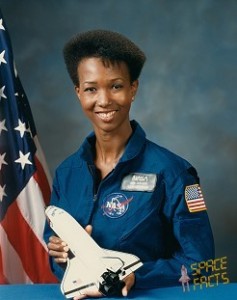
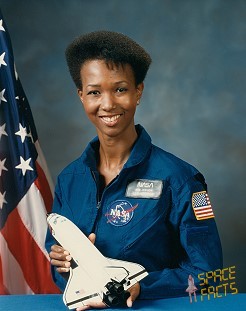
Mae Jemison
Born in 1956 in Decatur, Alabama – the youngest of three children- to Charlie and Dorothy Jemison, Mae Jemison was the first African American woman to travel to space! Her father was a maintenance supervisor for charitable organization and her mother taught English and math. When she was three her family moved to Chicago.
In 1977, at the age of 16, Mae received a National Achievement Scholarship to go to Stanford University in Northern California. There she double majored in chemical engineering and African-American Studies. She went on to medical school at Cornell where she received her MD in 1981. Not one to shy away from challenges, she traveled to Cuba, Kenya and Thailand providing medical care to those in need. (more…)
Black History, Education
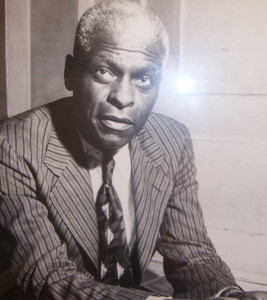
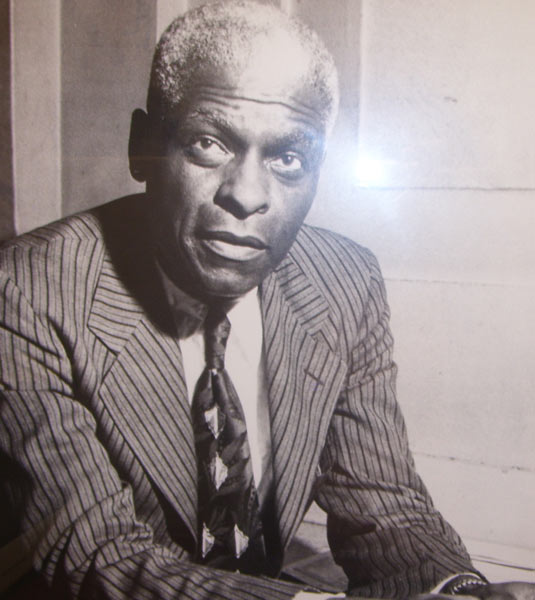
Dr. Benjamin E. Mays
Dr. Benjamin Elijah Mays was a giant in the Christian ministry and American education. He is remembered for his outstanding leadership and service as a teacher, preacher, mentor, scholar, author and activist in the civil rights movement.
Born August 1, 1894 near Epworth, South Carolina, he was a Phi Beta Kappa graduate of Bates College in Maine. He served as pastor of Shiloh Baptist Church from 1921-1923 in Atlanta, Georgia. Recruited by Morehouse President John Hope, Mays would join the faculty as a mathematics teacher and debate coach. He obtained a master’s degree in 1925 and in 1935 a Ph.D. degree from the University of Chicago. In 1934, he was appointed dean of the School of Religion at Howard University and served until 1940. (more…)
Abolition, Black History
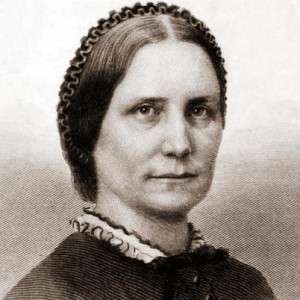
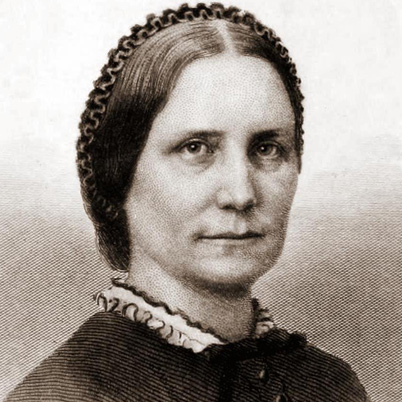
Mary Livermore
Mary Ashton Rice was born in Boston, Massachusetts on December 19, 1820 to Timothy Rice and Zebiah Vose (Ashton) Rice. She was a direct descendant of Edmund Rice an early Puritan immigrant to Massachusetts Bay Colony. She attended school at an all-female seminary in Charlestown, Massachusetts, and read the entire bible every year until the age of 23. She graduated from the seminary in 1836, but stayed there as a teacher for two years. In 1839, she started a job as a tutor on a Virginia plantation, and after witnessing the cruel institution of slavery, she became an abolitionist. In 1842, she left the plantation to take charge of a private school in Duxbury, Massachusetts, where she worked for three years.
She married Daniel P. Livermore, a Universalist minister in May 1845, and in 1857, Livermore and her husband moved to Chicago. She published a collection of nineteen essays entitled Pen Pictures in 1863. As a member of the Republican party, Livermore campaigned for Abraham Lincoln in the 1860 presidential election. (more…)
Black History, Events
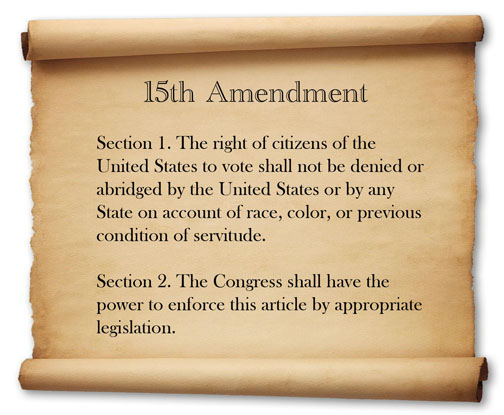
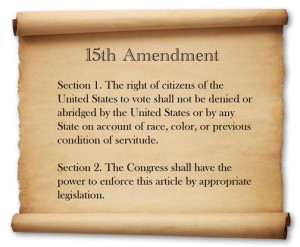 The 15th Amendment to the Constitution granted African American men the right to vote by declaring that the “right of citizens of the United States to vote shall not be denied or abridged by the United States or by any state on account of race, color, or previous condition of servitude.” Although ratified on February 3, 1870, the promise of the 15th Amendment would not be fully realized for almost a century. Through the use of poll taxes, literacy tests and other means, Southern states were able to effectively disenfranchise African Americans. It would take the passage of the Voting Rights Act of 1965 before the majority of African Americans in the South were registered to vote.
Black History, The Arts
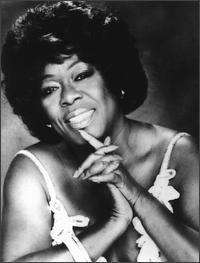
Sarah Vaughn
Born in Newark, New Jersey, in 1924, Vaughan was immediately surrounded by music: her carpenter father was an amateur guitarist and her laundress mother was a church vocalist. Young Sarah studied piano from the age of seven, and before entering her teens had become an organist and choir soloist at the Mount Zion Baptist Church.
When she was eighteen, friends dared her to enter the famed Wednesday Night Amateur Contest at Harlem’s Apollo Theater. She gave a sizzling rendition of “Body and Soul,â€� and won first prize. In the audience that night was the singer Billy Eckstine. Six months later, she had joined Eckstine in Earl Hines’s big band along with jazz legends Dizzy Gillespie and Charlie Parker. (more…)